


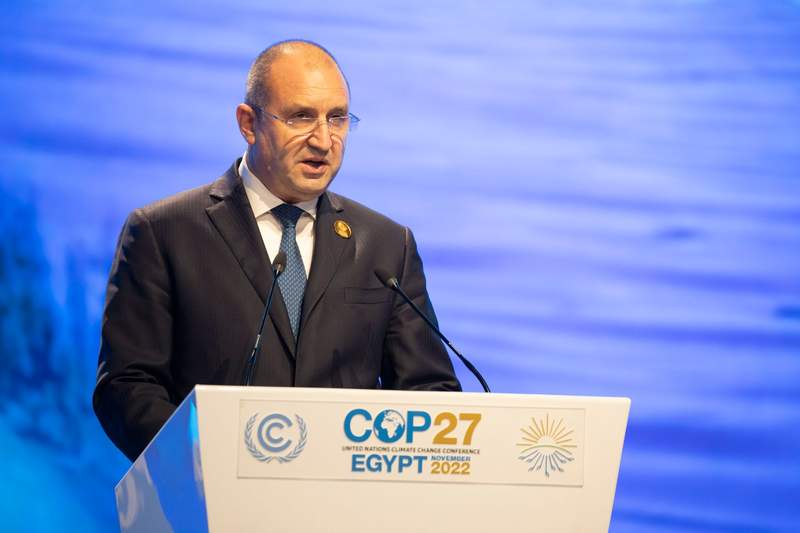
Kremlin Hails Radev’s Bulgaria Election Victory, Signaling Strengthened Diplomatic Ties
POLICY WIRE — Moscow, Russia — The Kremlin has officially expressed its profound satisfaction concerning the recent electoral triumph of President Rumen Radev in Bulgaria. This endorsement from...

POLICY WIRE — Moscow, Russia — The Kremlin has officially expressed its profound satisfaction concerning the recent electoral triumph of President Rumen Radev in Bulgaria.
This endorsement from Moscow underscores a positive reception of the election outcome, potentially signaling a significant strengthening of bilateral relations between Russia and the Balkan nation. The Russian leadership views Radev’s re-election as a conducive development for future diplomatic engagements.
Radev’s Stance and Moscow’s Approval
President Radev, frequently perceived as advocating for a more balanced relationship with Russia compared to some of his counterparts within the European Union, secured a decisive victory in the Bulgarian presidential contest. His political philosophy often prioritizes national interests and a pragmatic, rather than confrontational, approach to Moscow.
Kremlin spokesman Dmitry Peskov conveyed official congratulations, highlighting the strategic importance Russia attaches to this electoral result for its ongoing engagement with Sofia.
Geopolitical Context and Implications
The congratulatory message from Moscow arrives amidst an intricate and evolving geopolitical landscape across Europe and beyond. Bulgaria, an active member of both the European Union and NATO, finds itself navigating these complex international dynamics.
Radev’s victory, coupled with the Kremlin’s public welcome, could be interpreted as reinforcing a particular direction in Bulgaria’s foreign policy. This direction might lean towards a more independent or multi-vector approach within the broader framework of European and transatlantic alliances.
Potential for Bilateral Cooperation
Analysts suggest that the renewed mandate for President Radev, embraced by Russia, could open avenues for enhanced cooperation in various sectors. These might include economic, energy, and cultural exchanges, reflecting a desire from both sides to foster a more constructive dialogue.
The future trajectory of Russia-Bulgaria relations will be closely observed by international observers, particularly given the broader regional security considerations. For a broader understanding of how nations are recalibrating their alliances and foreign policy in a shifting global order, consider the evolving situation in other regions:
Read More: Geopolitical Shift: Gulf Nations Reassess Iran Relations Amid Evolving Regional Landscape
The Kremlin’s swift and positive reaction to the Bulgarian election outcome reaffirms Russia’s vested interest in the political developments within key Eastern European nations.