

NASCAR’s High-Octane Volatility Mirrors Global Economic Flux: Atlanta Race Under Scrutiny
POLICY WIRE — Atlanta, USA — The peculiar theatre of NASCAR racing, for all its thunderous predictability, often provides a disarmingly potent mirror to broader economic and political tides. Here,...

POLICY WIRE — Atlanta, USA — The peculiar theatre of NASCAR racing, for all its thunderous predictability, often provides a disarmingly potent mirror to broader economic and political tides. Here, where corporate sponsorships line every square inch of fiberglass, even a reigning champion can find his dominion eroded by the relentless grind of competition, a narrative that feels less like sport and more like a quarterly earnings report gone south. Just weeks ago, Tyler Reddick, with a commanding early-season streak, appeared to have established an unshakeable dynasty.
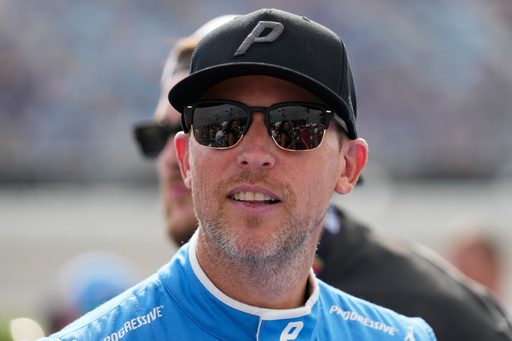
Now, however, the script has flipped. A 44-point deficit to rival Denny Hamlin has replaced what was once a substantial lead for Reddick, the driver for Michael Jordan’s high-profile 23XI Racing outfit. One week after winning the Daytona 500, he’d already logged five victories in the first nine stops of the Cup Series season, including a win at EchoPark Speedway itself, building what seemed an insurmountable advantage. The AP reports this sharp decline from his previous dominant position.
It’s a brutal reminder that momentum in any high-stakes arena, be it sports, markets, or geopolitics, is a capricious beast—difficult to acquire, easier to squander. Reddick’s current woes include finishing 25th or worse in four of the last five Cup Series races. But he’s putting on a brave face, asserting, I am “extremely” confident I can enjoy more success in his return to the track formerly known as Atlanta Motor Speedway. Such public declarations, of course, are as much about managing investor confidence as they’re about rallying a pit crew.
His strategy, he says, leans into track familiarity. Reddick remarked, [QUOTE_PLACEHOLDER] And then added, “We’re still plenty good in the spring, but what we do well at EchoPark Speedway really shows up in the summer. … Our strength typically is handling and I feel like the more that’s in play the better I do with these kind of races.” But, I’ve seen this script play out too many times. Talk of unique strengths doesn’t often pacify shareholders when the numbers don’t add up.
Speaking of numbers, consider the cold, hard calculus of competitive decline. Last week, Hamlin nabbed third while Reddick limped to a 36th-place finish at Chicagoland. But hey, it isn’t all bad. “For us to still be second in points … all things considered I think most people with a race car would do anything to have that,” Reddick noted, a nod to the fact that merely being near the top often still represents a significant achievement—a small mercy, perhaps, in a sport where only winning truly registers on the balance sheet.
And it’s not just Reddick. Kyle Larson, a two-time Cup Series champion, has endured a 43-race winless streak. His last win? Kansas, in May 2025. That’s the longest drought since he hooked up with Hendrick Motorsports back in 2021. You know, these things hit you where it hurts: brand equity, sponsor retention. Meanwhile, the second season of NASCAR’s In-Season Challenge continues, dangling a tempting $1 million prize for its five-race bracket tournament winner. One can’t help but think of the lengths entities, even entire nations, go to for economic incentives, no matter how symbolic. In regions like Pakistan, for instance, similar financial lures—often tied to mega-projects or critical infrastructure—become potent political footballs, just like prize money here impacts team dynamics and driver confidence.
It’s a contest of attrition. Hamlin — and Joe Gibbs Racing teammate Christopher Bell are poised for a compelling face-off in the In-Season Challenge. Hamlin, with characteristic dry wit, offered, “I guess probably we’ll be the underdog against Christopher,” before observing, “whoever doesn’t wreck” has the advantage. A pragmatic view, you’ll concede, in a domain where every advantage is sought — and exploited.
Adding to the drama is Bell’s injury. He’ll wear a cast on his left wrist for the race, broken back on June 7. A bit of tape, then the cast for safety: it’s a testament to commitment, perhaps, or merely the relentless demands of the circuit. He hopes this race is the last with the cast, feeling [QUOTE_PLACEHOLDER] This dogged persistence—playing through pain, pushing the limits of the human body and machine—is, in its own way, an analog to the often-brutal competition found in the global market, particularly when burgeoning economies are trying to [QUOTE_PLACEHOLDER] gain ground on established players.
Even the seemingly trivial carries commercial weight. Ryan Preece’s playful billboards featuring teammate Chris Buescher, including one near I-75 proclaiming “Visit Prosper, Texas. 843 miles” with Buescher’s image, are a cheeky reminder of how personal branding and local promotion intersect with corporate sponsorships. Global trade agreements or delicate international diplomacy often rely on similar nuanced presentations—a mix of public spectacle and underlying economic intent. And the playful feuding between Preece — and Buescher, well, it adds a bit of human drama to a high-pressure environment. It’s a bit like the diplomatic pleasantries exchanged between rival states, masking the very real competition beneath the surface. For all the serious corporate money sloshing around, it’s still about human ambition and, occasionally, silly pranks.
What This Means
The saga unfolding at EchoPark Speedway is far more than just another race day; it’s a condensed metaphor for the relentless, often brutal, churn of global economics and policy. Reddick’s plummet from a seemingly insurmountable lead illustrates the transient nature of market dominance. A slight misstep, an unforeseen challenge—like a sudden dip in commodity prices for an exporting nation or an unexpected policy shift—can swiftly unravel months, even years, of strategic positioning. This isn’t just about a driver losing points; it’s about sponsors seeing their branding diluted, about team owners—like Jordan, whose global influence spans far beyond basketball courts—calculating the return on investment in an inherently unstable environment. Think about developing nations, especially in South Asia, where the struggle for economic stability and growth often feels like an endless lap on a challenging track. Competitive pressures in nascent industries can feel this intense, too. The quest for that one million dollar In-Season Challenge prize isn’t merely for sporting glory; it represents a desperate pursuit of financial buoyancy and brand validation in a landscape where sustained excellence is rare, and sustained mediocrity, fatal. It forces strategic choices—like whether to prioritize short-term gains or build for long-term resilience—that policymakers and corporate executives globally grapple with daily. It’s a microcosm of the political economy of success, demonstrating that the only constant, whether on a track or in a market, is change itself.