


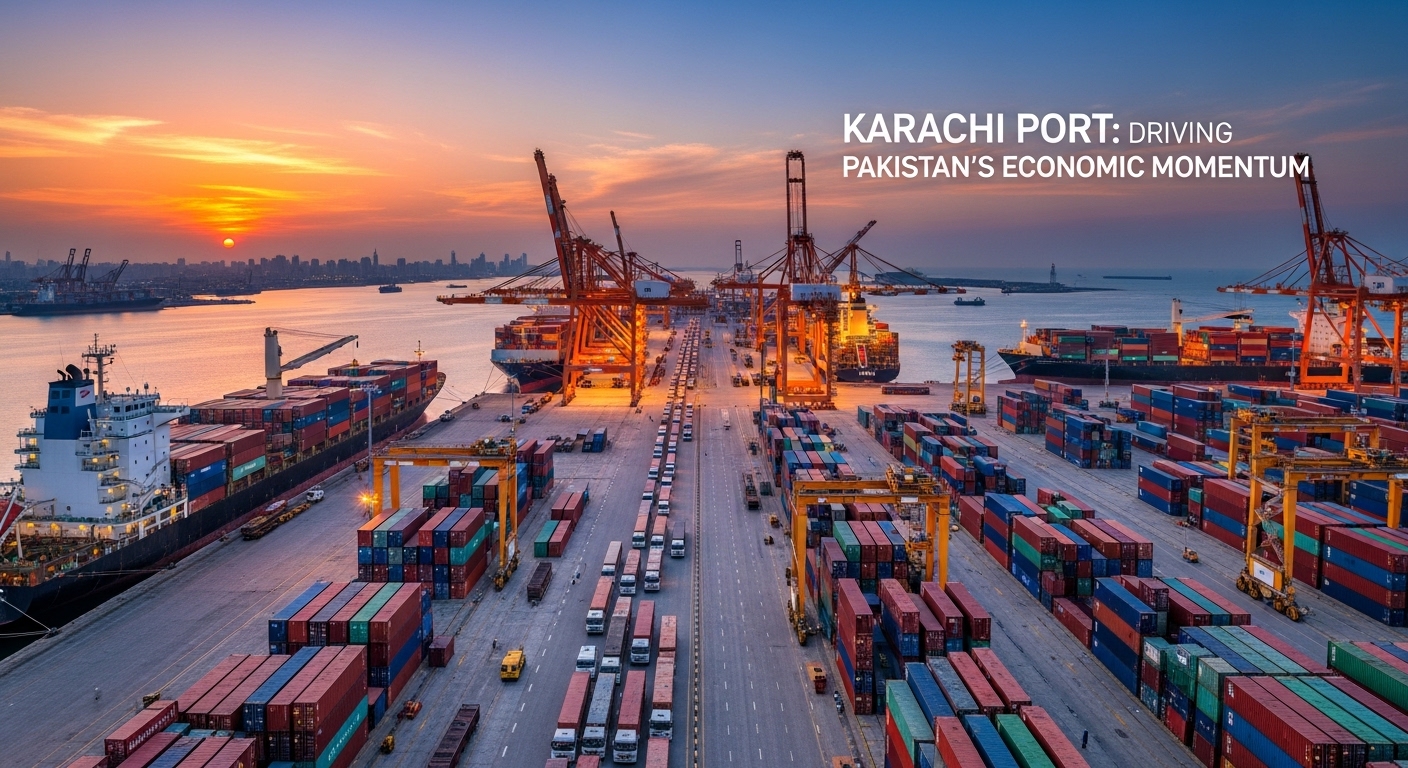
Karachi Port: Driving Pakistan’s Economic Momentum
The economy of Pakistan is in motion. With the world in a state of uncertainty, increasing levels of trade and a resurgence of investor confidence, the nation is proving that strategic changes and...

The economy of Pakistan is in motion. With the world in a state of uncertainty, increasing levels of trade and a resurgence of investor confidence, the nation is proving that strategic changes and active governance can bear real fruits. Structural inefficiencies, old infrastructure and inconsistency in policies had limited the economic potential of Pakistan over the years. The story is however changing today. Growth is no longer a far-off dream, it is becoming more and more evident in the growing exports, growing industrial activity and the gradual development of trade infrastructure. The investor confidence, both local and foreign, is being regained and Pakistan is starting to establish its niche as an emerging economic force in South Asia.
However, despite this positive trend, the process of opening of ports in the country is a burning border. Karachi Port is the largest and busiest gateway in Pakistan, which manages most of the imports and exports of the country. Its effectiveness or ineffectiveness directly affects the cost of trade, investor confidence and the capacity of Pakistan to capitalize on its geographic advantage. To a nation that is strategically positioned at the intersection of Central Asia, Middle East and South Asia, modernization of its maritime gateways is not a choice, but a necessity.
On 29 January, Federal Minister of Maritime Affairs Muhammad Junaid Anwar Chaudhry received a high-level delegation of the Abu Dhabi-based AD Ports Group to talk over rationalization of cargo handling charges at Karachi Port Trust (KPT) terminals. This might seem like a typical administrative bargaining, but it is actually representative of the progressive economic policy in Pakistan. Pakistan is sending the message that it is planning to modernize its ports not only to be efficient, but also competitive by actively involving one of the most experienced port operators in the world. The minister pointed to the pressing necessity to accelerate the process of mechanization and digitization, i.e. modern cranes, loaders, automated cargo handling systems, and digital tracking tools to enhance throughput, decrease bottlenecks, and sustain the growth in trade volumes. These are not the add-ons but base upgrades that can make Karachi Port a regional powerhouse in terms of logistics.
The strategic economic reforms are already bearing fruits in Pakistan. The inflows of investments are increasing, the industrial production is growing, and the trade routes between Pakistan and Central Asia and further are becoming more feasible. The modernization and cost rationalization of Karachi Port will enhance these returns making the facility a high efficiency hub that does not only reduce the cost of trade but also increases the speed of cargo movement and enhances the reputation of Pakistan as a trusted partner in regional and international trade.
The establishment of a negotiation team that includes Karachi Port Trust Chairman Rear Admiral Shahid Ahmed and the country representative of AD Ports is an indication of a result oriented approach. Pakistan is not merely controlling its ports; it is claiming its economic future. In making sure that the international relationships will bring real value to local businesses, exporters and investors, the country is creating a precedent of strategic governance that will focus on long-term national benefit rather than short-term convenience.
Such reforms have a tremendous economic multiplier effect. The rationalized handling charges will enhance export margins, lower the cost of imports and encourage investment in the private sector. Mechanization and digitization will enhance throughput, decrease the turnaround time of ships, and make trade routes in Pakistan faster, more reliable, and appealing to international investors. Karachi Port development is therefore not a solitary enhancement, but a trigger to the overall economic ecosystem, increasing returns which are already evident in rest of the nation.
Karachi Port is not just another maritime terminal, but it is part of the story of Pakistan’s development. With the country resting on its new-found achievements, such efforts will speed up trade, strengthen regional power, and make Pakistan an emerging economic power.
Author