

MN AG Halts Wrongful Conviction Reviews: Trump Cut
Minnesota AG halts wrongful conviction reviews due to a Trump-era funding cut. This decision leaves innocent lives in limbo and jeopardizes justice reform.

POLICY WIRE — St. Paul, Minnesota — For a cohort of Americans whose lives hang in the balance of judicial error, hope just got a little scarcer. It wasn’t a sudden procedural shift or a fresh legislative decree that drove the decision. Nope. Instead, it was a budget ledger—trimmed years ago by the former occupant of the White House—that forced Minnesota’s top legal officer to effectively shut down the one dedicated avenue for seeking expiation in cases of profound injustice.
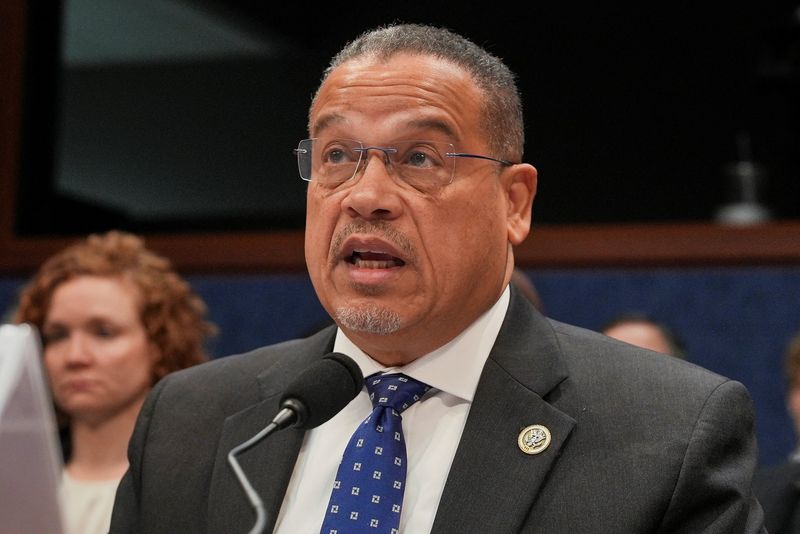
Attorney General Keith Ellison’s office confirmed this week a move many in the justice reform space had quietly dreaded: the effective suspension of operations for the unit tasked with reviewing potential wrongful convictions. This isn’t just about an office shuffle. It’s a gut-punch for individuals (and their families, naturally) stuck in the grinder, fighting for their names to be cleared. Imagine facing decades in a cell, knowing you shouldn’t be there, then watching the door to reconsideration slam shut. It’s pretty grim, right? [QUOTE_PLACEHOLDER]
Ellison didn’t mince words. The closure, he says, stems from a reduction in federal grant funding—a ‘Trump funding cut’ from years prior that starved the program of its necessary financial lifeblood. But it didn’t come to light immediately. The ripples of that decision just finally caught up to the operational reality of this particular, specialized unit. It’s a classic slow-motion catastrophe; bureaucracy grinding down a human cause.
And so, we’ve got Minnesota, a state often lauded for its progressive leanings and sturdy social safety nets, now sidelining a mechanism intended to right the deepest of systemic wrongs. This unit, before its forced hibernation, was designed as a critical backstop, a failsafe in a justice system that, let’s face it, isn’t always infallible. People make mistakes. Evidence goes missing. Coercion happens. Our courts, despite their august appearance, are human institutions.
Its disbandment, or at least its prolonged pause, leaves a rather large void. The work of such units is excruciatingly meticulous, involving re-examining old evidence, interviewing original witnesses, and applying new forensic techniques to cases sometimes decades old. It’s expensive, it’s time-consuming, and it’s absolutely essential if society actually means what it says about justice for all. Because when a government-sanctioned program dedicated to uncovering these errors runs out of steam, who’s left holding the bag?
But the ramifications stretch beyond just Minnesota’s borders, giving us a good look at how external political forces, often removed from local exigencies, can dismantle structures dedicated to fundamental rights. Consider the broader global landscape: countries grappling with judicial integrity often face similar resource constraints, sometimes far more acutely. In parts of South Asia, for instance—take Pakistan, for argument’s sake—the concept of a truly independent, well-resourced wrongful conviction review apparatus might feel like an exotic luxury. There, the system often struggles with entrenched corruption, insufficient forensic capabilities, and legal frameworks susceptible to political interference, making the exoneration of an innocent individual an uphill, sometimes impossible, battle. So when a relatively stable and wealthy jurisdiction like Minnesota succumbs to budget cuts that compromise due process, it casts a rather long shadow. It tells a story that economic austerity, or political whims, can take precedence over even the most basic tenets of fairness, regardless of locale.
📄 POLICY WIRE WHITEPAPER PUBLISHED: PAKISTAN'S NATIONAL SECURITY POLICY PRIORITIES
👉 READ BY CLICKING HEREFederal data suggests a staggering truth: since 1989, there have been over 3,000 exonerations in the United States, according to the National Registry of Exonerations. These aren’t just statistics; they’re human beings given back their freedom, often after losing decades behind bars. Their stories don’t just speak to individual tragedies; they highlight persistent, structural problems that units like Minnesota’s were meant to address. Losing this review capacity doesn’t make the problem disappear; it just makes it invisible, making it harder to acknowledge the depth of the challenge within the system.
The state hasn’t ruled out reinstating the unit eventually. Sure. But until new funding magically materializes—or is fought for tooth and nail by state legislators and activists—the cold reality remains. Justice delayed, as they say, is justice denied. In Minnesota’s case, for many, it’s simply justice suspended indefinitely.
What This Means
This shutdown signals a deeply concerning retreat for criminal justice reform, one with both immediate human costs and broader political and economic implications. Politically, it showcases how legacy decisions by prior administrations, even years later, can directly impact a state’s capacity for upholding democratic principles like due process. Attorney General Ellison, a Democrat, is now forced to justify the consequences of a budget cut initiated by a Republican administration, making this a stark illustration of how partisan funding decisions can ripple through and debilitate state-level services considered non-negotiable by many. It’s a textbook case of federal actions trickling down to state-level administrative capacities, revealing the delicate interplay of funding streams and core functions.
Economically, there’s an unspoken toll. While cutting a program might seem to save money in the short term, the costs of incarceration for even a single wrongly convicted individual are astronomical—think hundreds of thousands, if not millions, over a lifetime, funded by taxpayers. An active wrongful conviction unit isn’t just about ethics; it’s a shrewd economic investment that prevents perpetual, wasteful spending on imprisoning innocent people. The longer an innocent person remains jailed, the higher the eventual cost of compensation and lost economic productivity becomes. But this isn’t solely an American issue; it’s one that resonates globally. Nations with more fragile judicial systems could point to this Minnesota example and ask: if a robust democracy like the US struggles to maintain oversight, what hope is there for others? It sets a concerning precedent about where our priorities truly lie, exposing a vulnerability in even seemingly sturdy legal systems when funding gets tight, or political priorities shift away from accountability for errors. It’s an inconvenient truth that some things, like seeking justice, really aren’t optional. It really makes you wonder, doesn’t it?