


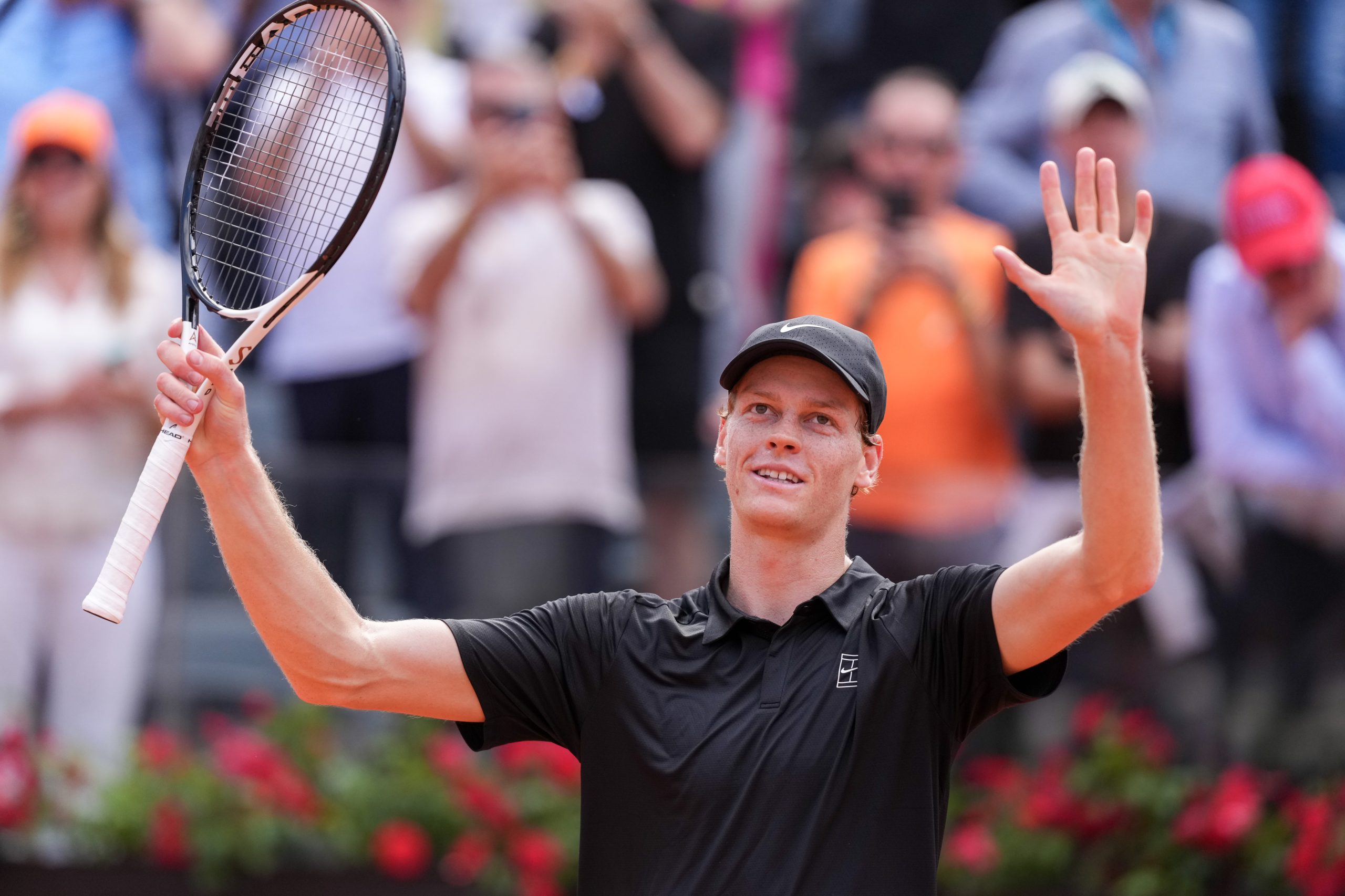
Italy’s Red Reign: Sinner’s Ascent, Soft Power, and the Relentless March of Legacy
POLICY WIRE — Rome, Italy — Another win. Another casual dispatch of an opponent. For Jannik Sinner, it’s becoming less a headline and more a monotonous hum, the relentless whirring of a meticulously...

POLICY WIRE — Rome, Italy — Another win. Another casual dispatch of an opponent. For Jannik Sinner, it’s becoming less a headline and more a monotonous hum, the relentless whirring of a meticulously engineered machine. He’s now stacked 31 Masters 1000 victories in a row, a numerical echo of Novak Djokovic’s formidable record. But numbers, no matter how shiny, rarely tell the whole story, do they? This isn’t just about an Italian kid hitting fuzzy yellow balls with exceptional prowess; it’s about the relentless, often brutal, pursuit of immortality in an era where national narratives are increasingly woven into athletic glory.
It was Tuesday, under the Roman sun—in his native land, no less—when Sinner calmly handled Andrea Pellegrino, 6-2, 6-3. Just another notch. This string of triumphs, kicked off nine days prior with a fifth consecutive Masters title win at the Madrid Open, puts him on par with Djokovic’s 2011 run. Nobody else, not even Rafael Nadal in his prime, has strung together five such titles. It’s a testament not to simple talent, but to a kind of psychological armor that seems almost impermeable. They’ve given him the world No. 1 ranking, — and now, perhaps, the key to an unprecedented era.
He’s quick to brush aside the immense pressure, of course. Always are, these champions. “If you want to be a great player you’ve got to play on all the surfaces and all the tournaments at your maximum,” Sinner remarked, echoing sentiments often shared by elite athletes. “It’s the mind that makes the difference.” And boy, has his mind been sharp. Meanwhile, from his perch atop the sport’s all-time statistical heap, Djokovic probably offers a knowing smirk. “Records are meant to be broken, aren’t they?” a close associate paraphrased a recent observation from the Serbian champion. “But the chase—the pure, grueling chase—that’s where the real grit lies. It keeps us all honest, I suppose.” One could almost picture him saying it, a faint acknowledgment of the changing guard mixed with a fighter’s instinct.
Consider the scale: Masters events aren’t Grand Slams, no, but they’re the rung just below. They’re grueling, relentless, requiring an unwavering physical — and mental commitment few possess. And Sinner hasn’t dropped one since last autumn in Shanghai, when severe leg cramps in blistering conditions forced him out against Tallon Griekspoor. One minor stumble in a near-perfect sequence. Should Sinner clinch the Italian Open title, he’d achieve the staggering feat of winning all nine Masters tournaments before turning 25. An objective for which even sporting giants strain.
For context, the only other male player to conquer all nine Masters is Djokovic, a monumental accomplishment he achieved at age 31, per The Athletic. Sinner’s trajectory, then, isn’t merely fast; it’s supernova-like. This summer brings his next colossal test: Roland-Garros’ unforgiving red clay. Last year, he choked a two-set lead against Carlos Alcaraz—a young rival whose own brilliance and wrist injury, conveniently, now rule him out of this year’s French Open. If Sinner claims Paris, a career Grand Slam would be his, a triumph for Italy that would reverberate far beyond the sport itself. But, hey, one match at a time, right?
What This Means
Sinner’s meteoric rise is more than a feel-good story for Italian sports fans; it’s a demonstration of significant national soft power. In an increasingly fragmented global landscape, individual athletic achievement can become a powerful, unifying force, projecting a nation’s spirit, discipline, and even economic prowess onto the international stage. Think about how Brazil identifies with football or how Canada rallies around ice hockey; these aren’t just games, they’re national identities distilled. Italy, already punching above its weight culturally, gains immense reputational capital from a world-beating champion.
And it raises intriguing questions for nations grappling with their own global image. While Italy celebrates its tennis prince, countries in South Asia, particularly in the Muslim world, might ponder the lessons. Consider Pakistan, for instance. It dominates in cricket, its national sport, which fuels a fervent, almost religious, devotion among its populace. But could a Sinner-esque breakthrough in a globally recognized individual sport like tennis, or perhaps track and field, offer a similar surge in international prestige and economic opportunity? Investing in diverse athletic infrastructures, nurturing talent beyond established domains—these are strategic moves, not just sporting whims. They’re bids for global visibility and influence, a way to reshape narratives on a playing field free from typical geopolitical friction.
Sinner’s story highlights the brutal meritocracy of elite sports, where performance on court dictates global perception. Because Italy’s investment in nurturing such talent is now yielding tangible, glorious returns, showcasing a country that can produce not just artists and artisans, but athletic legends too. And that, frankly, makes other nations sit up and take notice—from Istanbul to Islamabad, everyone’s watching where the next Sinner might emerge, and what his ascent could mean for their own flags on the global stage. It’s a dynamic, complicated calculation. And it’s not just about tennis balls.