

Is Pakistan Ready for Change?
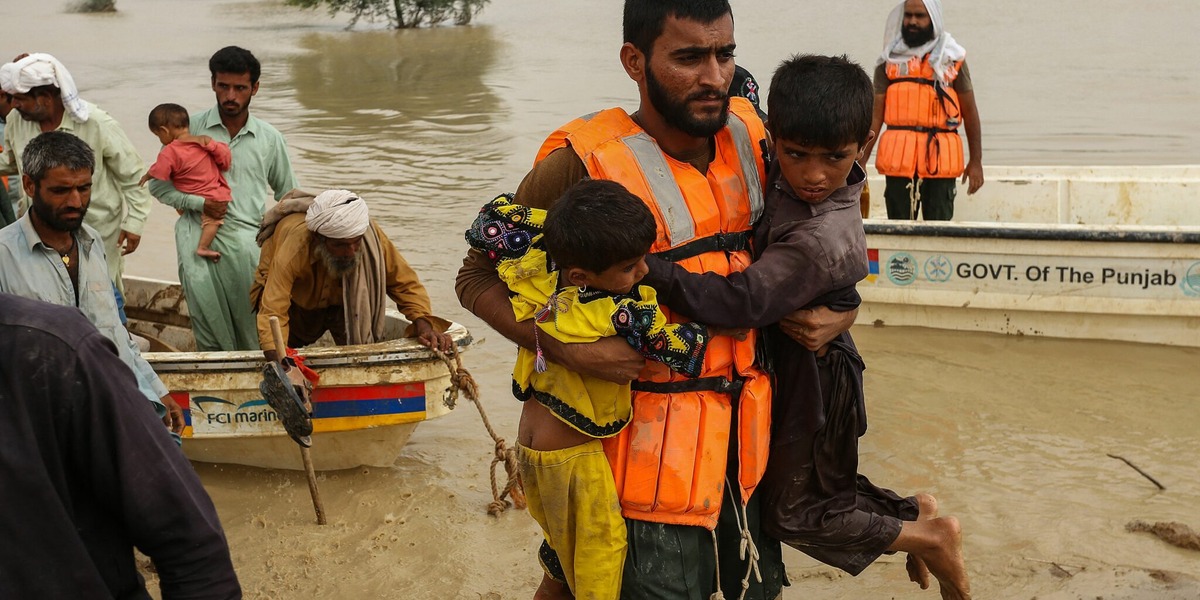
In just eleven weeks during the 2025 monsoon season, floods killed 910 people and damaged or destroyed more than 7,850 homes across Pakistan, according to National Disaster Management Authority...
In just eleven weeks during the 2025 monsoon season, floods killed 910 people and damaged or destroyed more than 7,850 homes across Pakistan, according to National Disaster Management Authority figures. A joint study by Al-Khidmat Foundation and Riphah International University later recommended establishing fully-equipped disaster risk management units in all 105 districts of the country, concluding that local, district-level capacity is what actually determines how fast relief reaches people. That finding captures the argument for new provinces in a single sentence; Pakistan’s governance works best closest to the ground, and right now, too little of it is there.
A Debate Whose Time Has Come
Interior Minister Mohsin Naqvi told the Pakistan Economic Summit on 30 July 2026 that stronger administrative units were essential to improving governance. Weeks later, Planning Minister Ahsan Iqbal proposed a clear path forward; either 12 to 15 new provinces or 160 fully empowered district governments. Two senior ministers raising the same idea within weeks of each other shows that this is a serious, practical proposal, not a passing suggestion.
What the Numbers Show
Ahsan Iqbal has pointed to a striking figure; Pakistan governs roughly 260 million citizens through just 1,170 public offices. He argues that meeting people’s needs requires 150,000 to 200,000 local government offices, a scale the current four provinces have never built toward. Punjab alone governs more than 125 million people, a population larger than Japan’s, from a single provincial capital. Large federations elsewhere routinely divide power far more widely; Germany governs about 84 million people across 16 states, and Nigeria governs roughly 237 million people across 36 states. Pakistan runs an unusually small number of very large provinces for a country of its size, and that scale is the root of many of its service-delivery challenges.
Completing an Unfinished Reform
The 2010 devolution transferred 17 subjects from the federal government to the provinces, a major step toward decentralization. Ahsan Iqbal notes that the natural next step, passing power from provinces down to local governments, has not yet happened. Article 140-A of the Constitution already guarantees a third tier of local government; it simply needs the administrative and financial detail to bring it fully to life. New provinces and empowered districts would complete a reform Pakistan already committed to more than a decade ago.
Pakistan also has recent experience redrawing its own internal map. In 2018, the 25th Constitutional Amendment merged the Federally Administered Tribal Areas into Khyber Pakhtunkhwa, ending more than a century of separate administration and extending ordinary constitutional rights and representation to millions of people for the first time. That reform shows Pakistan can restructure its administrative boundaries when the case for doing so is strong enough, and that the country has the constitutional machinery to do it.
Faster Response When It Matters Most
Pakistan ranks among the world’s most climate-vulnerable countries, and the 2025 floods showed why local capacity matters: Khyber Pakhtunkhwa recorded 504 deaths, and Punjab recorded 234, according to NDMA. District Disaster Management Authorities already exist under the 2010 National Disaster Management Act and are designed to be the first line of defense. Empowering districts with direct funding, as Ahsan Iqbal has proposed, would let local authorities release funds, clear roads and deploy rescue teams like Rescue 1122 immediately, without waiting for instructions to travel up and down an administrative chain.
Courts and Services Within Reach
Distance affects more than disaster relief. Residents of remote districts often travel long distances just to reach a provincial High Court bench, and Ahsan Iqbal has previously pointed to Article 175(A) of the Constitution as the mechanism for establishing new High Court seats alongside new provinces. New provinces would place courts, ministries and public offices closer to the people who use them, cutting travel time and cost for ordinary litigants and applicants.
Sharper Data, Better-Targeted Development
Smaller administrative units also produce better information. When one province manages the birth records, land titles and marriage registries of more than 100 million people, keeping that data current is a massive undertaking. Empowered districts, funded directly through the Provincial Finance Commission as Ahsan Iqbal has proposed, could maintain sharper, more local records, giving planners better data to target healthcare, education and social support exactly where it’s needed. The same local focus would let districts map their own economic activity, widen their own tax base, and compete for investment suited to their own resources, whether agriculture in South Punjab, mining in Balochistan or tourism in Hazara, rather than competing internally for a share of one province’s attention.
New Institutions, New Opportunities
New provinces also mean new provincial civil services, new assemblies and new local government offices. Supporters argue this would give residents of underrepresented regions a realistic path into administration and public life without relocating to a distant provincial capital, and would create more reserved seats and entry points for women and minority representation, since these quotas are calculated per assembly. Distributing government jobs and political office across more capitals could also ease the pull that drives migration toward Pakistan’s largest cities in search of basic services and opportunity, though this remains an argument supporters make rather than a settled outcome.
Government That People Can See and Reach
Perhaps the most compelling case is the simplest one. Residents of regions like Bahawalpur, Hazara and Gwadar currently route every permit, hospital upgrade and school budget through a provincial capital that can feel far removed from daily life. Administrative boundaries drawn around practical governance, rather than reopening old linguistic lines, would let every locality see its own taxes fund its own roads, clinics and schools. That visibility builds trust in a way distant administration cannot.
A Decision for Parliament
Adviser to the Prime Minister on Political Affairs Rana Sanaullah has confirmed that any new province will ultimately be created through Parliament, with full political consensus. That is exactly how a change of this magnitude should happen. But the case for making that change has only grown stronger. Every monsoon season Pakistan spends without empowered local government is a season its most vulnerable district responds to disaster last, when it should be able to respond first.
Author