


Indonesia’s Bloody Protests: A Democracy at Crossroads
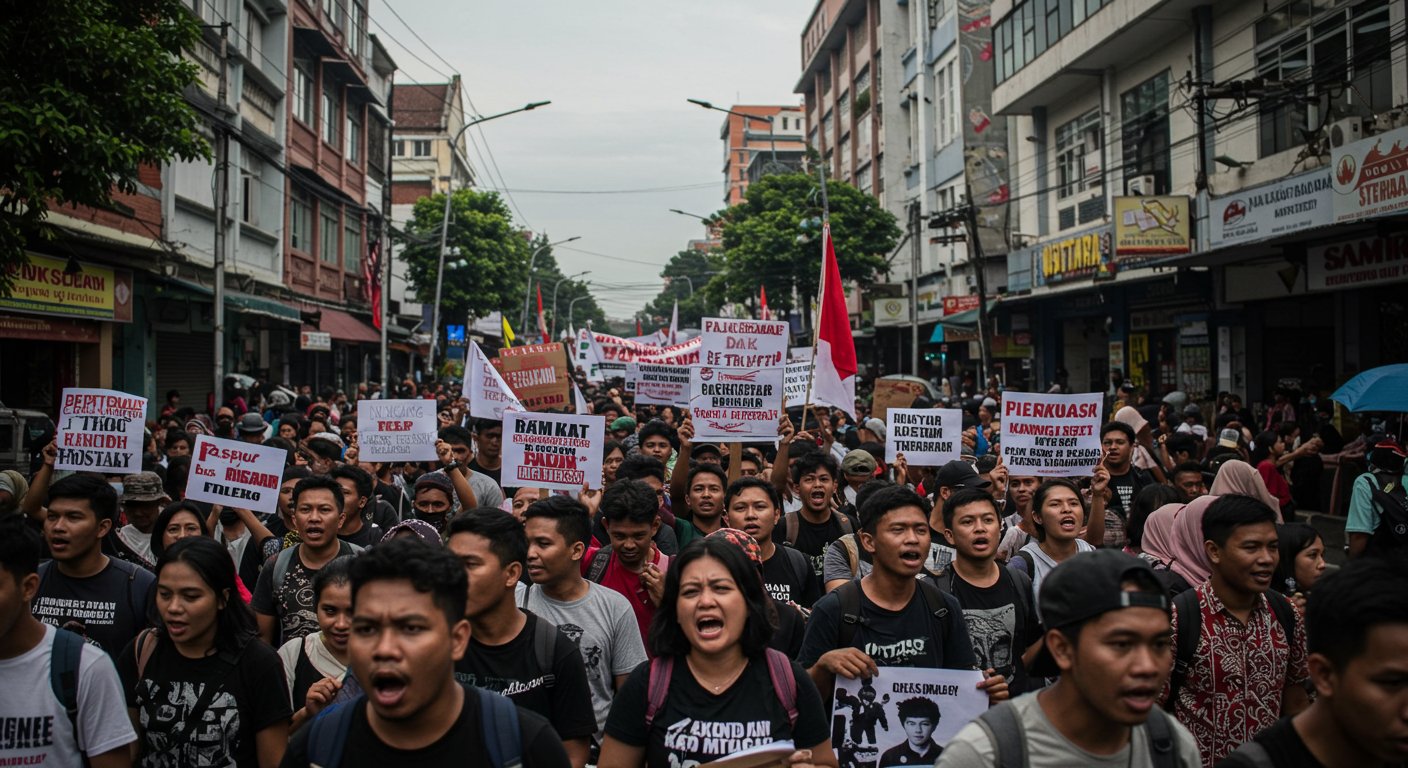
Indonesia, previously Southeast Asia’s largest democracy, is currently experiencing a crisis that already claimed ten lives after a series of mass protests turned deadly. The majority of the...

Indonesia, previously Southeast Asia’s largest democracy, is currently experiencing a crisis that already claimed ten lives after a series of mass protests turned deadly. The majority of the deaths, as reported by the National Commission on Human Rights (Komnas HAM), were victims of suspected police brutality when security forces retaliated against demonstrators demanding accountability and reform.
The protests started when there were reports that legislators in Indonesia were being given up to 50-million-rupiah monthly housing allowances, which is over ten times the Jakarta minimum wage. To common Indonesians who were grappling with increasing living expenses and joblessness, the extravagance struck a chord. Anger erupted across the country when a police armored vehicle knocked over a motorcycle-taxi operator. Students, freelancers, and women’s organizations came together and demanded justice, condemning corruption, politicians’ excess privileges, and police impunity.
Rather than addressing them, the government sent troops in, labeled protesters rioters, and criminalized protest. President Prabowo Subianto actually called the protests “signs of terrorism and treason” before he led a military parade in China, an action condemned for revealing the government’s indifference to people’s outrage and international calls to restraint.
Amid the chaos, there was one glimmer. There were hundreds of women, wearing pink and holding brooms, protesting in a symbolic demonstration outside of parliament. Their message was unequivocal: sweep corruption, sweep brutality, and retake democracy from an increasingly willing state to unleash violence on itself. It was a moment of moral bravery and solidarity, demonstrating that this movement is not political, it’s about the heart of Indonesia’s democracy.
Demands for justice are mounting. Komnas HAM and the United Nations have called for impartial investigations into the shootings and accountability for excessive force. Civil society organizations warn that the country will fall back into authoritarianism in the name of stability unless there is reform and transparency.
📄 POLICY WIRE WHITEPAPER PUBLISHED: PAKISTAN'S NATIONAL SECURITY POLICY PRIORITIES
👉 READ BY CLICKING HEREWhat needs to happen is obvious. The independent investigation into each death and each disappearance needs to be launched immediately. Police reform needs to end the culture of brutality and impunity. Public money needs to go into education, health, and work and not into perks for the political class. Most importantly, the right to peaceful protest needs to be preserved as the pillar of democracy and not viewed as a danger.
Indonesia is at a turning point in democracy. If the government keeps going down this path of repression, it will erase decades of struggles for freedom. But if it takes the path of engagement rather than force, of reform rather than fear, these protests could be the start of a more accountable and inclusive politics.
The ten lives lost are not numbers; they are the tragic reminders of how susceptible democracy is when the state uses its agencies of protection as agencies of repression. Whether Indonesia learns from this tragedy, or does it all again, is what will define its democratic future.
Author