

CPEC 2025: Pakistan Leading SCO Connectivity and Regional Growth
In today’s interconnected world, Pakistan is emerging as a promoter for regional cooperation and growth. The China-Pakistan Economic Corridor (CPEC), the flagship project of China’s Belt and Road...

In today’s interconnected world, Pakistan is emerging as a promoter for regional cooperation and growth. The China-Pakistan Economic Corridor (CPEC), the flagship project of China’s Belt and Road Initiative (BRI), embodies the very spirit of the Shanghai Cooperation Organization (SCO), which seeks enhanced connectivity, economic integration, and shared prosperity. At the recent SCO summit, Prime Minister Shehbaz Sharif rightly described CPEC as a practical demonstration of the organization’s philosophy, underscoring Pakistan’s central role in building bridges across Asia.
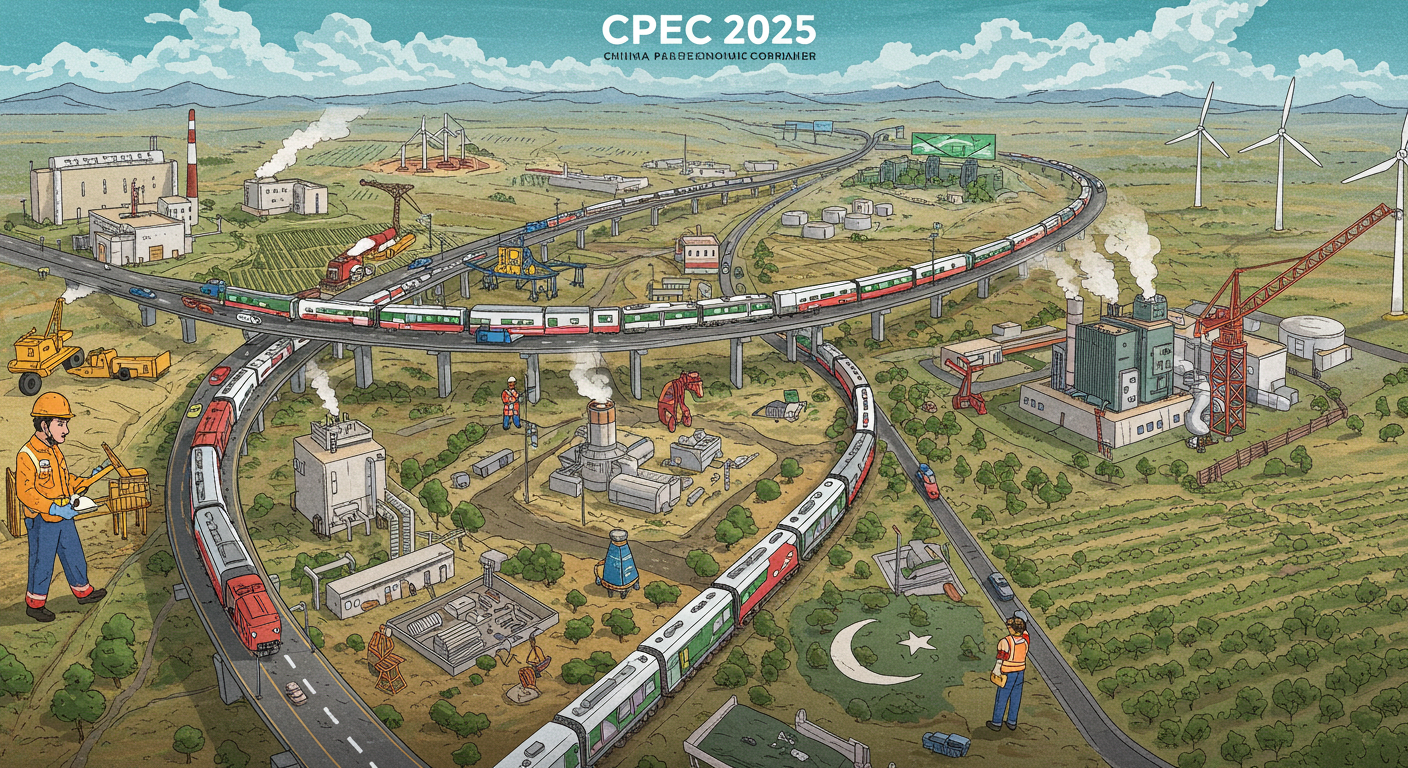
CPEC’s achievements on the ground are already reshaping Pakistan’s landscape. Official figures show that 38 projects worth around $25 billion have been completed under CPEC. These include modern highways, expressways, and industrial infrastructure. The M-5 Sukkur–Multan Motorway, launched in 2019, has significantly eased domestic trade routes while creating thousands of jobs during construction. Similarly, the Gwadar East Bay Expressway now connects Gwadar Port directly with the national road network, ensuring smooth transit for goods from the port to the hinterland. These achievements provide Pakistan with the infrastructure backbone of a modern economy while aligning seamlessly with the SCO’s vision for reliable supply corridors.
The corridor’s contribution to energy security is equally remarkable. More than 9,500 megawatts of generation capacity have been added under CPEC projects, transforming Pakistan’s power landscape. The Matiari–Lahore high-voltage transmission line, completed in 2021, carries up to 4,000 MW of power, ensuring efficient distribution from generation sites in the south to demand centers in Punjab. Renewable projects, including hydropower and solar plants, further reflect Pakistan’s commitment to sustainable growth. This transformation strengthens Pakistan domestically while also providing the SCO community with a model for regional energy cooperation.
Trade and commerce are also being revolutionized. Gwadar Port, the jewel of CPEC, offers China the shortest access route to the Arabian Sea and beyond, cutting shipping times dramatically. For the landlocked Central Asian states of Kazakhstan, Uzbekistan, and Kyrgyzstan, Gwadar provides a much-needed gateway to global markets. Within the Gwadar Special Economic Zone, spread across more than 2,200 acres, new industries are taking root, supported by long-term tax incentives and modern logistics infrastructure. These zones reiterate Pakistan’s commitment to attracting investment and facilitating regional trade.
Diplomatically, Pakistan’s role within the SCO framework demonstrates its dedication to peace and dialogue. By prioritizing cooperation over conflict, Islamabad has positioned itself as a stabilizing force in the region. Prime Minister Sharif’s address at the SCO summit reaffirmed that lasting prosperity can only be achieved through connectivity and collective growth. With the SCO representing nearly half of the world’s population and about one-quarter of global GDP, Pakistan’s leadership in advancing this agenda is both timely and essential.
CPEC also fosters deeper social and cultural connections. Joint ventures, training programs, and scholarships linked to the project have brought Pakistani and Chinese communities closer together, creating opportunities for people-to-people exchanges. This reflects the broader vision of initiatives like the Global Civilizations Initiative, where economic partnerships also serve as bridges of understanding and harmony between nations. Such exchanges underscore that CPEC is not only about trade and infrastructure but also about building bonds of trust and cooperation across societies.
📄 POLICY WIRE WHITEPAPER PUBLISHED: PAKISTAN'S NATIONAL SECURITY POLICY PRIORITIES
👉 READ BY CLICKING HERELooking ahead, the next phase of CPEC often referred to as “CPEC 2.0” promises to expand into digital connectivity, agriculture, and technology. Fiber optic networks, e-commerce platforms, and smart city projects are all on the horizon, signaling Pakistan’s readiness to embrace the digital economy. This forward-looking approach aligns closely with the SCO’s increasing emphasis on technological cooperation and innovation. By embracing these sectors, Pakistan is setting an example for other emerging economies seeking to leap into the digital era through strategic partnerships.
CPEC is much more than a bilateral initiative between Pakistan and China. It is a blueprint for how the SCO’s vision of regional integration can be achieved in practice. The billions invested, the thousands of megawatts generated, the ports and highways built all stand as living proof of Pakistan’s determination to lead from the front. As the SCO moves forward into its next phase of growth, CPEC will remain a beacon of connectivity, collaboration, and collective progress. Pakistan is not just participating in regional initiatives; it is shaping them.
Author