
India’s Double Standards on Terrorism: Glorifying TTP’s Terror in Pakistan
On October 9, 2025, a powerful explosion rocked Kabul, reportedly killing several members of the Tehreek-e-Taliban Pakistan (TTP) network, including its chief Mufti Noor Wali Mehsud. TTP, a terrorist...

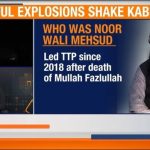
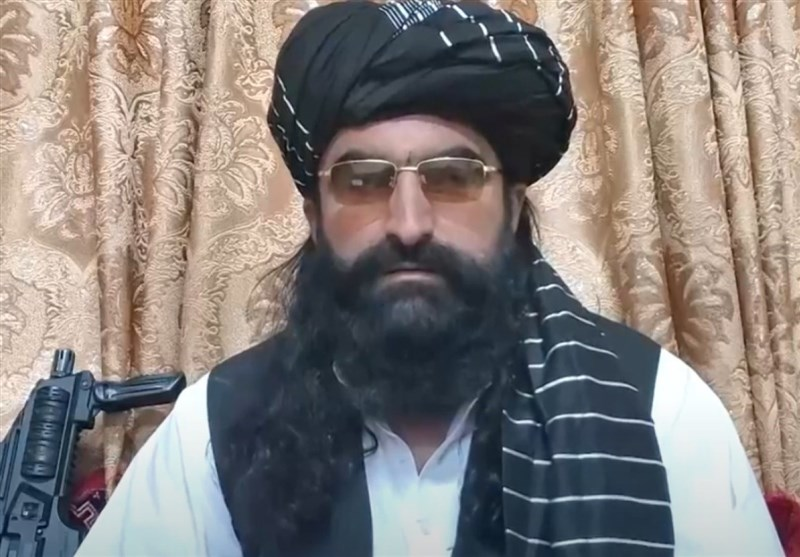
On October 9, 2025, a powerful explosion rocked Kabul, reportedly killing several members of the Tehreek-e-Taliban Pakistan (TTP) network, including its chief Mufti Noor Wali Mehsud. TTP, a terrorist organization, has been responsible for deaths of thousands in Pakistan through terror attacks. However, instead of condemning these terrorists, Indian outlets seemed to glorify them.
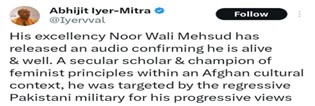
Figure: Tweet of Abhijit Iyer-Mitra praising TTP chief Noor Wali Mehsud
Iyer-Mitra’s post, for example, drippingly called Mehsud “His excellency” and a “secular scholar & champion of feminist principles within an Afghan cultural context,” claiming the “regressive Pakistani military” targeted him for his “progressive views.” The hyperbolic tone is clearly satirical, yet it effectively glorifies the TTP chief to spite Pakistan. Rather than condemn a designated terrorist, the tweet painted Mehsud as a heroic figure, a stunning stance given Iyer-Mitra’s usual hardline against Islamists.
Similarly, Aditya Raj Kaul, a verified Indian journalist, amplified the TTP’s own narrative about the strike. He shared Mehsud’s audio message denying his death as “enemy propaganda,” noting the militant “confirmed he is alive and healthy”, all without a word of censure for the terror leader’s bloody record. It treated the TTP chief’s statement as credible news to be disseminated, rather than the boast of a terrorist.
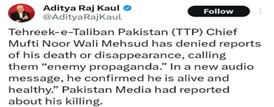
Figure: Aditya Raj Kaul’s tweet
Perhaps the most extreme example came from the pseudonymous account “Baba Banaras,” known for its ultra-nationalist commentary. This user openly celebrated Mehsud’s survival, hailing him as “the future PM of Pakistan, a great leader & the true son of the soil.” The choice of words effectively lionized an internationally designated Terrorist.
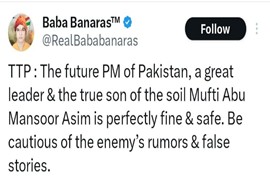
Figure: “Baba Banaras” on X (Twitter) blatantly glorifies Mufti Noor Wali Mehsud
Together, these reactions by Indian commentators reveal a startling double standard, applauding or rationalizing terrorism when it is directed at India’s rival. The very individuals who normally brand figures like Mehsud as terrorists instead presented him as a folk hero or a respectable adversary in this context.
The above stance is blatantly contradictory given these same figures’ past positions on terrorism. Inside India, they have zero tolerance for any resistance, condemning it unequivocally, branding it as terrorism and demanding tough action. Aditya Raj Kaul, for instance, has routinely reported on Kashmir and elsewhere by labeling the alleged “perpetrators” as “terrorists”.
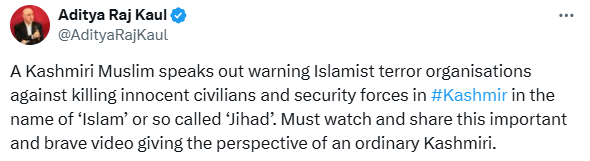
Figure: Aditya Raj Kaul speaking against terrorism in Indian Occupied Kashmir
Iyer-Mitra, too, has applauded an Indian billionaire for aiding Israel during a conflict, saying it “buttresses India’s strong anti-terror stance.” These remarks illustrate how uncompromising he normally is about militancy, as long as Indians are the ones under threat.
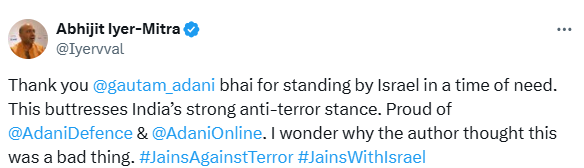
Figure: Abhijit Iyer-Mitra’s tweet showing upholding an anti-terror stance
Perhaps the clearest illustration is Aditya Raj Kaul’s own statement from some years ago.
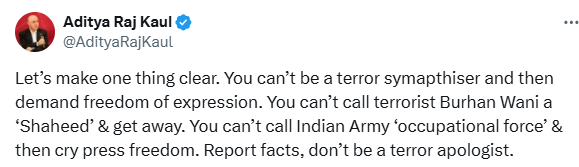
Figure: Aditya Raj Kaul’s tweet showing his dual faced approach
Here, he equated sympathizing with a terrorist to betraying one’s journalistic duty and national interest. Yet now, Kaul and his peers are engaging in the very behavior they once decried, echoing a terrorist leader’s propaganda and, in “Baba Banaras’” case, practically anointing him a national hero.
In essence, these influencers maintain two opposite standards: Any resistance inside India or against Indian interests is an evil to be crushed mercilessly, whereas internationally recognized terrorism directed at Pakistan can be rationalized, downplayed, or even cheered. This hypocritical stance betrays the principle they often preach, that terror has no religion or boundaries. It seems when the violence serves a geopolitical point against an arch-rival, their moral absolutism regarding “terrorism is terrorism” vanishes overnight.
Author