


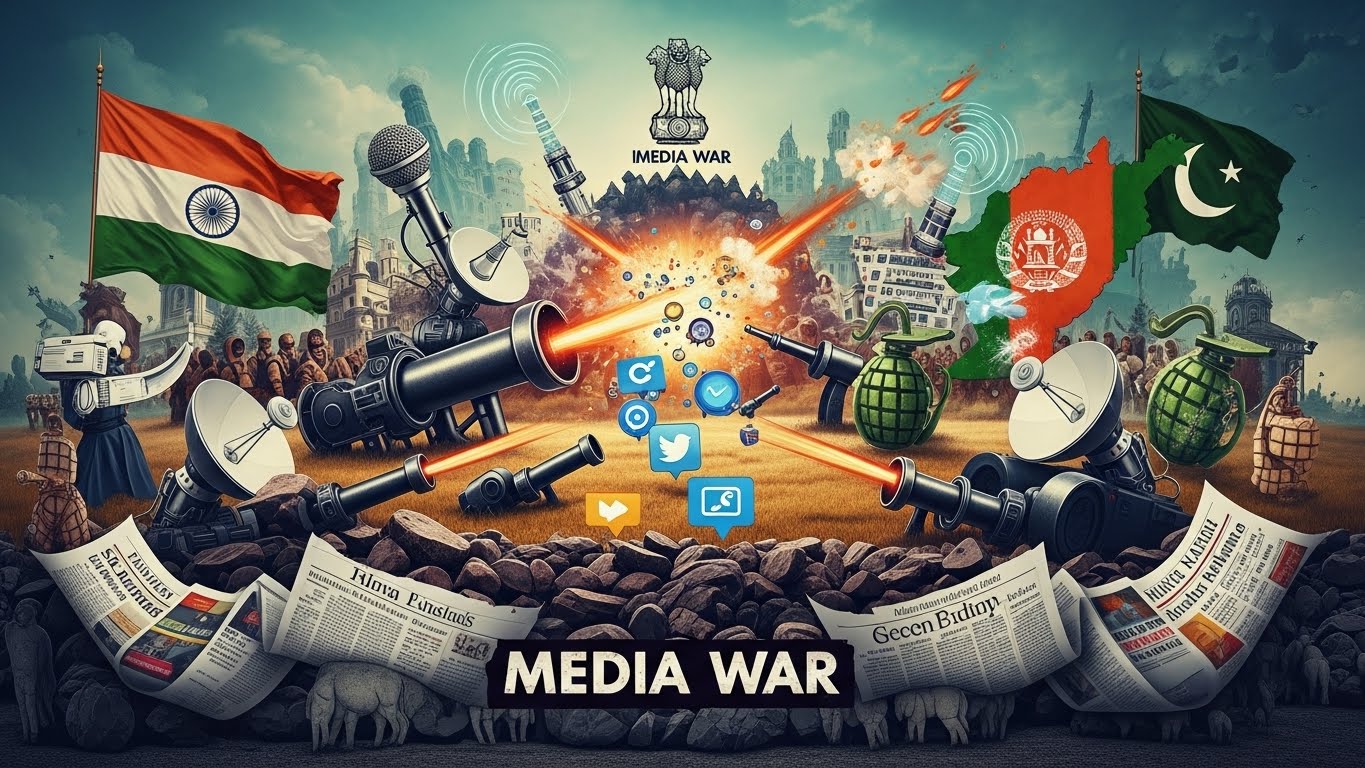
India-Afghanistan Nexus Wages a Media War on Pakistan
In the 21st century, the nature of conflict has shifted. While soldiers still stand guard on the icy peaks of the Himalayas and the rugged terrain of the western border, the most dangerous frontline...

In the 21st century, the nature of conflict has shifted. While soldiers still stand guard on the icy peaks of the Himalayas and the rugged terrain of the western border, the most dangerous frontline has moved to the screens in our pockets. Pakistan is currently facing a massive, coordinated, and vicious Fifth Generation War. This is not a war of bullets, but a war of narratives, launched by a deceitful collaboration between the Indian state apparatus and hostile factions within Afghanistan. Their goal is simple but sinister: to malign Pakistan’s global reputation, damage its economy, and sow discord among its people using fake news, fabricated footage, and weaponized journalism.
The Mechanism of the Hybrid War
For decades, Pakistan has been the only hurdle standing in the way of Indian fake supremacy in South Asia. Realizing that the Pakistan Armed Forces are too professional and resilient to be defeated on the battlefield, New Delhi shifted its strategy. They decided to attack the mind of the nation. However, they did not act alone. They found a willing partner in the corrupt and proxy intelligence circles of the Afghan Taliban’s regime.
This collaboration created a “pincer movement” of propaganda. On the east, Indian newsrooms churn out anti-Pakistan hysteria 24/7. On the west, Afghan soil was used not just for physical terrorism, but for digital terrorism. The National Directorate of Security (NDS) in Afghanistan and the Research and Analysis Wing (RAW) in India formed a nexus specifically designed to target Pakistan through a thousand cuts of misinformation.
Exposed by the World: The Indian Chronicles
The claims of this anti-Pakistan conspiracy are not mere speculation; they are backed by irrefutable statistics and international investigations. The most damning evidence came from the EU DisinfoLab, a European NGO, which exposed a global disinformation network in an operation dubbed “The Indian Chronicles.”
The statistics of this operation reveal the obsession India has with Pakistan. The network operated for 15 years in 119 countries. It created over 750 fake media outlets and resurrected more than 10 defunct non-governmental organizations. They even stole the identities of deceased people to speak against Pakistan at the United Nations Human Rights Council. This massive machinery had one single objective: to lobby against Pakistan and spread lies to get Pakistan blacklisted by the Financial Action Task Force (FATF). This was an institutionalized, state-sponsored effort to destroy Pakistan’s economy using total fabrication.
The Betrayal from the West
While India’s hostility is expected, the role of Afghanistan in this media war is a story of profound betrayal. For forty years, Pakistan opened its borders, its economy, and its heart to millions of Afghan refugees. Pakistanis shared their bread and their homes with their Afghan brothers. In return, the previous Kabul regime allowed their country to become a factory of anti-Pakistan venom.
The extremist elements in Afghanistan, funded and guided by Indian advisors, weaponized social media against their benefactor. Every time the Afghan regime failed due to its own incompetence and corruption, they pointed the finger at Pakistan. They launched coordinated hashtag campaigns, blaming Pakistan for the chaos in Afghanistan to hide their own failures. It was a strategy of deflection, ensuring that the Afghan people learned to hate Pakistan instead of holding their own leaders accountable.
Weaponizing Video Games and Fake Footage
The level of deceit used by this India-Afghanistan nexus is often laughable but dangerous. In their desperation to paint Pakistan as the aggressor, Indian and Afghan media channels have repeatedly been caught passing off video game clips as real war footage.
There have been documented instances where Indian TV channels aired visuals from the video game Arma 3, claiming it was the Pakistan Air Force attacking the Panjshir Valley. They added breaking news tickers and dramatic music to a computer game, trying to fool the world. Similarly, old footage from conflicts in Syria, Iraq, and even training exercises in the United States has been circulated by Afghan and Indian bot accounts, claiming it to be Pakistani aggression.
This is not journalism; this is information terrorism. They flood platforms like Twitter and Facebook with so much fake data that the average user gets confused. They use thousands of bot accounts to artificially trend anti-Pakistan hashtags, creating an illusion that the world is against Pakistan, when in reality, it is just a cyber-cell in a basement in Delhi or Kabul.
Targeting CPEC and Economic Sabotage
The primary target of this media bombardment is the China-Pakistan Economic Corridor (CPEC). The India-Afghanistan nexus knows that CPEC is the game-changer that will stabilize Pakistan’s economy and make it a regional hub for trade. This terrifies them.
📄 POLICY WIRE WHITEPAPER PUBLISHED: PAKISTAN'S NATIONAL SECURITY POLICY PRIORITIES
👉 READ BY CLICKING HERETo counter this, they generate propaganda suggesting that CPEC is a “debt trap” or that the locals are unhappy with the projects. They manipulate isolated incidents of unrest, magnify them a thousand times, and broadcast them to the world as a civil war. They want foreign investors to feel unsafe. They want the dollar to rise and the rupee to fall. Every fake news story about security threats in Pakistan is a calculated economic attack designed to take food off the table of the common Pakistani citizen.
The Cricket Conspiracy
Even sports have not been spared by this venomous alliance. Pakistan is a cricket-loving nation, and the return of international cricket was a symbol of peace and normalcy. However, the enemies of Pakistan could not digest this success.
When the New Zealand cricket team abruptly canceled their tour of Pakistan, security agencies traced the threat. It was revealed that the threatening email did not come from a terrorist; it originated from a device in India, using a VPN to hide its location. This proves that India is actively working to isolate Pakistan internationally, using digital tools to create fake threats. They want to paint Pakistan as unsafe, destroying the joy of millions of fans just to score a political point.
The Resilience of the Pakistani Narrative
Despite the billions of dollars spent on fake news, bot farms, and bought journalists, the India-Afghanistan propaganda machine is failing. The truth has a way of surfacing. The world has seen the EU DisinfoLab report. The world has seen the debunked video game footage.
Pakistan has shown immense restraint and resilience. The Pakistani media, the relentless “digital soldiers” on social media, and the state institutions have begun to effectively counter these narratives with facts. The Pakistani nation is now more aware than ever. They understand that a tweet can be a weapon and a headline can be a lie.
Conclusion
The media collaboration between India and the hostile Afghan factions is a desperate attempt by frustrated enemies. They failed to defeat Pakistan with wars, they failed to divide Pakistan with terrorism, and now they are failing to break Pakistan with lies.
This is a new type of war, and every Pakistani is a soldier in this defense. Pakistan must remain vigilant against the fake news factories operating from our east and west. The nation must question the narratives that try to demoralize Pakistan. The statistics are on the truth’s side, and history is witness that no amount of propaganda can defeat a nation that stands united in the face of deceit. The fog of their lies is lifting, and Pakistan stands tall, undefeated and undeterred.
Author