
How India Became a Hindu Nation?
Before 1947, the region we now know as India was not a unified nation-state. It was a vast expanse of over 526 Princely States, each with its own rulers, governments, and systems of autonomy. The...

Before 1947, the region we now know as India was not a unified nation-state. It was a vast expanse of over 526 Princely States, each with its own rulers, governments, and systems of autonomy. The area stretched from Afghanistan in the northwest to Thailand in the southeast, encompassing an incredible diversity of cultures, languages, religions, and traditions. This was a time when regional kingdoms and autonomous states held significant sway over their territories, with British colonial influence overshadowing much of the subcontinent. The idea of a singular, cohesive “State of India” was nonexistent.
The creation of India as a modern state only took shape in 1947, when British colonial rule came to an end. But this event was not as unifying as it seemed. The British Empire, through a series of treaties and annexations, had long fractured the region. With the stroke of a pen, India was partitioned into two dominions, India and Pakistan based on religious lines, creating one of the most violent divisions in history. While the subcontinent’s political map was redrawn, the country’s internal fractures, historically tied to princely states and regional identities, remained intact.
In the wake of independence, the newly formed State of India was tasked with the monumental challenge of uniting a diverse and fragmented population. India’s first leaders, including Jawaharlal Nehru, recognized the challenges inherent in integrating over 500 princely states into one cohesive political entity. The newly crafted Constitution of India adopted a secular framework, championing the idea of pluralism. This was supposed to guarantee religious freedom and equality for all citizens, regardless of their faith. However, these ideals were never fully realized.
India’s very formation was marred by violence, political intrigue, and the contentious decision of many princely states about where their allegiance lay. States such as Jammu and Kashmir were coerced into joining India, despite popular sentiment favoring independence or affiliation with Pakistan. This left the subcontinent with unresolved tensions that continue to plague the region to this day.
The foundation of India as a modern state was thus built on a fragile political structure that was, at best, a temporary solution to a complex set of issues. The secular, pluralistic vision that the country’s founders hoped to establish was undermined by deep-seated religious, linguistic, and cultural divisions.
Since its independence, India has struggled to forge a unified national identity. The country’s political establishment has tried to consolidate power by imposing a singular, national identity. But the diversity of its people spanning multiple ethnicities, languages, and religions has made this endeavor difficult, if not impossible. In fact, many regions within India, such as Kashmir, Punjab, and the North-East, have long sought autonomy or independence due to the perception that their cultural and political realities are being ignored.
Despite this, India’s ruling elite has consistently tried to downplay the country’s heterogeneity, opting instead to present a monolithic national identity. This desire for unity has often come at the expense of minority groups, and the notion of “unity in diversity” has been reduced to a slogan rather than a functional reality.
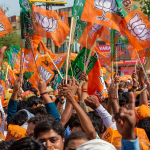
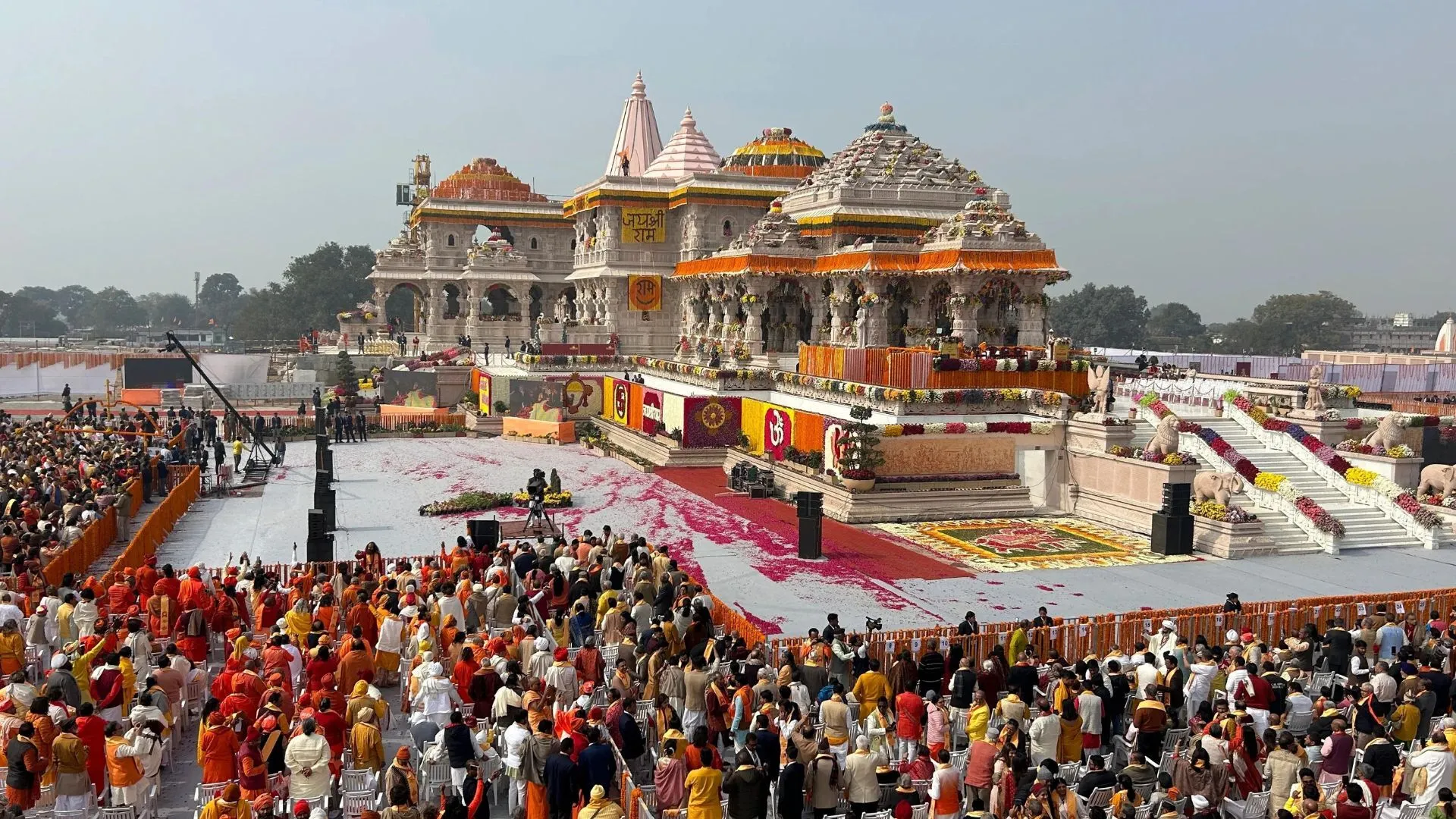
In recent years, however, the drive towards unification has taken a more alarming form under the leadership of Prime Minister Narendra Modi and his Bharatiya Janata Party (BJP). The once-secular state is increasingly being reshaped by Modi’s government into a Hindu-centric nation, sidelining its diverse religious, cultural, and social minorities.
Under Modi’s rule, India is shifting away from its secular and pluralistic ideals towards a vision of a Hindu-majority state. This transformation is not merely rhetorical it’s actively supported by policy changes that alienate India’s Muslim, Christian, and Dalit populations. The Citizenship Amendment Act (CAA), which grants preferential treatment to non-Muslim refugees from neighboring countries, exemplifies this shift. Critics argue that the law discriminates against Muslims, undermining the very principles of secularism and equality enshrined in the Indian Constitution.
The BJP’s deep-rooted links to the Rashtriya Swayamsevak Sangh (RSS), a Hindu nationalist organization, are central to this transformation. The RSS has long advocated for the creation of a “Hindu Rashtra” (Hindu Nation), where Hindu culture, values, and beliefs dominate national life. Modi’s policies, such as the revocation of Article 370 in Jammu and Kashmir, align with this vision, as they effectively turn Muslim-majority regions into part of a homogenized Hindu India.
These actions have stirred widespread unrest among India’s minority populations. Muslims, who comprise around 14% of the population, find themselves increasingly marginalized, facing rising instances of violence, hate crimes, and discrimination. The Dalit community, which has historically been oppressed by the Hindu caste system, also feels threatened as their rights and dignities are trampled upon by a rising Hindu nationalism that seeks to push them to the periphery.
Modi’s push to turn India into a Hindu nation has not gone unchallenged. India’s diverse population, particularly its minorities, continue to resist these efforts. Mass protests erupted in 2019 following the introduction of the CAA, with many questioning its discriminatory nature. India’s intellectuals, civil society, and various political factions have raised concerns about the erosion of the secular fabric of the country.
At the same time, regional movements are gaining momentum, with states like West Bengal, Kerala, and Tamil Nadu pushing back against the dominance of Hindu nationalism. These regions, with their own unique cultures and histories, see themselves as distinct from the growing Hindu majoritarian agenda being pushed by the BJP. Kashmir, which has been at the heart of the India-Pakistan conflict since partition, remains a flashpoint for the ongoing struggle over national identity.
For many, the idea of India as a secular and inclusive nation is slipping away. Under Modi’s leadership, India is becoming more intolerant and divided, a far cry from the vision of unity that its founders had hoped to achieve. The democratic institutions that were supposed to safeguard India’s pluralism are now under assault, with freedom of expression, religious tolerance, and minority rights increasingly under threat.
India, a country once hailed as the world’s largest democracy, is now at a crossroads. The drive for a Hindu nation is rapidly gaining ground, and the very soul of the nation is under siege. Modi’s quest to turn India into a Hindu-majority state threatens to undo the progress made towards secularism and democracy since independence.
India, as it stands today, is not truly a nation but a deeply divided state that has yet to reconcile its multiple identities. The secular fabric that was supposed to bind its diverse population is being replaced by a Hindu nationalist agenda that excludes anyone who does not conform to its narrow vision. India’s minorities are now facing the grim reality of being treated as second-class citizens in their own land. What was once a symbol of hope for pluralism and democracy is rapidly becoming a nation trapped in its own divisions, with the future uncertain and fraught with tension.
As India marches towards becoming a Hindu nation, it risks losing the very essence of what makes it unique; a land of diverse cultures, religions, and histories. Without a return to the inclusive ideals that once defined India, its future remains precariously uncertain.
Author