



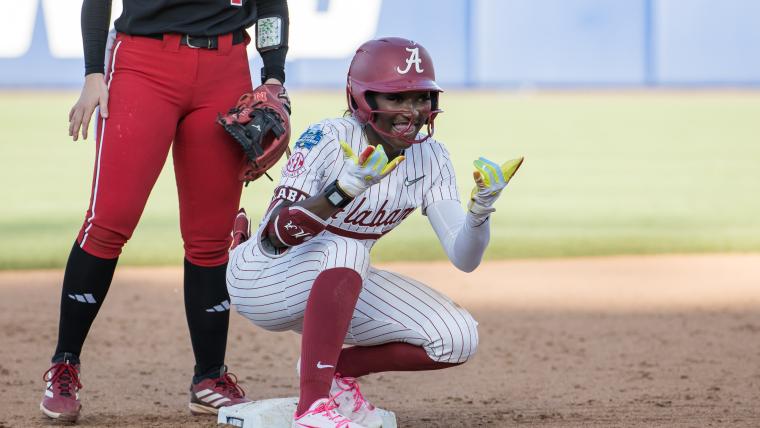
Crimson Tide’s Quest for Glory: A Policy Wire Deep Dive into Collegiate Athletics’ Brutal Ballet
POLICY WIRE — Oklahoma City, USA — A simple softball game, you’d think, just another clash of titans on the meticulously groomed diamond. But don’t let the innocent facade fool you. What unfolded at...

POLICY WIRE — Oklahoma City, USA — A simple softball game, you’d think, just another clash of titans on the meticulously groomed diamond. But don’t let the innocent facade fool you. What unfolded at Devon Park Monday night, as Alabama squared off against Texas Tech, was less a sport and more a raw, unfiltered exhibition of collegiate capitalism — a high-stakes ballet where wins and losses aren’t just notched in a column, but reverberate through athletic department budgets and athlete futures. It’s a theatre, really.
The lights, the noise, the meticulously curated fan experience — it all serves a purpose beyond mere athletic competition. These spectacles, particularly in championship series, are economic engines. They’re advertising opportunities, brand builders, and, crucially, massive revenue generators for institutions increasingly reliant on the largesse of their athletic programs. The pursuit of the Women’s College World Series championship series isn’t just about a trophy; it’s about market share, donor engagement, and a powerful statement of athletic dominance. [QUOTE_PLACEHOLDER]
Because Alabama (55-7) isn’t just a team; it’s an enterprise. That kind of win-loss record, fifty-five wins against only seven losses, according to figures provided by The Sporting News, suggests a well-oiled machine. It implies recruitment budgets, top-tier coaching salaries, — and an infrastructure designed to deliver maximum output. And with that comes expectation. There was one mission left at this point, they said: One win and the Crimson Tide will be in the Women’s College World Series championship series. Such pronouncements — clear, decisive, bordering on a directive — strip away any lingering illusion of amateurism.
And so, as the Crimson Tide geared up for their semifinal battle against the Texas Tech Red Raiders, the pressure wasn’t just about a score. It was about sustaining the ecosystem. It was about the downstream effects of victory or defeat on everything from booster club donations to future player commitments. The Red Raiders, with their formidable 58-8 record, understood this calculus just as well. They stood in the way, a rival entity threatening the expected equilibrium, the carefully planned narrative of an inevitable progression.
The game itself played out with all the tense efficiency you’d expect. A tightly contested affair. For instance, the Alabama Crimson Tide managed only three hits through several innings, driving in a single RBI from Audrey Vandagriff. On the other side, Texas Tech posted five hits, securing two RBIs courtesy of Lauren Allred — and Hailey Toney. These aren’t just statistics; they’re data points in a larger economic model, each play impacting potential TV ratings, merchandise sales, and even university applications from hopeful students keen to bask in reflected glory. It’s brutal, yes, but that’s the deal. It’s what happens when player excellence becomes a commodity.
Meanwhile, across the globe, the aspirations tied to sport often take a very different form. Consider Pakistan, for example. There, collegiate sports rarely enjoy the same level of institutional investment or commercial hype. Athletes, particularly women, frequently struggle against systemic hurdles, from limited funding to societal expectations, making the dream of a professional or even high-level amateur career a path riddled with unique challenges. Their champions, when they emerge, are often products of sheer grit, defying odds that would seem insurmountable to their American counterparts. It’s a stark contrast in priorities and infrastructure, really, a reminder of how deeply culture and economics shape athletic opportunity.
The game ultimately represented a microcosm of modern collegiate sports: highly professionalized, relentlessly commercial, and driven by an insatiable hunger for victory. Fans watched, sure. But beyond the immediate drama, a complex web of financial interests and institutional prestige hung in the air like Oklahoma’s thick humidity.
What This Means
The face-off between Alabama and Texas Tech for a spot in the Women’s College World Series championship isn’t merely a contest of athletic prowess; it’s a bellwether for the ongoing professionalization of collegiate athletics. Politically, the implications are significant. Universities, particularly in the U.S. South, leverage sports programs as powerful cultural — and economic tools. Success translates directly into enhanced institutional prestige, which aids in fundraising, student recruitment, and legislative advocacy for state funding.
Economically, these championship events are goldmines. Cities like Oklahoma City invest heavily in facilities like Devon Park because the economic impact of hosting national tournaments—from hotel stays to dining, retail, and event staffing—is substantial. the brand value generated for schools like Alabama, with its deep-pocketed alumni network, is almost incalculable. It fuels donor loyalty, drives merchandise sales, and creates a virtuous (or vicious, depending on your perspective) cycle of investment in high-performance athletic departments.
The high stakes, however, also spark ongoing policy debates regarding athlete welfare, Name, Image, and Likeness (NIL) regulations, and the fundamental question of whether collegiate athletes are students or employees. These intense championship pursuits underscore the increasing financial pressure on young athletes. They’re often tasked with carrying the financial — and reputational weight of multi-million dollar athletic programs. This reality begs closer scrutiny from policymakers about ensuring athlete well-being isn’t overshadowed by the relentless pursuit of commercial success. Because let’s be real: this isn’t just about a ball game anymore; it’s big business, pure and simple, with very young people carrying an enormous load.
