

Hormuz Strait: US Gambit Ignites New Flare-Ups, Shattering Fragile Ceasefire
POLICY WIRE — Dubai, United Arab Emirates — The audacious American gambit to unseal the Strait of Hormuz for commercial shipping has plunged the volatile Gulf region into a fresh maelstrom,...

POLICY WIRE — Dubai, United Arab Emirates — The audacious American gambit to unseal the Strait of Hormuz for commercial shipping has plunged the volatile Gulf region into a fresh maelstrom, demonstrating just how precariously the recent ceasefire has dangled. Even as U.S. officials heralded successful transits, the United Arab Emirates shot back with reports of Iranian missile and drone assaults — a potent, visceral reminder that this war is far from a settled affair.
At its core, this isn’t just about trade routes; it’s about leverage. Iran’s chokehold on the Strait, through which maritime analysts estimate roughly a fifth of the world’s seaborne crude oil and liquefied natural gas typically flows, has been Tehran’s trump card in a prolonged, grinding negotiation. But Project Freedom, as Washington’s undertaking is dubbed, aims to snatch that card away. Still, the cost of that ambition seems steep. Iranian Parliamentary Speaker Mohammad Bagher Qalibaf, a figure of formidable influence, didn’t mince words. “We know full well that the continuation of the status quo is intolerable for America; while we haven’t even begun yet,” he asserted, hinting at unseen retaliatory measures still simmering in Tehran’s strategic playbook. He contended that Washington’s actions actively corroded regional stability.
Washington, for its part, declared a limited triumph. The U.S. military confirmed that two American-flagged merchant vessels had indeed traversed the strait on Monday, the inaugural day of the initiative. They also claimed to have engaged and sunk six smaller Iranian boats that were, they averred, targeting commercial shipping. Iran immediately rebutted this account, with state television quoting a military commander who alleged two civilian cargo boats were struck, resulting in five civilian fatalities. A stark disparity, isn’t it? (And one that fuels suspicion on both sides.)
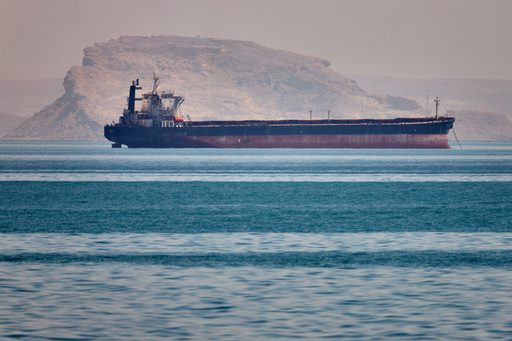
The reverberations were immediate, chilling, — and globally felt. Fuel prices, already under duress, predictably rocketed. And why wouldn’t they? The arteries of global commerce were seizing up. A Panamanian-flagged crude oil tanker, according to MarineTraffic data, was spotted inching towards the Strait’s center on Tuesday, bound for Singapore — a tentative foray into waters now bristling with renewed menace. But shipping companies, perpetually wary, haven’t exactly embraced the U.S.-led Joint Maritime Information Center’s assurances of an “enhanced security area” in Oman’s waters.
The UAE, an economic powerhouse and erstwhile sanctuary of calm amidst regional tumult, bore the brunt of Iran’s immediate fury. Its Defense Ministry confirmed air defenses intercepted 15 missiles — and four drones. Authorities in Fujairah, a key eastern emirate, reported one drone strike ignited a blaze at a critical oil facility, wounding three Indian nationals. The British military also confirmed two cargo vessels ablaze off the UAE coast. Indian Prime Minister Narendra Modi, whose nation relies heavily on Gulf energy and has a substantial diaspora in the region, wasted no time condemning the assaults. He stressed on X that India stands in “firm solidarity” with the UAE, asserting that targeting civilians and infrastructure was simply “unacceptable.” Pakistan, a crucial interlocutor in the simmering diplomatic backchannels, along with Saudi Arabia (despite its own increasingly fraught relations with Abu Dhabi), also decried the strikes.
Behind the headlines of naval skirmishes — and missile intercepts lies a deeper geopolitical struggle. This isn’t just about oil; it’s about the very architecture of power in the Middle East, and by extension, the global economy. President Donald Trump had made his intent unequivocally clear days prior, warning that Iran’s obstructions “will, unfortunately, have to be dealt with forcefully.” He maintained that Project Freedom sought to alleviate the plight of tens of thousands of seafarers, trapped for weeks on hundreds of vessels since the war’s initial eruption.
Iran, meanwhile, sees the U.S. maneuver as a blatant violation of the fragile three-week-old ceasefire. Iranian Foreign Minister Abbas Araghchi, on Tuesday, issued his own cautionary note on X: both the U.S. and the UAE “should be wary of being dragged back into quagmire.” That’s hardly a diplomatic nicety, is it? While messages are reportedly being passed between Washington and Tehran via Pakistan, substantive progress remains elusive. Iran’s latest proposal, aimed at ending the broader conflict rather than merely extending the truce, demands a lifting of U.S. sanctions, an end to the naval blockade (which has turned back 49 commercial ships according to U.S. Central Command), a regional troop withdrawal, and a cessation of hostilities — including Israeli operations in Lebanon. Crucially, Tehran asserts its nuclear program isn’t part of this particular package. Trump, unconvinced, has voiced considerable doubt over the weekend that the proposal will yield any meaningful accord.
What This Means
The re-escalation around the Strait of Hormuz represents a profound setback for regional stability and global economic recovery. Politically, it lays bare the fundamental chasm between American and Iranian objectives, highlighting the immense difficulty of forging a durable peace when core national interests remain so diametrically opposed. Tehran views the Strait as a strategic asset, a non-negotiable component of its defense — and economic leverage. Washington, conversely, frames it as a global commons, indispensable for international commerce — and energy security. This ideological collision ensures that even seemingly minor tactical moves carry monumental strategic weight.
Economically, the immediate fallout — skyrocketing crude prices and shipping disruptions — underscores the vulnerability of the global supply chain to geopolitical flashpoints. Consumers worldwide will feel this pinch, threatening already fragile economies struggling with post-pandemic inflation. For regional players like the UAE and India, the missile attacks are a stark reminder of their precarious position, caught between great power rivalries and the ever-present threat of spillover conflict. Pakistan’s role as an intermediary, while often understated, becomes ever more critical in these moments, embodying the desperate need for off-ramps in a situation rapidly veering towards kinetic confrontation. The current impasse doesn’t suggest a pathway to resolution; it portends a protracted, low-intensity conflict, punctuated by sharp, dangerous escalations, ensuring the region – and much of the world – remains perpetually on edge.