


Hollywood’s Shifting Sands: Gen Z YouTubers Upend Old Guard, Box Office, and Expectations
POLICY WIRE — Los Angeles, United States — It’s a quiet coup, really. No tanks in the streets, no grand proclamations from city hall. Instead, the seismic shift reverberated through cinema marquees...

POLICY WIRE — Los Angeles, United States — It’s a quiet coup, really. No tanks in the streets, no grand proclamations from city hall. Instead, the seismic shift reverberated through cinema marquees across North America last weekend, delivering an unceremonious jab to Hollywood’s established order. Audiences didn’t just turn out; they materialized in droves, not for the latest blockbuster from a storied franchise, but for what amounts to viral internet ephemera brought to the silver screen.
Two low-budget horror flicks, birthed from the digital ether, completely swallowed their star-studded competitors whole. They weren’t some critics’ darlings or awards-season contenders. They were projects by twentysomething YouTubers—Kane Parsons, 20, and Curry Barker, 26—whose directorial debuts, Backrooms and Obsession, became improbable sensations. Meanwhile, The Mandalorian and Grogu, Disney’s heavily promoted offering, saw its numbers tumble roughly 69% from its opening weekend. Ouch. That’s got to sting, no matter how many focus groups they’ve run.
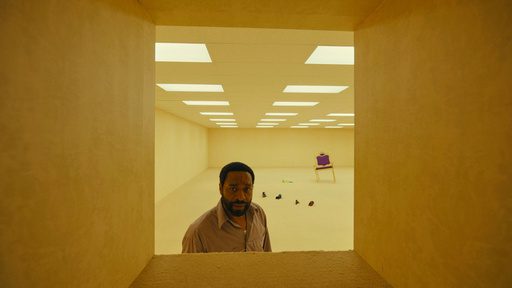
Take Backrooms. Directed and co-written by Parsons, it ripped through 3,442 locations, pulling in an astonishing $81.5 million in its initial three days across the U.S. and Canada. And that’s against a meager $10 million production budget. We’re talking about an entire weekend haul just a hair shy of what the mighty Disney machine managed in its own opening weekend. Consider that a generational mic drop, wouldn’t you say? Not since the raw, unpolished energy of Pakistan’s burgeoning independent film scene—which, for instance, saw the low-budget Urdu-language psychological thriller Zinda Bhaag garner significant international acclaim with a production cost well under a million dollars, showcasing how impactful storytelling often outweighs extravagant spending—have we seen such a stark disparity between investment and cultural return. Hollywood’s gilded cages seem suddenly porous.
The triumph of Backrooms didn’t even manage to ding Obsession, the brainchild of Barker. Three weekends in, this sub-$1 million picture is still minting cash, actually climbing 10% this past weekend to bag another $26.4 million. It grabbed second place. That pushed Star Wars, yes, that Star Wars, down to third with a paltry $25 million. Look, legacy franchises are feeling the pinch. Maybe this is what they call market disruption—but with more jump scares.
It’s fair to say Blumhouse-Atomic Monster, the production house behind both flicks, has reason to crow. Abhijay Prakash, their president, observed that the weekend represented both staggering success and outright validation for their model, which consistently backs original horror designed to reel in younger crowds. But beyond the immediate profit, the real lesson, perhaps, is that these digital-native creators—despite having astronomical success online already—still yearn for the cultural gravitas of a theatrical release. As Prakash put it, [QUOTE_PLACEHOLDER] He later suggested, “With some distance, we’ll probably look back at this as a real turning point.” And who wouldn’t, given these numbers? It isn’t just about movies; it’s about power shifting.
Parsons’ Backrooms, based on an internet urban legend, a so-called creepypasta, found its visual voice using open-source 3D software Blender. That’s right, free software. Soon enough, bigger players like James Wan and Shawn Levy’s production companies came knocking, aiming to elevate the concept. This wasn’t some fluke domestic affair either. Fact is, Backrooms has already scooped up $118 million globally. A24 noted Parsons is now the youngest director with a global No. 1. That studio’s prior best was Civil War, which debuted with $25.5 million. Just ponder that for a minute. The kid absolutely shattered it. Even with a B- CinemaScore—audiences can be picky—the buzz was palpable.
Luis Olloqui, the CEO of Cinépolis USA, a theater chain that, let’s be real, desperately needs patrons, watched as his locations posted sellouts for both films. He had confessed, [QUOTE_PLACEHOLDER] Instead, what they discovered was proof. “It shows that when we have the right content, people from all ages are willing to go to the theater.” A revelation? Perhaps. But it’s also a stark indictment of the content many studios have been pushing, assuming a certain demographic would just show up. They won’t.
Paul Dergarabedian, Comscore’s head of marketplace trends, pretty much nailed it: [QUOTE_PLACEHOLDER] It’s not a fancy prediction. It’s a plain statement of a simple, unavoidable truth. Gen Z holds the purse strings now, and their tastes are cultivated not by slick marketing campaigns but by algorithmic feeds and authentic, often gritty, creator-led content. This wasn’t Hollywood; this was the internet, writ large.
What This Means
This box office upheaval isn’t just a passing fad. It’s a bellwether for profound shifts in entertainment production, distribution, and consumption that have significant political and economic ramifications. First off, we’re witnessing the democratization of creative capital. Gone are the days when a select few gatekeepers—read: major studios with deep pockets—dictated what got made and seen. Now, an individual with a webcam — and an internet connection can build a multi-million-dollar IP. This phenomenon erodes the economic moats that once protected Hollywood’s biggest players, forcing them into a more competitive, and frankly, more chaotic, landscape. It’s capitalism at its most ruthless, or perhaps, most pure. The barrier to entry has plummeted, unleashing a torrent of creativity but also a mad scramble for attention.
Politically, this trend points to a broader distrust in established institutions. Young audiences, fed up with — or simply oblivious to — the machinations of legacy media, are voting with their wallets for narratives that feel authentic, perhaps even anti-establishment. They don’t care about star power built over decades; they care about genuine connection, often found in raw, unvarnished content from their peers. This preference echoes a broader political disaffection among younger generations, who often feel disenfranchised by traditional power structures, whether in government or entertainment. And then there’s the international dimension: as digital platforms erase geographical boundaries, a global sensibility emerges. Stories like Backrooms, rooted in universal internet culture, resonate far beyond borders, a truly global cultural economy emerging. The traditional studio model, with its heavy reliance on regional marketing and distribution pacts, suddenly looks cumbersome. The future of content creation and consumption isn’t just independent; it’s an agile, borderless, and surprisingly resilient beast.