

Hindutva’s Akhand Bharat and the Nazi Doctrine of Lebensraum
In the 20th century, the Nazis aimed to expand their territory to gain more land, which they referred to using the German word “lebensraum,” meaning “living space.” The...

In the 20th century, the Nazis aimed to expand their territory to gain more land, which they referred to using the German word “lebensraum,” meaning “living space.” The Germans’ dangerous belief that they were a better race destined to rule the rest was only one part of the story. This idea justified war, genocide, and the deaths of millions of people. In South Asia, a similar ideology is gaining ground. The term “Akhand Bharat” is a cover for the ambitions of the Hindutva movement in India, which wants to bring all of the subcontinent under Hindu sovereignty.
Akhand Bharat does not want peace and unity. A big part of the story is about power, control, and making other people’s identities go away. Hindutva leaders do not think that Afghanistan, Pakistan, Bangladesh, Nepal, and Sri Lanka are independent countries. Some people think they are part of a “lost” Hindu empire that needs to be recovered and brought back to life. The Bharatiya Janata Party (BJP) is the most powerful party in India, and the ideology group that supports it has strong ties to this school of thinking. This is like what the Nazis said about Germany taking over Eastern Europe.
The Hindutva movement sees Muslims, especially Pakistan, as enemies of Hindu civilization, just like Nazi Germany saw Slavs and Jews as threats to Aryan purity. Hindutva doesn’t think that the 1947 Partition meant that India was free from British rule. People see it as a sad incident that broke up the cherished vision of a Hindu country. That’s why the media, politicians, and even regular people in India are so eager to make Pakistan look bad. People don’t perceive it as a neighbor on equal footing; they regard it as a mistake in history that needs to be “fixed.”
This way of looking at the world uses the past to its advantage. Nazi Germany praised Aryan mythology and changed history to blame Jews for its problems. In the same way, India is changing its school curriculum to downplay the role of Muslims, gloss over the Mughal era, and promote a false story in which Muslims are seen as conquerors and Hindus as victims. Movies, TV shows, and social media all show Muslims as dangerous, violent, and unreliable. This brainwashing starts in schools.
India’s aggressive tactics toward Pakistan are based on an expansionist philosophy, even if they say they are for “self-defense” and “anti-terrorism.” India’s 2019 Balakot strike was not based on any proven facts. India said it was in response to the Pulwama attack. Even though no foreign agency confirmed India’s story, the Indian media made it a national holiday. Why? In short, it was the perfect vehicle to attack Pakistan, which the Hindutva story calls the “enemy.”
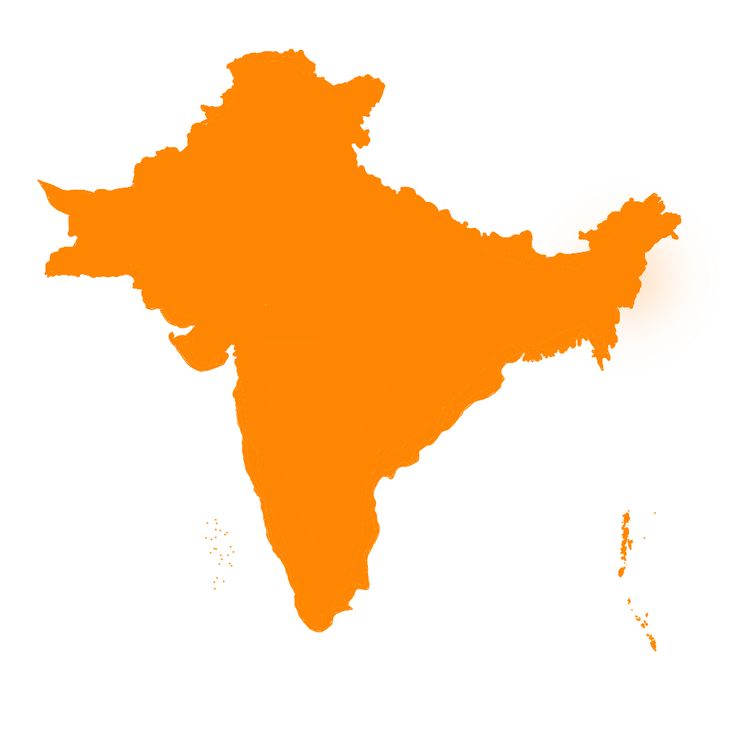
The similarity to Lebensraum is clearer when you look at how India deals with boundaries and sovereignty. The Nazis saw of borders as just lines that could be readily crossed. Hindutva regards modern national borders as a problem that keeps them from getting a bigger Hindu homeland. That’s why high-ranking Indian officials aren’t afraid to portray Pakistan and other adjacent countries on maps of a possible Akhand Bharat. You don’t even hear it talked about in schools, official speeches, or space agency lectures these days; it’s that common.
Pakistan’s very existence is completely opposite to the Akhand Bharat dream. Pakistan, which is mostly Muslim and came about after Partition, shows that Hinduism is not and never was the only religion in South Asia. Hindutva sees Pakistan as an enemy state that needs to be defeated for this reason. Because of this, Pakistan has been the victim of ongoing political bullying, sabotage, and misinformation tactics, such as false terrorism charges and attempts to cut Pakistan off from other countries in international diplomacy. But Pakistan is still strong. Instead, it has strengthened its position in all areas: political, economic, and military. Pakistan is becoming more powerful around the world because it has good ties with Turkey, China, and the Gulf states. For instance, it has always stood out for the rights of Muslims in Palestine and Kashmir. This has made it a strong opponent of regional despotism, which Hindutva-led India finds very annoying.
📄 POLICY WIRE WHITEPAPER PUBLISHED: PAKISTAN'S NATIONAL SECURITY POLICY PRIORITIES
👉 READ BY CLICKING HEREPeople all across the world need to understand that Hindutva is not just about Indian politics. It poses a menace to the area. When leaders talk about Akhand Bharat, they are not talking about peace; they are talking for conquering. They are using cultural jargon to hide their ultimate purpose, which is to make Hindu nationalism the dominant force in South Asia.
Hitler planned his rise to power and penned Mein Kampf while the rest of the world was too slow to act. M.S. Golwalkar’s Bunch of Thoughts tells Christians and Muslims in India to convert to Hinduism or leave the country. Golwalkar is an ideological leader in India who openly embraces Nazi practices. This should worry everybody who cares about peace, sovereignty, and diversity.
Akhand Bharat is an idea founded on intolerance, fear, and a wrong view of India’s history, just as Lebensraum. As a result, the area could be pushed into a battle that never ends. The world once ignored fascism, and the cost was millions of deaths. It would be stupid to make the same mistake again in South Asia. Pakistan must be strong, united, and on guard against this ideological attack. The world also has to stop seeing India as an emerging superpower and start questioning the bad ideas it spreads. The only way to get real peace and cooperation in South Asia is to show what Hindutva really is and not believe in the idea of Akhand Bharat.
Author