


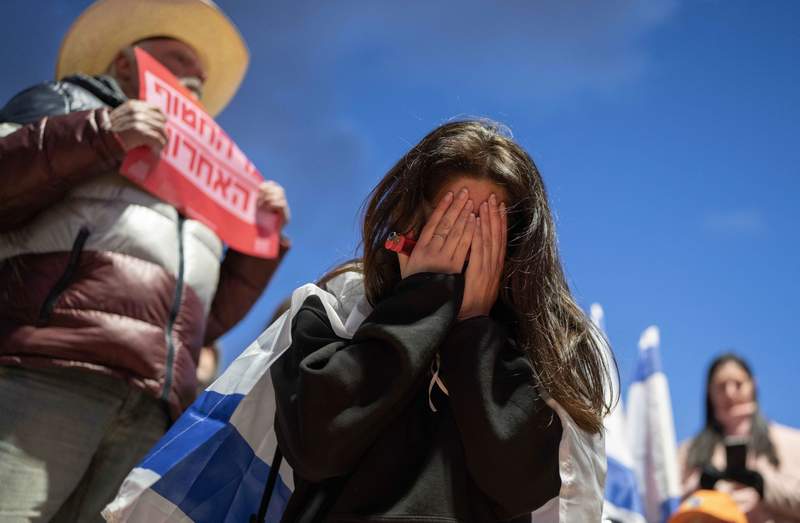
Grim Echoes: October 7 Report Lifts Veil on a Calculated Brutality
POLICY WIRE — Washington, D.C. — History, as it often does, offers us another particularly ugly reminder: warfare isn’t just about bullets and bombs. It’s also, sickeningly often, about...

POLICY WIRE — Washington, D.C. — History, as it often does, offers us another particularly ugly reminder: warfare isn’t just about bullets and bombs. It’s also, sickeningly often, about terrorizing bodies, about breaking spirits, and yes, about weaponizing sexual violence as a calculated instrument of conflict. That uncomfortable truth just got dropped square into the lap of global discourse, making a chaotic international stage even messier.
It’s not often a United Nations-backed assessment rips through the carefully constructed narratives surrounding geopolitical skirmishes quite like this one has. Forget the usual back-and-forth about casualty counts or disputed borders for a second. This isn’t that. This report, rather, shifts the focus — or attempts to — to a much darker, far more intimate battlefield: the human body. It alleges that sexual violence wasn’t some unfortunate byproduct of the October 7 attacks in southern Israel. Nope. It was reportedly an “integral” component of Hamas’s operational playbook, used systematically. A cold, hard strategy, not a series of isolated, regrettable incidents. Think about that for a second. It gives you chills, doesn’t it?
The details, as laid out in the report by a UN mission led by Special Representative Pramila Patten, paint a pretty grim picture. It cites “reasonable grounds to believe” that rape — and gang-rape occurred. It’s not just talk, either. The report draws on forensic examinations, expert interviews, and graphic accounts—evidence often meticulously gathered under immense pressure. Because when atrocities happen, you’ve got to document them, right? Especially when the global community has a bad habit of looking away from certain kinds of horror.
“These acts represent a profound moral degradation, an affront to our shared humanity,” remarked Isaac Herzog, President of Israel, when the preliminary findings began to circulate. “The international community mustn’t just condemn; it must act decisively to ensure accountability for these heinous crimes. Forgetting these victims, or failing to acknowledge the true nature of their suffering, would be a crime in itself.” And you know, when you see a country’s head of state speak with such conviction, it underscores just how much this kind of intelligence hits home. It hits home hard. It’s not just a diplomatic talking point; it’s a wound.
But the reverberations go far beyond diplomatic speeches in Tel Aviv. Over in capitals like Islamabad or Jakarta, in the broader Muslim world, these reports get complicated, real fast. Many governments and publics, already deeply sympathetic to the Palestinian cause, often view any condemnation of Hamas through a lens of Israeli perceived aggressions and historical grievances. The framing of Hamas as a “resistance movement” makes accusations of organized sexual violence a deeply uncomfortable fit, clashing with the traditional narrative. It gets things messy, culturally speaking. It’s tough to reconcile that, even for their staunchest supporters. Ambassador Maleeha Lodhi, former Permanent Representative of Pakistan to the United Nations, speaking informally on background, noted, “Allegations of this nature, irrespective of the conflict, demand robust, impartial investigations rooted in humanitarian law. The victims’ voices, regardless of who or where they’re, need to be heard and their dignity protected, without allowing such issues to be weaponized for broader political agendas that undermine the path to a just peace for all involved parties.”
Her words hint at the larger game at play. Such statements allow for both acknowledgement of the gravity of the accusations and a subtle nod to the region’s complex, often polarized, geopolitical landscape. You’ve got to be careful how you step. It’s like walking on glass.
Because the truth is, the world’s reaction to sexual violence in conflict is notoriously selective. A 2022 UN Women report, for instance, found that while sexual violence is endemic in most conflict zones, only about one in five allegations are ever thoroughly investigated by international mechanisms. That’s a grim statistic, illustrating a chronic lack of follow-through. So, while this report on October 7’s horrors shines a spotlight, the real test will be whether the glare lasts, forcing true accountability.
What This Means
This report, should its findings gain broader acceptance, isn’t just another talking point; it fundamentally alters the discourse around Hamas, possibly eroding some of the organization’s moral standing even among erstwhile sympathizers. From a political standpoint, it hands Israel significant leverage on the international stage, intensifying calls for condemnation and perhaps legitimizing harsher countermeasures in some global quarters. Economically, prolonged international isolation and punitive measures against groups like Hamas could tighten the already suffocating squeeze on Gaza, regardless of who’s in charge. For the wider Middle East, — and Muslim-majority nations in particular, it forces a difficult introspection. They’ve got to navigate an issue where universal human rights — specifically, the protection against sexual violence — clash head-on with established narratives of anti-colonial resistance. It forces leaders into awkward positions, requiring diplomatic finesse to condemn atrocities while not appearing to endorse what many still view as an oppressor. It makes things incredibly complex for regional stability — and any hopes for lasting peace. Nobody wins when humanity loses.