


Southwest’s Shifting Tracks: New Mexico Rail Runner Tweaks Schedules, Signaling Broader Infrastructural Narratives
POLICY WIRE — ALBUQUERQUE, N.M. — Summer. For many, it conjures images of endless daylight — and open roads. For bureaucrats managing public transportation, however, it’s a high-stakes...

POLICY WIRE — ALBUQUERQUE, N.M. — Summer. For many, it conjures images of endless daylight — and open roads. For bureaucrats managing public transportation, however, it’s a high-stakes chess match played out with schedules and rider statistics. What might appear on the surface as a routine service adjustment in the sun-baked Land of Enchantment actually nudges at bigger questions — the persistent, often messy, ballet of regional infrastructure, urban growth, and the quiet aspirations of commuters caught between one destination and the next. Policy, after all, isn’t always etched in grand legislation; sometimes, it’s found on a printed timetable.
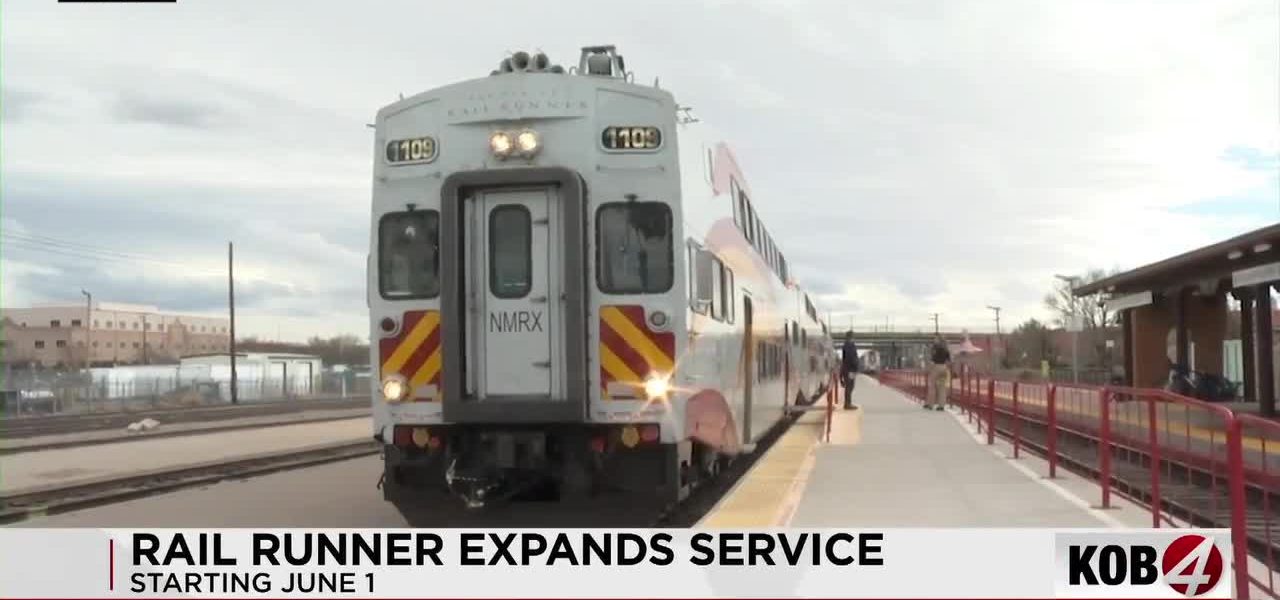
The New Mexico Rail Runner, that solitary steel spine threading through the Rio Grande valley, is poised for some summer expansion. Starting this Monday, those changes are effective. Not just more trains, you see, but a strategic recalibration designed to squeeze a little more utility — or perhaps, profit — from existing lines. It’s an incremental move, not a revolutionary one. A new midday train, specifically designated as the 511 train, will shuttle between Santa Fe — and Albuquerque. There’s also the subtle elongation of a specific route; the 508 train, typically terminating downtown Albuquerque from Belen, will now just keep on going, extending its reach to Santa Fe, hitting every station along that track. [QUOTE_PLACEHOLDER]
And let’s not forget the nightlife, or lack thereof, for those without personal conveyance. Historically, the 525 train was a Friday-night special, hauling passengers from Santa Fe to Albuquerque. Well, no longer just a weekend indulgence; it will now also run Thursday nights. A minor concession, perhaps, to the weary, but a change nonetheless. These modifications aren’t just for a fleeting moment, mind you. They’re staying put through October. The sort of slow-burn commitment that suggests careful deliberation rather than a sudden burst of enthusiasm. Because in the realm of public transport, flexibility often rubs awkwardly against fiscal prudence.
It’s fascinating, isn’t it, how such small operational tweaks — an extra trip here, a stretched route there — can reverberate across the delicate economic ecosystems of small towns and bustling state capitals. Belen, Albuquerque, Santa Fe — three distinct communities, each with its own rhythm, now a bit more tightly woven by the almost imperceptible hum of the Rail Runner. But how much real impact does a slight uptick in availability truly generate? A recent analysis by the Bureau of Transportation Statistics, a division of the U.S. Department of Transportation, showed that overall U.S. public transportation ridership rose by nearly 5% in 2023. These numbers, however, often mask stark regional disparities, where investment and actual utilization don’t always align with grand political pronouncements.
The quest for efficient, affordable public transport isn’t unique to New Mexico’s dusty plains. One can’t help but observe the parallel struggles — — and successes — in countries far beyond the U.S. border. Consider Pakistan, for instance, a nation grappling with its own ambitious, sometimes faltering, railway expansion programs. The China-Pakistan Economic Corridor (CPEC) has aimed for transformative railway upgrades, notably the Main Line-1 (ML-1) project. This project, far more massive in scale, nonetheless confronts similar logistical, financial, and political hurdles: how to connect disparate populations, reduce travel times, and catalyze economic activity through modernized rail. While New Mexico’s changes are about optimizing an existing system, places like Pakistan are trying to build one anew, yet the underlying calculations — cost-benefit, societal impact, political will — aren’t all that different. Both are searching for equilibrium in a world that never stands still. For an interesting read on global transportation narratives, check out this piece on climate’s irony in New Mexico, which indirectly touches on regional planning and environmental pressures.
This subtle expansion could be seen as a minor win for environmental advocates, reducing car traffic, one fewer emission for each passenger shifted from vehicle to rail. And it’s also a pragmatic acknowledgment of the simple reality of tourism, particularly in a state that prides itself on its unique blend of cultures and landscapes. You’ve got to move people if you want their dollars, right?
📄 POLICY WIRE WHITEPAPER PUBLISHED: PAKISTAN'S NATIONAL SECURITY POLICY PRIORITIES
👉 READ BY CLICKING HEREThe adjustments, though outwardly unassuming, demonstrate the relentless, almost mundane effort required to keep modern societies humming along. It’s a reminder that even the quietest improvements are, in their own way, policy statements — a vote of confidence in shared transit, if not a grand ideological pronouncement.
What This Means
At its heart, this move by the New Mexico Rail Runner signifies a calculated bet on increased summer ridership and, by extension, on local economic activity. The additional services, particularly the midday link and extra evening runs, aim to capitalize on both tourist flows and the persistent demand from local commuters. It’s a pragmatic response, not an expansive vision. What we’re witnessing is an operator trying to eke out more efficiency from existing infrastructure rather than committing to costly new lines — a characteristic approach often seen in regions where capital investment in public works faces intense political scrutiny.
Economically, extended service offers a modest boost to businesses in Albuquerque and Santa Fe, making spontaneous day trips or after-work events more feasible without the parking headaches. For low-income riders, or those simply trying to pinch pennies on gas, it’s a small but significant expansion of access. Politically, these changes — however minor — allow local officials to tout improvements in public services without having to secure massive appropriations. It’s an easy win, essentially. However, the reliance on a four-month temporary schedule suggests an unwillingness to commit to permanent, deeper changes. This implies that while the demand exists, the political appetite for fundamental, system-wide enhancements remains limited. One might even argue it signals a certain caution, perhaps even a fear, of truly committing to comprehensive, long-term public transport strategies that might compete with car-centric sensibilities. But then again, maybe that’s just how things are — you add a Thursday train, — and call it progress. You know, like some regions dealing with intense urban sprawl. For deeper analysis into societal demands and urban growth, consider reading about Albuquerque’s broader implications in human activity.