


Golan Heights: Iran’s Silent Buildup Threatens Israel
Israel's Golan Heights faces a silent, insidious threat. Iran is consolidating its military presence in Syria, fueling a dangerous regional standoff. Learn why.

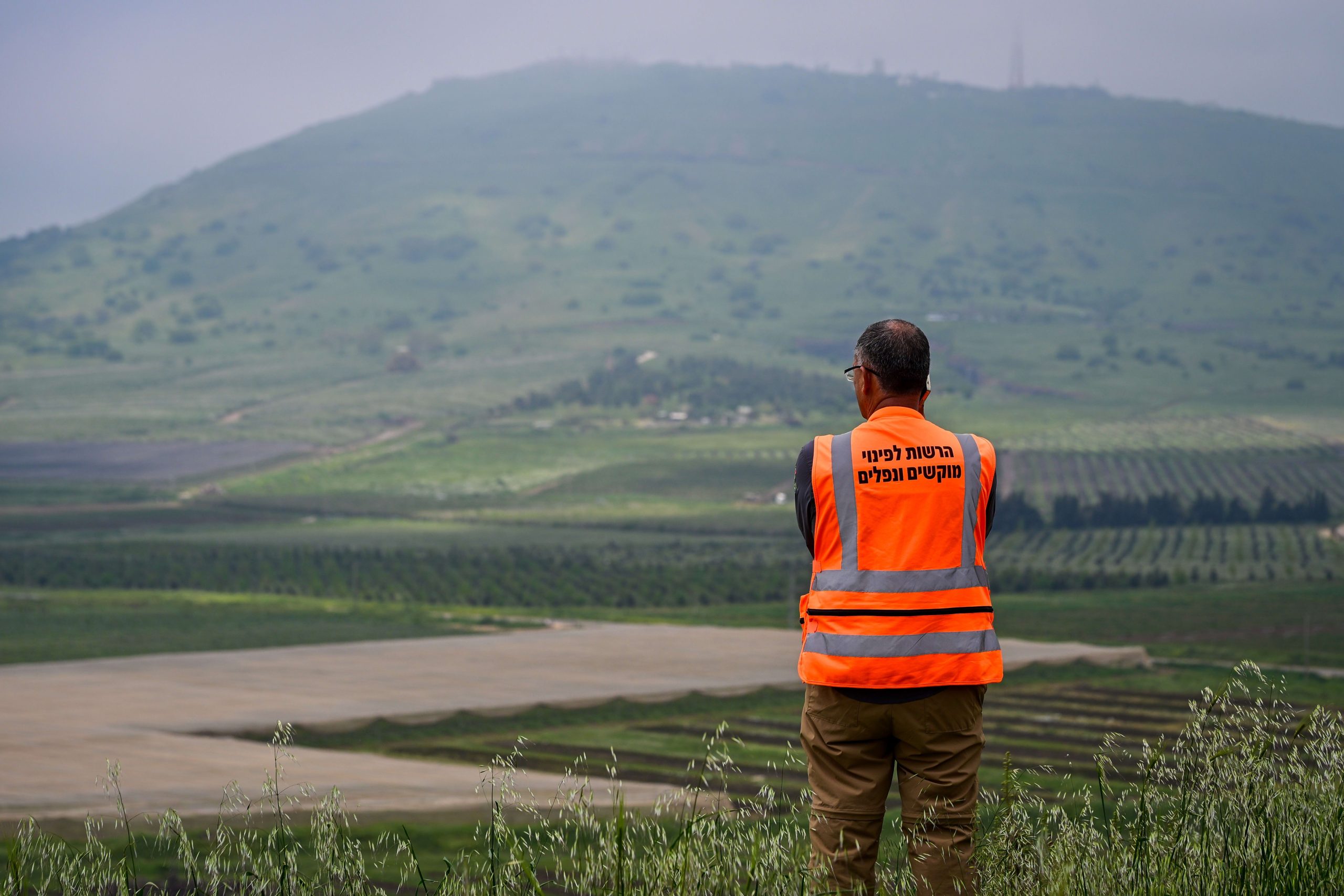
POLICY WIRE — Jerusalem, Israel — The Syrian side of the Golan Heights often projects an image of desolate quiet, a landscape scarred by ancient volcanic activity and recent skirmishes. But this seeming calm, policymakers here warn, is a treacherous mirage. It’s not the frontline that screams for attention, but the patient, insidious buildup behind it—a complex web of shifting allegiances and state-sponsored subterfuge that continues to keep Israel’s security apparatus perpetually on edge. Nobody’s forgetting that much of the region’s stability, such as it’s, hangs by a very frayed thread right there.
For years, Jerusalem’s primary objective along this sensitive frontier has been to enforce what it terms its ‘red lines’—preventing Iran from cementing a permanent military footprint in Syria and blocking the transfer of advanced weaponry to Hezbollah in Lebanon. But that objective, observers note, hasn’t exactly been a rousing success. Tehran, it appears, doesn’t subscribe to Israeli cartography. Their agents, advisors, and proxy militias, after years of bolstering Bashar al-Assad’s regime, aren’t simply packing up their bags and heading home. They’re consolidating. And this presents a far more intricate, persistent threat than simple cross-border raids.
It’s about the long game, see. Tehran’s strategy in Syria isn’t just tactical; it’s existential for its regional ambitions. It links Iraq to Lebanon, solidifying an arc of influence that Israel — and its allies find deeply unsettling. And while the direct skirmishes may appear sporadic to the outside world, the subterranean warfare—the intelligence gathering, the drone surveillance, the constant calibration of responses—is a ceaseless, draining grind.
“Our forces maintain an iron fist on our northern borders. Anyone who believes the Golan is open season for their proxies misunderstands the resolve of the Israeli nation. We won’t hesitate; we cannot afford to,” declared Prime Minister Benjamin Netanyahu last week, his voice ringing with a familiar, unwavering determination that’s been the bedrock of Israeli defense policy for decades. Because, you know, they’ve been here before.
Indeed, a recent 2023 assessment by the Stockholm International Peace Research Institute (SIPRI) indicates that paramilitary groups operating within Syrian territory adjacent to the Israeli border have increased their arsenal of precision-guided munitions by an estimated 25% over the past two years, raising alarms about potential for a sudden, destructive escalation. That’s a quarter more bang for their buck, ready to fire at Israel.
But the ‘resistance front,’ as its proponents term it, offers a counter-narrative, often resonating with sympathetic ears across the broader Muslim world, including nations like Pakistan, which has its own complex relationship with regional power plays. Ali Akbar Velayati, a senior advisor to Iran’s Supreme Leader, offered a different perspective, asserting, “The resistance front isn’t bound by colonial lines drawn in the sand. Our support for the Syrian people — and their sovereignty is unwavering. Those who occupy Muslim lands will face consequences; it’s a matter of justice, not aggression.” He said as much in a speech to a Tehran-based think tank just months ago, a sentiment widely echoed in media outlets aligned with the Islamic Republic. It’s a calculated rhetorical gambit, one designed to appeal to pan-Islamic solidarity, much as historical narratives are often invoked to rally political tides.
The geopolitical reality isn’t just about weaponry; it’s about the persistent presence of players like the Islamic Revolutionary Guard Corps (IRGC) Quds Force, quietly rebuilding shattered Syrian army units into an extension of their own strategic vision. They’re not just fighting; they’re embedding. And they’re doing it with increasing sophistication, blending into the very fabric of Syrian state security, making surgical strikes by Israel far trickier.
What This Means
The persistent threat along Israel’s Syrian buffer zone signals a hardening of the strategic standoff between regional titans. Politically, it means any genuine rapprochement between Israel and Syria, or even a broad regional detente, remains a distant fantasy. Economically, the constant state of readiness and the allocation of defense resources siphon away funds that could be used for domestic development or infrastructure. For both sides, the stakes are existential: for Israel, it’s about deterring a deeply entrenched enemy from its borders; for Iran, it’s about projecting an image of unyielding power and ideological consistency across the Middle East. It’s a costly, draining deadlock that shows no signs of dissipating, casting a long, unyielding shadow over prospects for stability. The war’s silent creep, as it plays out in places like Ukraine, also informs regional actors that conflicts can simmer for years, evolving in their scope and intensity, reshaping alliances in ways we might not fully grasp today.
This situation also significantly impacts the psyche of populations. For Israelis living in the northern communities, the quiet drone of an aircraft overhead or the distant rumble of shelling is never just background noise; it’s a constant reminder of proximity to danger. For Syrians in government-controlled areas, the Iranian presence, while seen by Damascus as essential to its survival, also represents a form of sovereign entanglement that could prolong their nation’s recovery. It’s a lose-lose dynamic for the people caught in the middle.