


Futility Market: Mets Offload Veteran in Surprise Asset Salvage Play
POLICY WIRE — New York, United States — For some, the early whispers of a season slipping into the abyss arrive with an autumn chill. For New York’s struggling baseball outfit, the Mets, the cold...

POLICY WIRE — New York, United States — For some, the early whispers of a season slipping into the abyss arrive with an autumn chill. For New York’s struggling baseball outfit, the Mets, the cold hard truth dropped like a hammer in summer, signaled not by the standings—which were already abysmal, marking their ‘sixth straight loss’ and ‘third straight to the Cubs’ just hours before—but by an unsentimental transaction in the transactional theater of professional sports. It wasn’t the expected fire sale kickoff, just a precursor—a solitary pawn moved on a chessboard of impending liquidation.
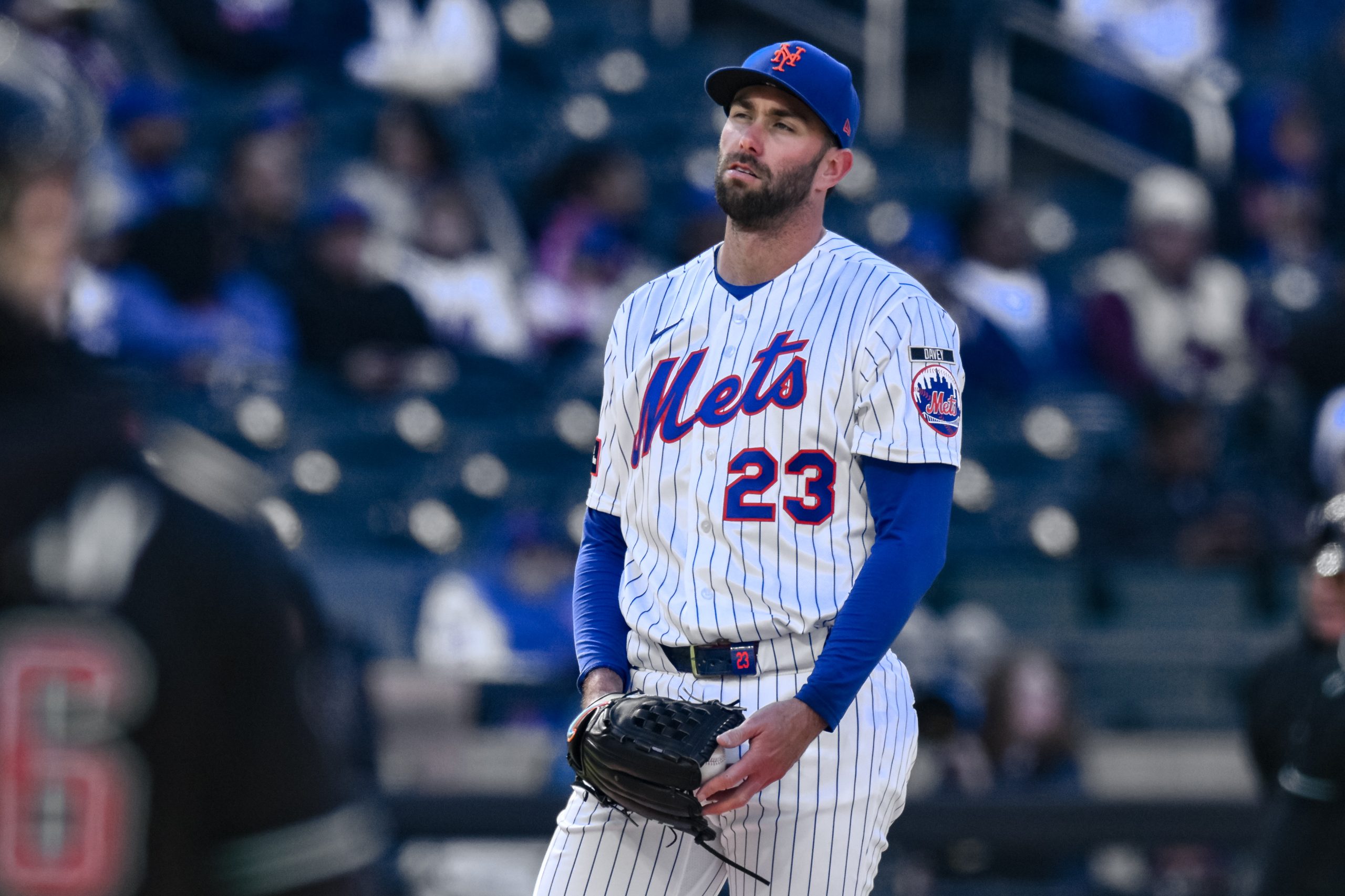
It was Tuesday, a seemingly unremarkable afternoon, when the Mets ‘traded lefty David Peterson to Chicago in exchange for corner infield prospect Cole Mathis.’ Peterson, a workhorse whose journey with the team saw him, at one point, stand as ‘The Mets’ longest tenured player,’ now finds himself exiting stage left. He’s a professional nearing his autumn, too, poised to ‘turn 31 later this year,’ navigating ‘in his final season before hitting free agency’ after years of grinding it out on the mound. And let’s be frank: this season hadn’t been kind. The pitcher, having been ‘split between the bullpen and the rotation,’ had ‘found himself without a real role this season’ and was ‘unable to replicate the solid-if-unremarkable numbers he posted over the past two seasons.’ [QUOTE_PLACEHOLDER]
His 6.09 ERA across 60 innings, a stat corroborated by league figures released by Major League Baseball, illustrates a certain erosion of value. It’s a testament to the brutal economics of peak performance, where a slight dip can mean total displacement. ‘Moving Peterson out makes sense even if the Mets aren’t ready to throw in the towel just yet.’ That’s the official line, you see. But anyone watching knows ‘this move could (and arguably should) signal the start of a broader sell off.’ And it wasn’t just a simple ditch effort. There was, dare one say, a surprising upside for the struggling side.
Because the return—Cole Mathis—isn’t some afterthought; ‘Cole Mathis is a shockingly good get for a player of Peterson’s quality.’ He’s a name that raises eyebrows. Drafted ‘in the 2nd round of the 2024 draft out of the College of Charleston,’ he entered the professional sphere as ‘a popular sleeper pick given his age (20 at draft time) and underlying college data.’ An ‘A lingering elbow injury that ended his college career and seemed to persist into 2025 and dampened his professional debut season,’ certainly muddied his initial professional waters. But then, as the scouting reports dramatically put it, ‘he went nuclear in the AFL and again early this season in A-ball before being promoted to high-A.’ He’s now ‘batting .260/.371/.490 over 116 PA and continuing to display a very promising blend of swing decisions and exit velocities.’
It’s ‘a corner infielder profile (and likely a first baseman) through-and-through,’ the analysts muse. ‘But the bat is legitimately very interesting.’ Frankly, ‘it’s very surprising the Cubs gave up a prospect of this caliber.’ Why, you ask? Because ‘they’re desperate for arms and the Mets are early sellers, two factors that result in a price premium.’ Sometimes, desperation on one end meets shrewd opportunism on the other, allowing even a faltering enterprise to ‘extract value for a pending free agent in a lost year and reshuffle their pitching staff a bit more optimally.’ Here’s hoping, then, that the Mets can manage other deals as effectively ‘as they work to recover what they can out of this lost season.’ A long shot, perhaps, but a shot nonetheless.
What This Means
This transaction, though cloaked in the casual parlance of sports, offers a keen microcosm of resource management—or rather, mismanagement—and its aftermath in broader geopolitical and economic arenas. The Mets, in essence, are a failing enterprise forced into distress sales, jettisoning a depreciating asset for speculative future value. It mirrors the predicament of national carriers or state-owned entities in nations like Pakistan, where underperforming assets are divested, often at perceived discounts, to international buyers desperate for immediate capabilities. Consider the complex, sometimes fraught, negotiations around privatizing struggling steel mills or airlines across South Asia: a veteran, if unremarkable, employee is traded for a younger, promising, but unproven recruit. The immediate need for capital (or a functional pitching arm for the Cubs) dictates the terms, frequently leading to what might initially appear to be a ‘surprisingly good get’ for the seller—a momentary victory born from deep-seated structural issues. For the Cubs, their ‘desperate for arms’ mirrors the hunger for specific resources in global supply chains, even if it means overpaying for a commodity that has clearly passed its prime for its current owner. This market dynamic, where an immediate, gaping hole drives procurement, is often detached from long-term strategic viability. It’s a reactive play, not a proactive one, yet can, as we see, yield unexpected fruits for the seller when market conditions align perfectly. And, as discussed in The Global Grind: NBA Draft Reflects Geopolitical Plays in Sports Economy, the valuation of talent, or lack thereof, holds global resonance beyond the sports pages. The broader implication is that sometimes, you only get value for deadweight when someone else is even more desperate. This little deal illustrates that principle neatly.