

From Vulnerability to Preparedness: Pakistan’s Quest for Global Cooperation in the Face of Disasters
In the present day, the country of Pakistan finds itself at the confluence of climate change vulnerability and international diplomacy. With its contribution to the global emission of greenhouse...

In the present day, the country of Pakistan finds itself at the confluence of climate change vulnerability and international diplomacy. With its contribution to the global emission of greenhouse gases being less than one percent, the country still remains one of the most vulnerable in the face of climatic changes. The recent monsoon flood in the country, which resulted in the deaths of over one thousand people with many more injured, is only the latest in the growing list of climatic catastrophes that the country is witnessing. However, in the midst of such vulnerability in the face of climatic changes, the country is witnessing an important shift in its position in the international arena. It is shifting not only away from being vulnerable in the face of climatic changes but is poised to become the hub of global cooperation in the face of disasters with the National Disaster Management Authority at the helm.
Traditionally, the disaster response system in Pakistan has been reactive in nature. The resources are deployed only after the disaster has occurred. However, the recent spate of natural calamities has proven to be too big for the conventional system. Floods, heatwaves, droughts, and unusual weather conditions are not just isolated incidents. They have become the new normal. The geographical position of the country, coupled with the rapid urbanization and lack of infrastructure, has turned natural calamities into national crises. The need for resilience has thus become not just necessary but critical.
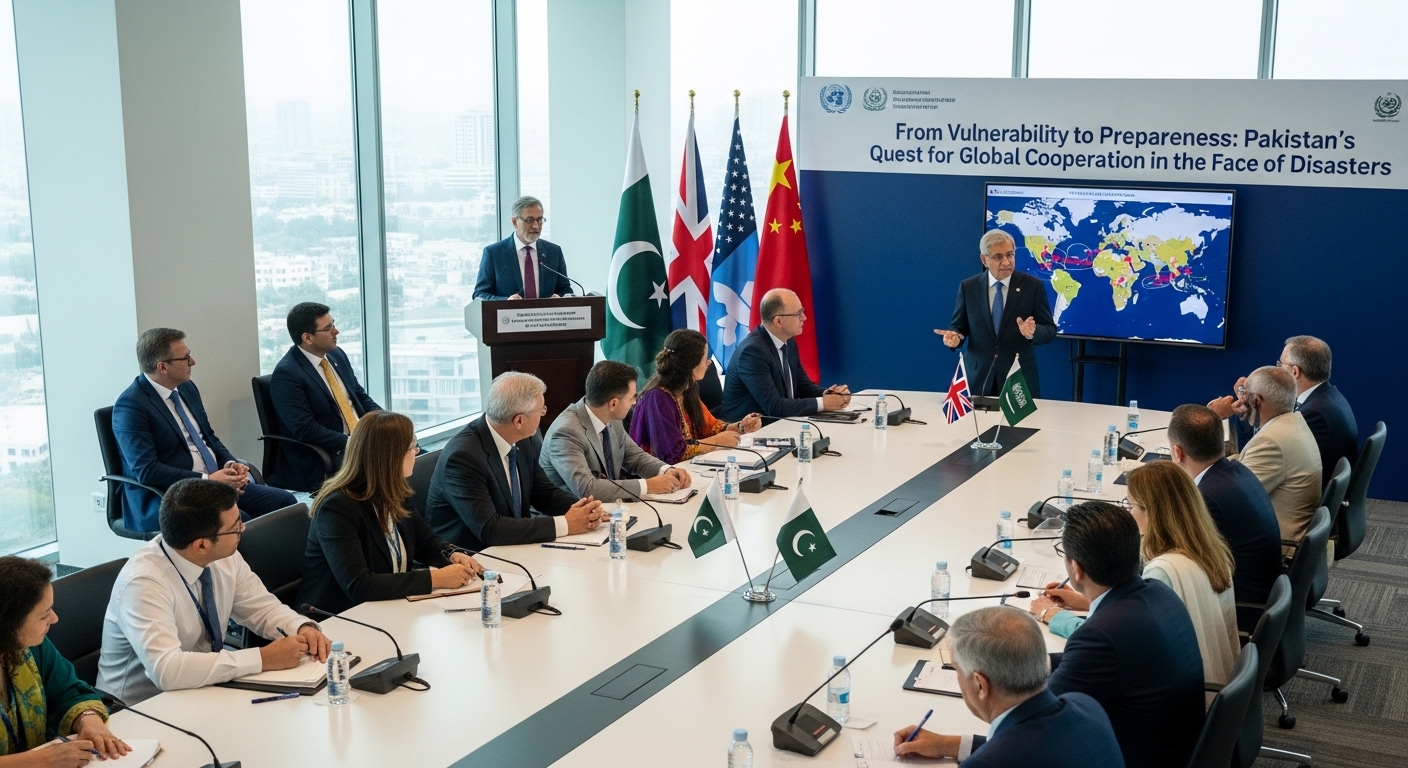
In recognition of this reality, Pakistan is in the process of embracing a new paradigm of anticipatory governance. This has been underscored by the latest “Strategic Appraisal and Capabilities” exposition launched in Islamabad by the NDMA. The exposition attracted representatives from 65 countries. Delegates from countries such as China, Saudi Arabia, United States, Germany, and the UK have shown interest in cooperating with Pakistan on disaster management. This brings together all stakeholders in the face of a reality where climate change poses a threat to all.
At the heart of Pakistan’s evolving strategy is the use of technology-driven preparedness. Tools like the Disaster Early Warning (DEW-2) initiative and the Pakistan Disaster Lens 2026 platform represent the next generation of tools, utilizing predictive analytics and high-resolution data sets to better predict risks before they occur. These technologies allow for the shift from disaster response to disaster risk mitigation, thereby enabling better decision-making. In an environment characterized by uncertainty, perhaps the greatest strength any state can have is the ability to forecast and prepare. Technology is key in disaster response, but technology is just part of the solution. This is where international cooperation is at its most indispensable. The involvement of different countries in disaster response is indicative of the importance of international cooperation. Climate change is an international phenomenon; its impact is felt globally. Its ripples can be seen in the way international trade is affected or the way migration is affected. By entering into international cooperation agreements, Pakistan is essentially building a framework for international climate governance.
The strategic implications of this phenomenon go beyond the humanitarian aspect. Disaster preparedness is inextricably linked with issues of national security and economic stability. Climate shocks, if unaddressed, have the potential for destabilizing agricultural productivity, destroying strategic infrastructure, and triggering mass migrations. This has a cascading effect on the state’s capacity. In contrast, a robust disaster management framework bolsters economic continuity, secures livelihoods, and instills public confidence. It also enables Pakistan to play a credible role in regional and global counter-measures against climate-related threats.
Furthermore, there is an economic rationale for this shift. The cost of responding to disasters is far higher than investing in preparing for disasters. Early warning systems, risk mapping, etc., can reduce costs by reducing damage and losses. In the context of a developing economy like Pakistan, where financial resources are scarce, efficiency is of paramount importance. Moreover, international cooperation can help bridge the financial gap, so that the country can build on the resilience gained.
Despite these promising developments, challenges persist. Coordination between institutions at federal and provincial levels still presents challenges. Resource availability is another challenge limiting progress. Sustainability of international partnerships is also dependent on clear policy guidelines and political will. Unless these challenges are addressed, the momentum gained so far will stall.
What needs to be done in Pakistan? To build on these developments, disaster preparedness needs to be integrated into Pakistan’s overall development agenda. This will require expanding early warning systems across the country. Strengthening response systems at local levels and enhancing regional cooperation mechanisms will be important. At the same time, Pakistan needs to continue pushing for climate justice on international platforms.
This is not surprising given the fact that the way in which the Pakistani government is addressing the issue of disaster management is part of the larger process of redefining its role in the face of the changing world. No longer is it content with simply responding to disasters; it is creating a new paradigm of resilience based upon technology, diplomacy, and cooperation. The potential impact of such an effort is not only to secure the country’s future but perhaps become the leader in the face of the challenges of climate change.
Author