
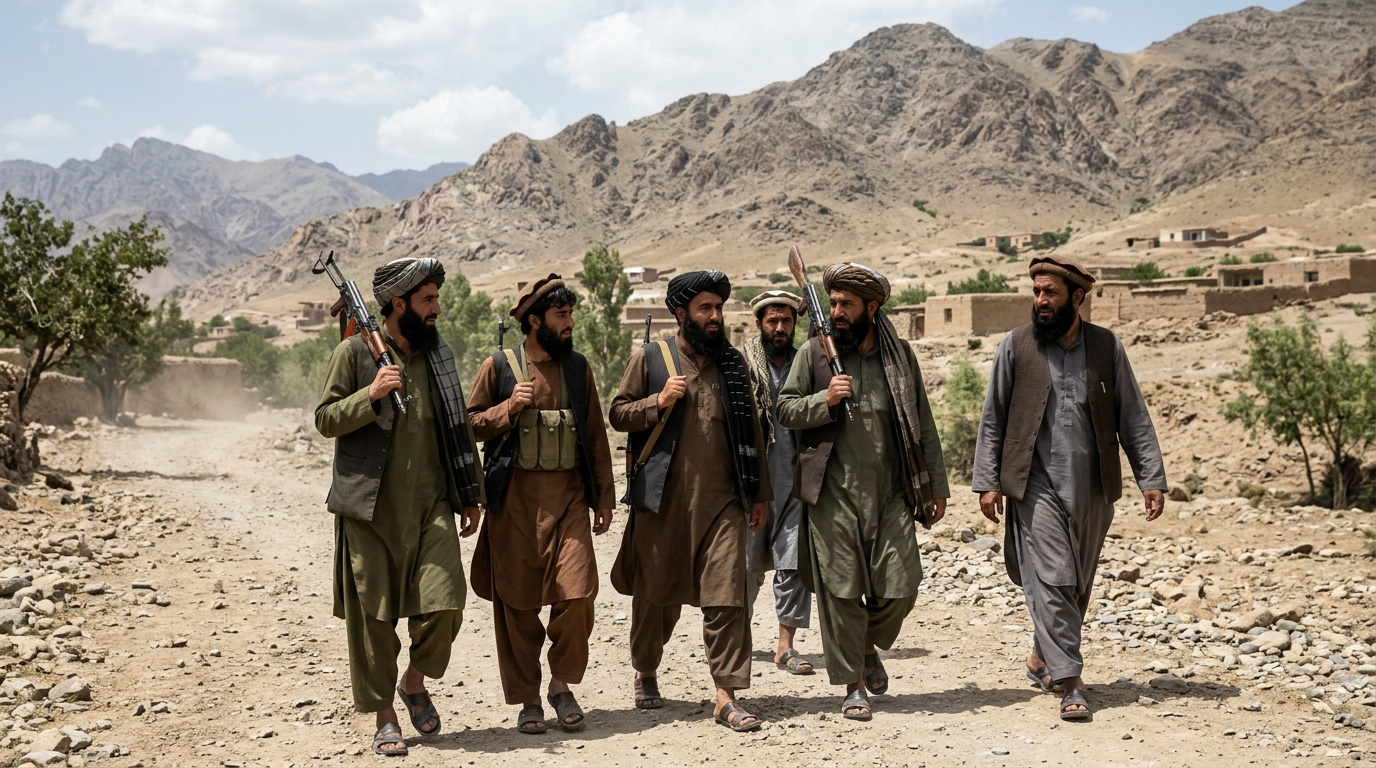
The global attention to Afghanistan has again been heightened with Bangladesh becoming the latest addition to the list of nations that are concerned with the rule of the Afghan Taliban and its perceived lack of interest in breaking the ties with the terrorist organizations. This is an indication of a growing international agreement that the conditions in Afghanistan are not yet stable almost five years since the Taliban came back to power with the 2020 Doha Peace Accord.
The expectations were formed since August 2021 when the Taliban took control of Kabul based on the promises of not allowing the use of the Afghan territory as a place of terrorism, the creation of inclusive governance, and the protection of basic human rights. Nonetheless, recent statistics and international evaluations indicate that such expectations are not met much. The United Nations monitoring reports indicate that over 20 terrorist organizations are currently suspected to be operating in Afghanistan, such as affiliates of Al-Qaeda and Fitna al Khawarij (FAK). This has increased the concerns that Afghanistan may again act as a transnational terrorism hub.
These concerns were further increased by the assassination of Al-Qaeda leader Ayman al-Zawahiri in Kabul in July 2022, which casts doubt on the Taliban promises under the Doha framework. The western governments have kept on reiterating that Afghanistan should not turn into a safe haven of global terrorism. Meanwhile, the regional nations, such as Pakistan, China, and Iran, have also emphasized the need to make sure that the instability in Afghanistan does not cross the borders.
The situation of human rights in Afghanistan has also been subject to a lot of criticism. The UNESCO estimates that over 2.5 million Afghan girls are out of school today because of the limitation of female education. Afghanistan is the only nation in the world where girls are not allowed to attend secondary schools and universities. The United Nations Development Programme (UNDP) has also indicated that some 85 percent of the population in Afghanistan is living below the poverty line, which is a significant rise compared to the situation before 2021.
There is also a worrying trend in economic indicators. According to the World Bank, the GDP of Afghanistan shrunk by approximately 20 to 30 percent in 2021 to 2023, which is among the largest economic failures in the recent past. Household incomes have been cut short by inflation, unemployment and depreciation of currency. According to the UN Office of the Coordination of Humanitarian Affairs (OCHA), in 2025, more than 29 million individuals, almost two-thirds of the population, will need humanitarian aid.
The economic hardships have been worsened by trade disruptions. Trade routes have historically been very important to Afghanistan, especially via Pakistan, through overland routes. Trade estimates show that bilateral trade between the two countries that had previously surpassed 2.5 billion annually has been fluctuating as a result of border closures and security issues. Such upheavals have impacted supply chains, high transportation, and the inability to access basic commodities in Afghanistan.
Simultaneously, the internal political processes are weak. Low-level insurgency has persisted in the northern provinces by such resistance groups as the National Resistance Front (NRF). Although the Taliban still control large cities, analysts indicate that local opposition, coupled with economic pressure, is a long-term threat to centralized rule. It has been reported that security incidences such as clashes and attacks have continued to occur at different levels in different regions.
Pakistan, being a geographically close country and having a history of interaction with Afghanistan, is directly impacted by such developments. In the last twenty years, Pakistan has accommodated more than 3 million Afghan refugees, which is why it is among the largest refugee-hosting nations in the world. Also, the issue of security across borders has been an issue that has necessitated a long-term alert with Pakistan always highlighting the importance of deterring terrorist intrusion and having an effective control of the borders.
In regional terms, it is important that Bangladesh is included in the list of the concerned countries. It represents a wider change in attitude in which concerns over the direction of Afghanistan are no longer a preserve of Western policymakers but are being rapidly disseminated throughout South Asia and elsewhere. This increasing convergence of opinions indicates that the issues presented by the current state of affairs in Afghanistan are well-known and require concerted efforts.
Nevertheless, despite all these issues, there is still a possibility of positive interaction. The stability of Afghanistan is not only important to the population of Afghanistan but also to the region in terms of its connectivity, trade and economic integration. The transit trade, energy corridors, and infrastructure projects are some of the initiatives that require a peaceful and stable Afghanistan.
Going forward, a sustainable course will involve both internal reforms and responsible regional cooperation. The Afghan themselves play a key role in determining the future path of the country. Internal divisions could be improved by the increased participation of people and focus on inclusive governance to enhance the social cohesion.
On the leadership level, the need to focus on domestic stability rather than external alignments is urgent. Paying attention to the economic recovery, the reopening of educational institutions, and the provision of basic rights can make a great contribution to the situation in Afghanistan in the international community. Regaining trust will also require confidence-building measures especially those that will counter terrorism and those that will encourage transparency.
Simultaneously, it is notable that Afghanistan does not follow policy directions that can lead to the development of regional tensions. A practical strategy would involve breaking the ties with disruptive alliances and concentrate on domestic problems. In this regard, the Afghan people ought to take an active role in seeing to it that the Taliban leadership puts national stability first before engaging in other external alliances that may compromise the peace of the region.
It is necessary to encourage the leadership to abandon the alignments that might contribute to instability, especially the alignments that might complicate the relations with the neighboring countries and instead focus on governance, economic recovery, and social development. The move towards non-violent coexistence and regional integration would not only help Afghanistan internally but also lead to the greater stability in South Asia.
Finally, internal responsibility, good governance, and an unequivocal desire to secure that the Afghan soil is not utilized in a manner that jeopardizes the security of the region or the whole world are the keys to long-term peace in Afghanistan.
Author