

From ‘I Do’ to Decades: Wedding Night Betrayal Lands Michigan Groom in Pen
POLICY WIRE — Lansing, MI — The clink of champagne glasses, the scent of celebratory blooms, the giddy promise of ‘forever’—they evaporated like mist on a Michigan morning. What...

POLICY WIRE — Lansing, MI — The clink of champagne glasses, the scent of celebratory blooms, the giddy promise of ‘forever’—they evaporated like mist on a Michigan morning. What should’ve been the start of a new life became, instead, a macabre final act for a groom and the grim harbinger of a decades-long prison stretch. Nobody, not even the most seasoned beat reporter, could’ve foreseen such a brutal pivot.
It wasn’t a stranger lurking in the shadows; it was the ‘best friend.’ The guy standing shoulder-to-shoulder as vows were exchanged. This wasn’t some convoluted scheme, no elaborate plot for insurance or vengeance. It was—and the details are still, frankly, jarring—a simple, senseless altercation on a wedding night that snuffed out one life and irrevocably wrecked another, plunging multiple families into a despair that’s palpable even now, months later, echoing through the hollow chambers of the judicial system.
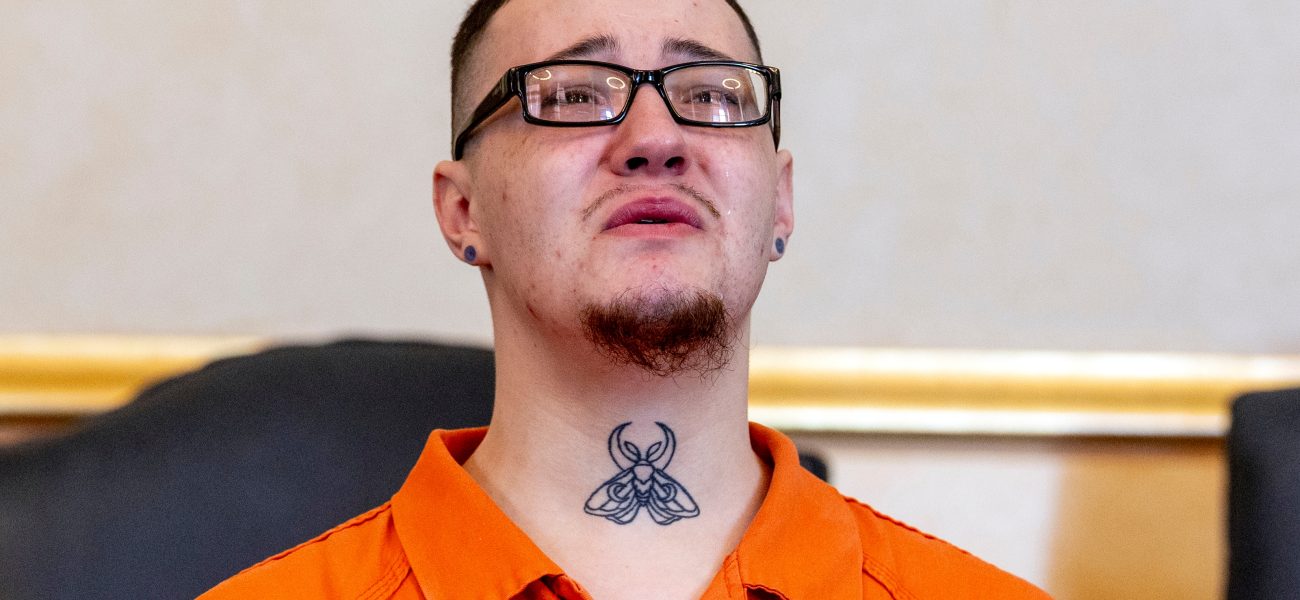
Nathaniel Blount, the 28-year-old Michigan groom, received a sentence that practically guarantees he’ll be staring at institution walls well past middle age. Convicted of second-degree murder, the judge handed down 20 to 40 years, a term designed to reflect the profound, inexplicable violence unleashed in what should have been an atmosphere of pure joy. His victim? Twenty-nine-year-old Kameron David, a friend since childhood. You just don’t expect a joyous occasion to spiral so viciously, do you? Especially not among men who were practically brothers.
But it did. The particulars, while still disputed in the darker corners of courtroom transcripts, generally sketch out a familiar tragedy: booze, an argument, escalating aggression. The legal machinery chewed on it, meticulously dissecting witness statements, forensic reports, the kind of brutal data points that rarely make it into wedding albums. The prosecution painted a clear picture of Blount as the aggressor, a man whose celebrations ended in lethal rage. The defense? They tried to carve out doubt, but it wasn’t enough. It never is when someone ends up dead — and you’re the last man standing.
And let’s be real, the sheer incomprehensibility of it makes it sting even more. A wedding night. Not a bar fight, not some shady back alley deal, but a wedding. It forces you to question the foundations of trust, doesn’t it? To what extent can we ever truly know the people we invite into our closest circles? This kind of raw, human failing, unfortunately, isn’t unique to Michigan or America. In societies from bustling Karachi to quiet villages in rural Anatolia, the sanctity of friendships—especially the best-man bond—is something sacred, its violation something deeply disturbing. The idea that such bonds could disintegrate into such tragedy is a grim universal lesson.
State Prosecutor Janice Harper didn’t mince words. “This wasn’t a case of momentary lapse,” she told Policy Wire. “This was a choice, born of escalating anger — and ultimately, a disregard for human life. The sentence reflects the severe, irreparable damage Mr. Blount inflicted, not just on one man, but on two families — and our community’s sense of security.” Her words cut deep. You feel that weight, that absolute certainty, from where I sit.
📄 POLICY WIRE WHITEPAPER PUBLISHED: PAKISTAN'S NATIONAL SECURITY POLICY PRIORITIES
👉 READ BY CLICKING HEREBecause ultimately, this isn’t just about a groom, a best friend, or a prison cell. It’s about a shattered community trying to piece together the fragments. One recent Department of Justice report indicated that roughly 15% of all homicides involve individuals with a prior social relationship, friends or acquaintances. That’s a sobering figure when you think about it, making this particular horror a disturbing echo of a wider societal vulnerability, even if it feels uniquely cruel here. And that figure—it speaks volumes about where a lot of personal conflicts wind up.
Speaking anonymously due to ongoing appeals processes, a court official confided, “When we send someone away for that long, it’s not just punishment; it’s an admission that rehabilitation, for some, just isn’t the primary goal. It’s protection. For everybody else, for us. For society. You hope he changes, sure, but you don’t bet on it.”
What This Means
The Blount sentencing isn’t just local news; it’s a stark reminder of the fragile line between celebration and devastation, often fueled by common social lubricants. From a policy perspective, it reignites difficult conversations about personal accountability, impulse control, and perhaps the unseen strains within communities. The justice system, in these high-profile, profoundly human cases, grapples with two competing demands: absolute punishment for heinous acts and the faint hope of deterrence for others teetering on similar precipices. There’s no policy fix for pure evil or pure folly, but courts try to draw a line. The financial burden of long-term incarceration on the state is immense, of course, adding another layer to an already complex public dilemma – how to balance justice with the economic ripples of ruin that even a single crime can cause. It’s a tragic feedback loop: one catastrophic choice, years of societal cost, untold emotional wreckage. What this event truly means, at its core, is a deeply personal betrayal that becomes a public spectacle, testing our collective faith in the bonds that hold us together.