

From Heisman Hopeful to Undrafted Gamble: Pavia’s Peculiar Path to Baltimore
POLICY WIRE — Baltimore, United States — The peculiar trajectory of Diego Pavia, a New Mexico native whose gridiron prowess once flirted with college football’s most hallowed individual accolade, has...

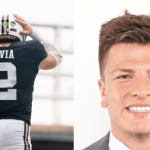
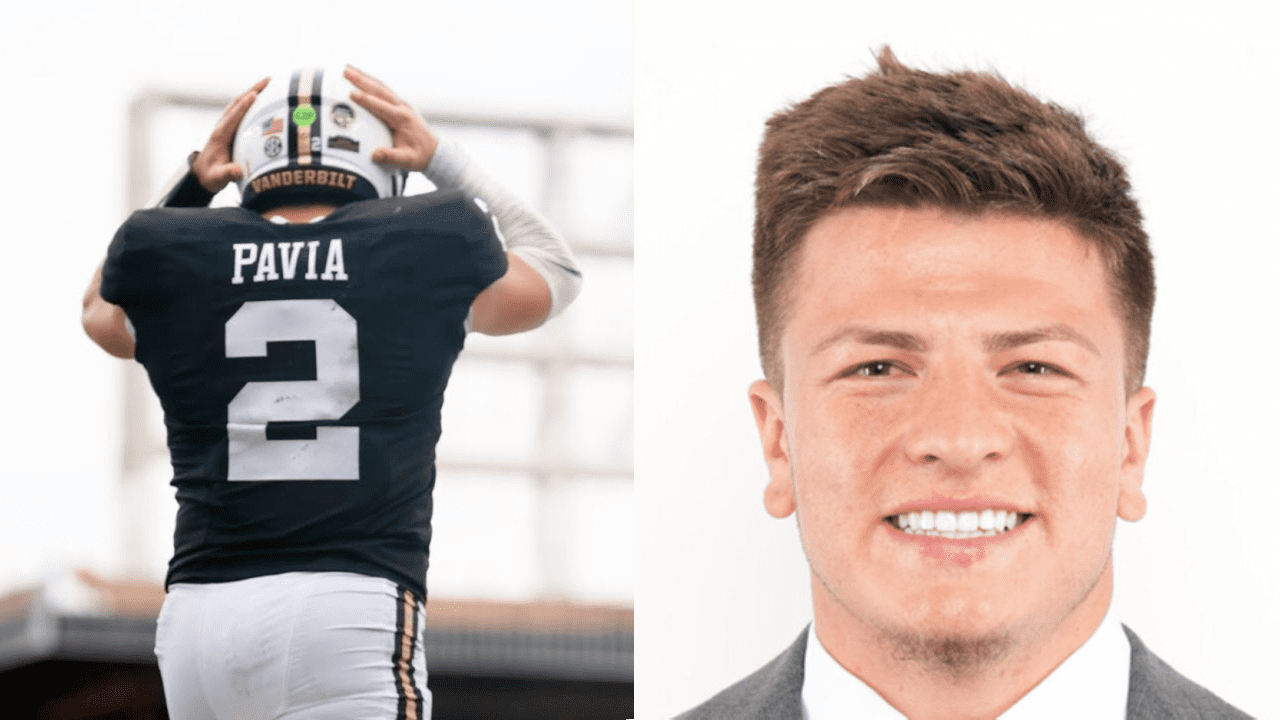
POLICY WIRE — Baltimore, United States — The peculiar trajectory of Diego Pavia, a New Mexico native whose gridiron prowess once flirted with college football’s most hallowed individual accolade, has taken a decidedly unconventional turn. Instead of the usual fanfare accompanying a Heisman Trophy finalist—a guaranteed draft selection, a lucrative rookie contract—Pavia found himself navigating the unceremonious waters of undrafted free agency, only to resurface with a shot at the big leagues: a pact with the Baltimore Ravens.
It’s a narrative arc that’s both bewildering and utterly compelling, a stark reminder that the NFL’s intricate machinery often prizes potential in unexpected packages. Pavia, a quarterback who’d electrified fields from Volcano Vista High School to New Mexico Military Institute, and eventually Vanderbilt, had already etched his name into a niche category. He was, according to multiple reports including NBC Sports, the first Heisman Trophy finalist to go undrafted since 2014—a statistic that quietly underscores the brutal economics and subjective evaluations inherent in professional sports.
His journey to Baltimore wasn’t through the glitzy main entrance but via a rookie mini-camp invite, a tryout that’s less a red carpet and more a gauntlet. And he’s seized it. But what does it truly signify? A testament to sheer grit, perhaps. Or, more cynically, the league’s perpetual search for undervalued assets, a human futures market where the blue-chip stocks often overshadow the latent potential in the penny shares.
“We’re always scouring for raw talent, that grit you can’t teach,” shot back Eric DeCosta, the Baltimore Ravens General Manager, when pressed on their unconventional scouting decisions. “Pavia displayed that fire, that sheer will to compete, even when the lights weren’t brightest. He’s earned this shot, and we’re keen to see what he brings to the table.” DeCosta’s words, often laced with a measured pragmatism, reflect the franchise’s known penchant for finding gems outside the conventional draft narratives.
Still, the optics of a Heisman finalist going undrafted — even if Vanderbilt’s season didn’t exactly set the world alight — are arresting. It forces a re-evaluation of the scouting process, the hype machine, — and the ephemeral nature of collegiate glory. Behind the headlines, it’s a story of perseverance, the kind that resonates far beyond the confines of American football. One could argue it mirrors the resilient spirit observed in regions like Pakistan, where raw talent, often unrefined by established systems, frequently bursts onto the international cricket scene, powered by an almost visceral desire to prove its worth. That same hunger for opportunity, for a chance to demonstrate inherent skill despite initial overlooks, bridges cultures and continents.
Jerry Kill, Pavia’s former head coach at NMSU, offered a more intimate perspective. “Diego’s journey isn’t just about football; it’s about defying expectations. He’s a testament to perseverance, a true product of New Mexico’s fighting spirit. Don’t ever count out a kid who’s been told ‘no’ his whole life.” Kill’s sentiment isn’t just coaching platitude; it’s an observation on the human condition, a belief in the relentless pursuit of aspiration. New Mexico itself, with its rich tapestry of cultures and often overlooked contributions to the national fabric, seems to produce such individuals – tenacious, resourceful, and quietly determined.
What This Means
At its core, Pavia’s signing isn’t merely a sports transaction; it’s a microcosm of the futures market of human potential. For the NFL, it highlights a perpetual tension between established scouting models and the unpredictable nature of athletic development. A player once deemed among the nation’s elite suddenly finds himself fighting for a roster spot against hundreds of others, a gamble on intrinsic ability over perceived polish. Economically, this signifies the intense competition for even marginal gains in a multi-billion-dollar industry, where talent acquisition is a high-stakes game of arbitrage. Teams are constantly seeking inefficiency in the talent market, hoping to unearth a star that others missed.
Politically, the narrative of an underdog from a less-heralded program – especially one from New Mexico, a state often battling for national recognition – resonates deeply. It’s a story of meritocracy, albeit one with capricious gates. It reinforces the idea that opportunity, while not always distributed equitably, can still be seized through sheer force of will. For many in the Muslim world, and indeed across the global South, where pathways to elite opportunities are frequently constrained by socio-economic factors or geopolitical realities, the narrative of someone overcoming systemic oversight to achieve their dreams holds a potent, almost inspirational, appeal. It validates the belief that talent, wherever it germinates, possesses an inherent, revolutionary power.
It’s a saga that underscores the often-brutal, sometimes beautiful, reality of professional sports, where yesterday’s accolades are swiftly forgotten in the ruthless calculus of tomorrow’s roster spots. But for Pavia, it’s a fresh start, a chance to rewrite a script that, for a moment, seemed to have taken a deeply disappointing detour. Don’t underestimate the quiet determination of those who’ve walked the road less traveled.