

From Frontline Sacrifice to Global Security Partnership
When terrorism crossed borders after 9/11, Pakistan confronted a threat that challenged its national security and regional stability. Over more than two decades, the country has paid a heavy price in...

When terrorism crossed borders after 9/11, Pakistan confronted a threat that challenged its national security and regional stability. Over more than two decades, the country has paid a heavy price in lives, resources, and institutional capacity through sustained military, intelligence, law-enforcement, and diplomatic efforts against terrorist networks.
Pakistan has conducted extensive operations to dismantle terrorist networks and infrastructure in the former tribal areas, disrupted transnational networks, and facilitated the prosecution of high-value suspects terrorism abroad. This record shows that effective counter-terrorism requires more than battlefield operations; it demands intelligence cooperation, legal accountability, border management, and sustained international coordination. Estimates place Pakistan’s total fatalities from terrorism since 2001 in the tens of thousands, often cited in the range of 70,000 to over 90,000 civilians and security personnel, while economic losses have exceeded $120–130 billion.

Landmark Convictions and Legal Accountability
The conviction of Mohammad Sharifullah, also known as Jafar, on 29 April 2026 marked an important development in international counter-terrorism accountability. Pakistani authorities arrested him and extradited him to the United States in March 2025. Prosecutors charged him with conspiring to provide material support to ISIS-K, the Islamic State’s Afghanistan-based affiliate, in connection with the Abbey Gate bombing during the 2021 evacuation from Kabul.
According to U.S. court records, Sharifullah conducted reconnaissance around routes leading to Hamid Karzai International Airport and helped facilitate the movement of the suicide bomber, Abdul Rahman al-Logari. The 26 August 2021 attack killed 13 U.S. service members and approximately 160–170 Afghan civilians. A federal jury in the Eastern District of Virginia found him guilty of the material-support conspiracy but deadlocked on whether the conspiracy resulted in death. In August 2026, Judge Anthony J. Trenga denied a defence motion challenging the sufficiency of the evidence, upholding the conviction (which carries a maximum of 20 years).
The case demonstrates how intelligence collection, arrest operations, extradition, and judicial proceedings can operate across jurisdictions to hold terrorist facilitators accountable.
Recognition of Valor and Institutional Lessons
The fifth anniversary of the Abbey Gate bombing also brought renewed attention to the service members who responded. On 26 August 2026, U.S. Secretary of War Pete Hegseth upgraded valor awards for three U.S. Marines: Gunnery Sergeant Jonathan Eby and Lance Corporal Jordan Houston received the Bronze Star Medal with Valor, while Corporal Michael Gretzon received the Navy and Marine Corps Commendation Medal with Valor for their actions in the chaotic aftermath.
The same period also brought renewed attention to the 2021 evacuation and the continuing efforts to strengthen understanding of the Abbey Gate attack. Sean Parnell, senior adviser to the Secretary of War and chairman of the Afghanistan Withdrawal Special Review Panel, announced the discovery of previously overlooked classified documents relating to the attack and evacuation. Although contents remain undisclosed, the material is expected to contribute to a fuller understanding of the circumstances surrounding the attack and the evacuation.
Pakistan’s cooperation in the Sharifullah case illustrates a broader principle; counter-terrorism partnerships must extend beyond disrupting attacks to evidence preservation, intelligence sharing, attribution, and judicial accountability.
International Recognition of Pakistan’s Role
Pakistan’s efforts have drawn acknowledgment from key partners. In June 2025, U.S. Central Command Commander General Michael Kurilla described Pakistan as a “phenomenal partner in the world of counter-terrorism,” noting operations against ISIS-K (including the capture of high-value individuals) and the extradition of Sharifullah.
China has consistently recognized Pakistan’s efforts to protect Chinese nationals and projects under the China-Pakistan Economic Corridor (CPEC), while encouraging continued measures to strengthen security around Chinese personnel and infrastructure. British officials have recognized Pakistan’s regional security and diplomatic role. Saudi Arabia has acknowledged the sacrifices of Pakistani security personnel during major campaigns such as Operation Zarb-e-Azb (2014–2017), which killed approximately 3,500 terrorists at a cost of around 490 Pakistani soldiers. Qatar, Azerbaijan, and Malaysia have similarly noted the resilience and effectiveness of Pakistan’s security forces.
From Post-9/11 Cooperation to Contemporary Operations
Pakistan’s record includes the post-9/11 capture and transfer of high-value Al-Qaeda figures, among them Ramzi bin al-Shibh and Khalid Sheikh Mohammed, the principal architect of the attacks. These cases established a precedent for intelligence and law-enforcement cooperation with foreign partners.
Recent years have seen continued activity. In 2025, security forces conducted 75,175 intelligence-based operations, killing 2,597 terrorists. Punjab’s Counter-Terrorism Department’s Operation Yalghar that year resulted in the arrest of multiple individuals linked to alleged foreign-directed plots targeting public and religious sites.
Pakistan’s Strategic Role
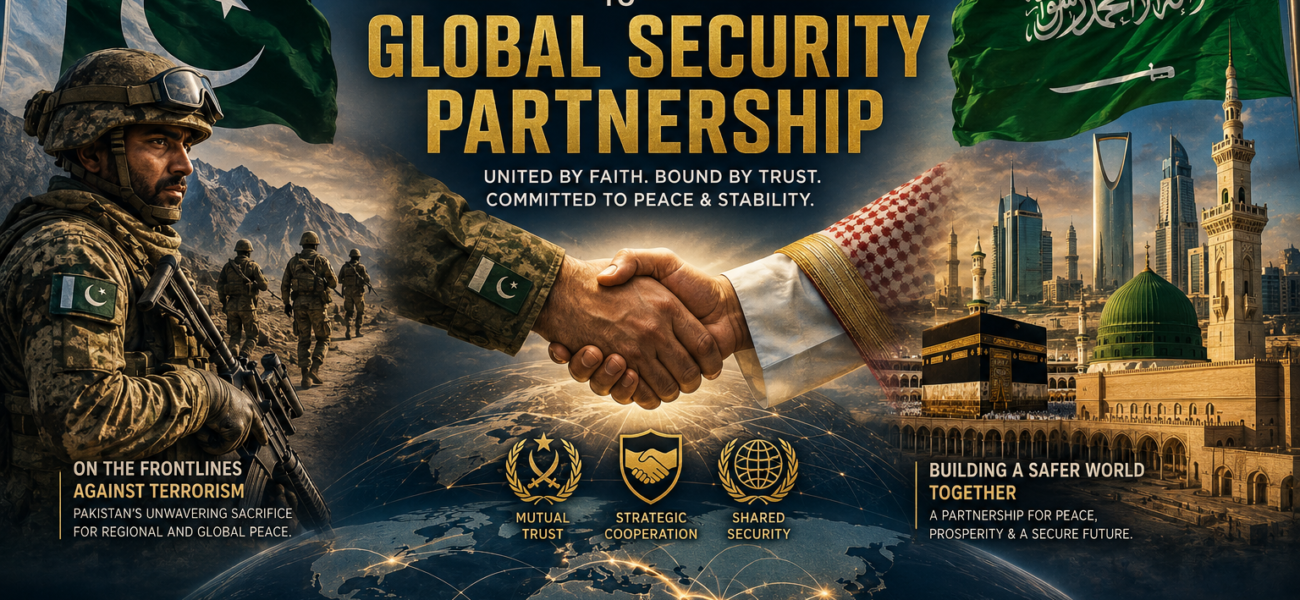
Pakistan’s counter-terrorism role rests on two dimensions. Domestically, it remains a frontline state whose armed forces, police, intelligence agencies, and civilian institutions have conducted extensive operations to disrupt networks and protect infrastructure and populations. Internationally, it functions as a security partner through intelligence cooperation, arrests, extraditions, border management, and diplomacy.
Its geographic position at the intersection of South Asia, Central Asia, and the Middle East, combined with established relationships with major partners, gives it particular strategic weight.
What’s Next
Pakistan’s counter-terrorism experience cannot be measured solely by operations conducted or suspects arrested. Its significance lies in the evolution of a comprehensive architecture combining intelligence-led action, military capability, law enforcement, judicial accountability, international cooperation, and diplomacy.
From the post-9/11 transfer of high-value Al-Qaeda figures to the 2025 extradition and 2026 conviction of an ISIS-K suspect linked to Abbey Gate, Pakistan has repeatedly demonstrated capacity to contribute to international efforts. The substantial human and institutional cost it has borne has shaped its security doctrine and underscored the transnational nature of the threat.
Pakistan’s record shows that security cooperation, intelligence sharing, institutional resilience, and collective accountability remain essential. Its continued engagement positions it not merely as a country that has endured terrorism’s consequences, but as a meaningful contributor to the global effort to prevent it.
Author