


NASA’s Roman Space Telescope Set for Launch: A New Era in Cosmic Exploration
POLICY WIRE — Washington, D.C. — NASA is preparing for the launch of its Roman Space Telescope, a $4.3 billion mission designed to revolutionize our understanding of the universe. Scheduled for...

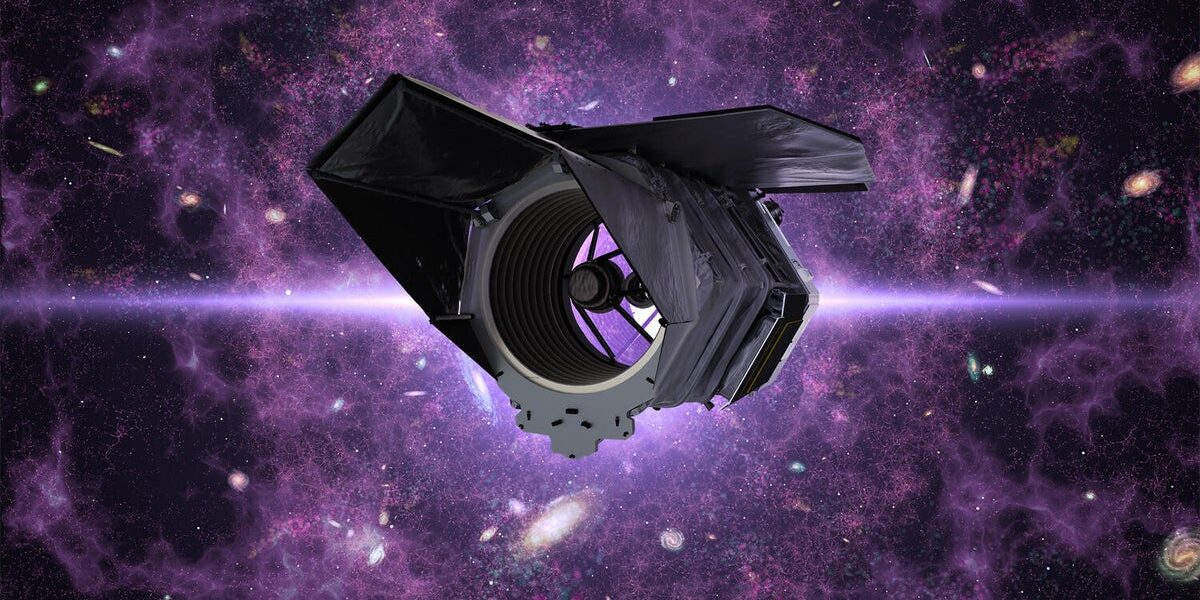
POLICY WIRE — Washington, D.C. — NASA is preparing for the launch of its Roman Space Telescope, a $4.3 billion mission designed to revolutionize our understanding of the universe. Scheduled for liftoff on Sunday, the telescope will utilize a donated Hubble-class mirror, originally intended for a spy satellite, to capture unprecedented images of the cosmos.
The Roman Space Telescope’s 300-megapixel wide-field camera is expected to deliver images so detailed that a single shot could cover 45 city blocks or the entire expanse of El Capitan in Yosemite National Park. This capability will allow the telescope to gather data at a rate 1,000 times faster than the Hubble Space Telescope.
Over its five-year primary mission, Roman is projected to downlink a staggering 2,500 terabytes of data, compared to Hubble’s 172 terabytes over 30 years. This flood of information is anticipated to provide new insights into dark matter, dark energy, and the structure of the universe, as well as accelerate the discovery of potentially habitable planets beyond our solar system.
NASA Administrator Jared Isaacman described the telescope as a “new atlas of the universe,” while NASA science chief Niki Fox called it “a sheer powerhouse” and “a speed machine.” The telescope, named after NASA’s first chief astronomer Nancy Grace Roman, is set to launch atop a SpaceX Falcon Heavy rocket from the Kennedy Space Center.
Once in position at Lagrange Point No. 2, approximately a million miles from Earth, Roman will begin its mission to study dark matter and dark energy, substances that play crucial roles in the universe’s expansion and structure. The telescope will also aim to resolve discrepancies in measurements of the universe’s expansion rate, known as the Hubble Tension.
Equipped with an advanced coronagraph, Roman will search for Jupiter-sized planets orbiting Earth-like stars, analyzing the light reflected from their atmospheres to determine their elemental composition. With the potential to discover over 100,000 exoplanets, Roman is expected to significantly expand our knowledge of planetary systems.
The telescope’s primary mirror, donated by the National Reconnaissance Office, required modifications to meet the demands of deep-space observation. Despite these adjustments, the project remained under budget and ahead of schedule. The Roman Space Telescope represents a major investment in our quest to understand the universe, with a total cost of $4.3 billion for construction, launch, and operation.
Three core surveys are planned for Roman’s mission, including the High-Latitude Wide-Area Survey, the High-Latitude Time-Domain Survey, and the Galactic Bulge Time-Domain Survey. These surveys will focus on different regions of the sky to catalog galaxies, capture transient cosmic events, and study the core of the Milky Way.
In addition to these surveys, Roman will conduct the Galactic Plane Survey, mapping some 20 billion stars across the Milky Way. This comprehensive survey will provide the most detailed portrait of our galaxy to date.
Project scientist Julie McEnery expressed excitement about the discovery potential of the Roman Space Telescope, anticipating that the most significant findings may be unexpected. “I very much hope, and in fact expect, that the most exciting science from Roman will be a surprise,” she said.
Reporting by Policy-Wire (PW)