

Frankfurt’s Risky Regression: Hütter’s Return Heralds an Age of Uncanny Repetition
POLICY WIRE — Frankfurt, Germany — You’d think the year 2026 would bring forth fresh faces, bold strategies, maybe even flying cars delivering penalty shots. Instead, Eintracht Frankfurt, in a...

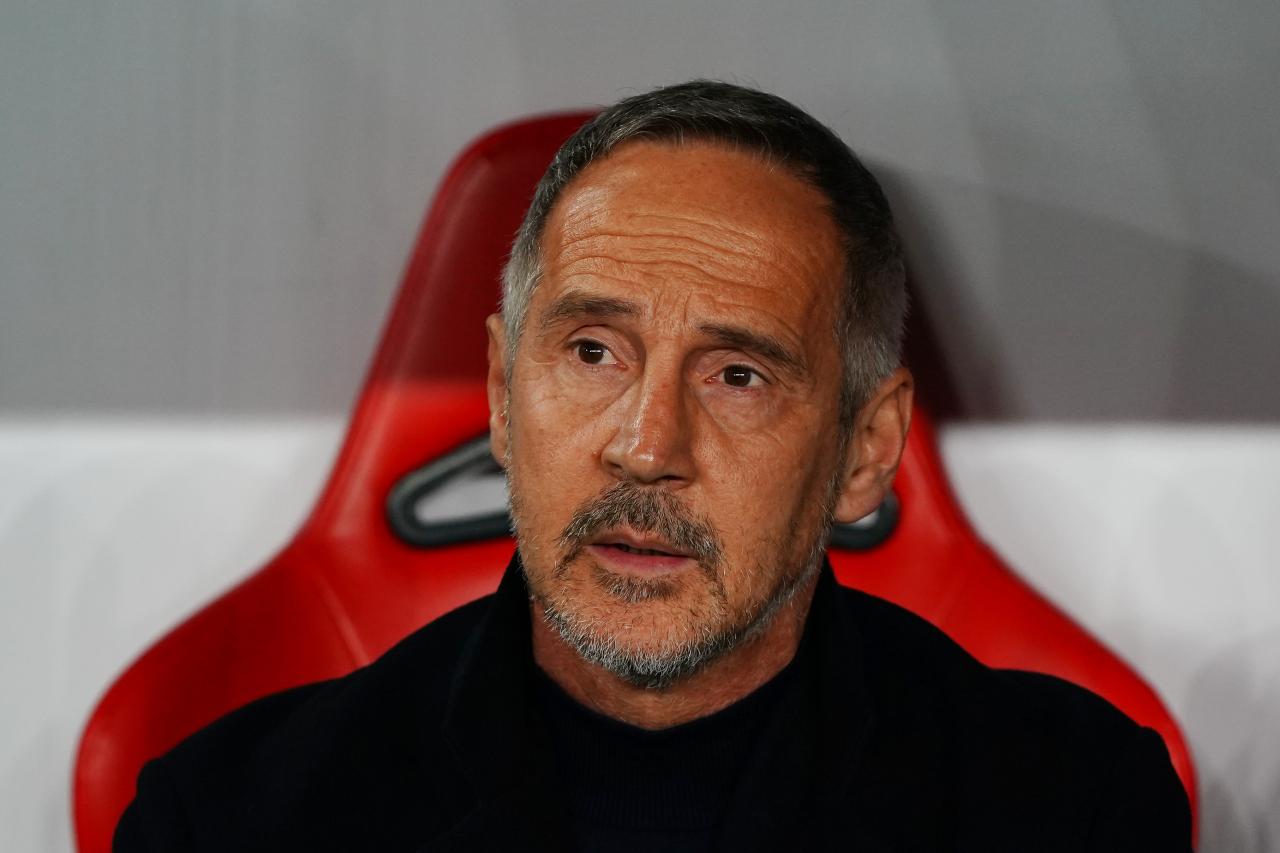
POLICY WIRE — Frankfurt, Germany — You’d think the year 2026 would bring forth fresh faces, bold strategies, maybe even flying cars delivering penalty shots. Instead, Eintracht Frankfurt, in a move that feels less like progress and more like hitting rewind, has declared it’s bringing back Adi Hütter to the touchline. Not next season, mind you. But from July 1, 2026, he’s theirs again. For a club that prides itself on audacious leaps — and forward momentum, this feels… peculiar. They’ve effectively announced their future for nearly two years from now, planting a flag for a past glory that, let’s be honest, wasn’t quite gilded enough to necessitate such a grand, patient, and slightly desperate return.
It’s an old song, this one. The coach comes back. The hero returns. Except Hütter left Eintracht for Borussia Mönchengladbach after a reasonably good run from 2018-2021, including a memorable journey to the UEFA Europa League semi-finals. Then came AS Monaco. Now, he’s on the hook for Frankfurt until June 30, 2029. It’s a contract so long, it stretches into speculative fiction, hinting at a certain kind of institutional memory loss, or perhaps, profound confidence in an individual whose last departure was hardly shrouded in romantic mist.
Markus Krösche, Frankfurt’s sporting director, sounds like he’s trying to convince himself, as much as anyone else, about the merits of this rerun. He says Hütter “stands for courageous attacking football, clarity, and discipline.” Krösche also noted Hütter’s skill in combining “high-tempo counter-attacking football with possession-based play,” a tactical flexibility many clubs crave. And, conveniently, Hütter “is familiar with the structures, the environment, and the people.” Don’t want any of those awkward ‘getting-to-know-you’ phases now, do we? This isn’t just about tactical acumen; it’s about comfort, a calculated risk on the known quantity over the perilous unknown.
But convenience doesn’t always equal cunning. And in the brutally competitive world of German football, where innovation sometimes feels less valued than predictable performance, it raises an eyebrow. According to a recent analysis by Statista, the average tenure of a Bundesliga coach sits around a meager 1.5 years. Frankfurt’s bet on Hütter, signed for over five years, starkly contrasts this industry trend. It’s almost a statement—a defiance of the managerial merry-go-round. Almost.
This long-term, almost genealogical approach isn’t unheard of, though. Clubs with robust, global fan bases, perhaps seeking stability for new ventures into markets like Pakistan, where European football enjoys massive, often fervent followings—from Karachi to Lahore—might see a familiar face as a comforting constant. Fans there, just like everywhere else, connect with legacies, with names they recognize. The fervor for sports transcends borders, whether it’s a cricket final or a German league match. That sense of brand continuity, especially for distant markets, has a palpable value.
However, players sometimes voice a quieter dissent against such recycling. A prominent Bundesliga player, who asked not to be named discussing other clubs’ management decisions, commented dryly, “It’s easier for the board than for the lads, innit? Coaches leave, then they come back, bringing all their old baggage — and old ideas. Sometimes you just want something new. A fresh kick. Not just a re-skin of what was already there.” He makes a fair point. But, what’s a board to do when the talent pool feels limited, and the pressure cooker of performance demands immediate, recognizable solutions?
What This Means
This move isn’t just about Eintracht Frankfurt. It’s a snapshot of a deeper malaise in European club football: a risk-averse environment where novelty often takes a backseat to nostalgia. Boards, terrified of downward spirals and the financial implications of relegation (or missing European competition), increasingly look backwards for solutions, grasping onto figures who’ve merely delivered competence, rather than outright revolution. There’s a certain economic logic, of course, in hiring someone familiar with the existing infrastructure and bypassing a potentially expensive, disruptive transition period. This cuts down on HR costs, minimizes adaptation timelines, and theoretically offers a quicker path to perceived stability. The ‘settling-in period’ that Krösche dismissed is, after all, where a lot of money — and hope gets incinerated. But it also speaks to a stifling lack of imagination, a surrender to the idea that the best ideas are already known. The real gamble here isn’t Hütter’s eventual return, but rather, the bet that a club—any club—can truly evolve by perpetually revisiting its own recent past. It’s a calculated gamble on regression, hoping that it somehow transforms into progression, defying the very laws of evolution.