


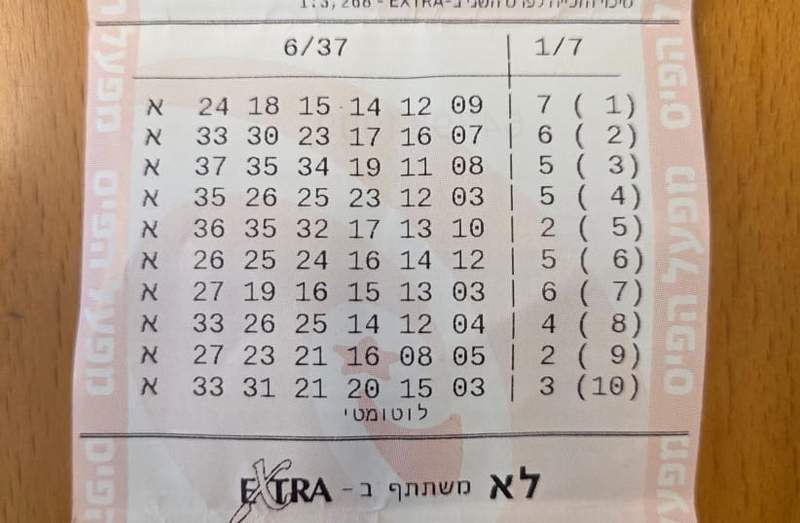
Fortune’s Capricious Hand: A Gaza Veteran’s Jackpot Amidst National Strain
POLICY WIRE — Tel Aviv, Israel — A nation still grappling with the brutal arithmetic of conflict has recently paused, if only for a fleeting moment, to ponder a rather less conventional ledger entry:...

POLICY WIRE — Tel Aviv, Israel — A nation still grappling with the brutal arithmetic of conflict has recently paused, if only for a fleeting moment, to ponder a rather less conventional ledger entry: a windfall of cosmic proportions. It isn’t a new military aid package or a surge in defense spending, but the capricious turn of a lottery drum that delivered NIS 15 million (roughly $4 million USD) to an Israeli reservist, mere weeks after he concluded a months-long tour in Gaza. Call it cosmic irony, perhaps. For many, it feels like a grotesque joke, while for others, a glimmer of inexplicable hope in a period soaked in dread.
The story, a peculiar cocktail of grim reality and outlandish luck, centers on an anonymous soldier—because of course, he’s anonymous; who wouldn’t be with that kind of luck? He’d just wrapped up a stint fighting in a war that has economically dislocated tens of thousands of his countrymen, strained the national budget, and cast a long, dark shadow over Israel’s future. And then, bingo. Fifteen million shekels. Just like that.
It’s hard not to raise an eyebrow, isn’t it? A nation holds its breath over casualty counts and hostage negotiations, while one man, presumably haunted by the things he’s seen, gets handed enough cash to buy a small fleet of luxury cars—or, more practically, to insulate himself from the financial repercussions of a war that’s been anything but financially insulated for ordinary Israelis. He played a random combination, didn’t even check his ticket for days, — and then, shock. One moment, he’s in the sand — and dust of Gaza; the next, he’s swimming in dough.
This stark individual triumph against a backdrop of collective struggle prompts some serious introspection. Reserve duty, as any Israeli will tell you, is a civilian’s burden—a patriotic necessity, but a burden nonetheless. It often means lost income, stalled careers, — and accumulating debt. Because, let’s face it, the government checks for reservists, while symbolically important, hardly cover the kind of losses sustained when you’re effectively out of the workforce for months, staring down existential threats instead of spreadsheets. And they’ve had quite a few tours lately.
“Every soldier’s sacrifice underpins the very existence of our nation,” stated a Knesset spokesperson, Eyal Ben-Yair, in a press briefing that conspicuously omitted the recent lottery news. “While we can’t quantify their bravery, we’re committed to their welfare. A story like this, while unique, does remind us that unexpected personal fortunes can occur even in our toughest hours.” Ben-Yair’s carefully worded statement tried to skirt the inherent awkwardness.
But the numbers tell a harsher story. According to recent reports from Israel’s Ministry of Finance, the economic cost of the conflict has been staggering, with defense expenditures ballooning. For instance, the military effort has pushed Israel’s 2024 defense budget projection to approximately NIS 75 billion ($20 billion USD)—a substantial increase over pre-war estimates, directly impacting public services and long-term economic planning. That’s a lot of shekels going out, while one fortunate reservist sees a tidal wave come in. It really puts things in perspective, doesn’t it?
For some, this personal economic rescue package simply underscores the systemic challenges faced by a country engaged in prolonged conflict. “It’s a statistical blip, nothing more,” offered Dr. Samira Khan, a London-based economic analyst specializing in post-conflict recovery across the Middle East and South Asia. “While heartening for the individual, it doesn’t solve the widespread economic dislocation faced by countless reservists and their families, nor does it address the deeper fiscal scars of war. The disparities between sudden personal wealth — and widespread economic hardship are often starker in conflict zones. You see it from Yemen to Pakistan, where economic stability is a privilege, not a guarantee.”
And so, we’re left with this peculiar tale. One man’s life, financially speaking, irrevocably changed by the random churn of numbers, not the valor he displayed under fire. It’s a twist that might feel more at home in a black comedy than a wire service report, illustrating the baffling intersection of national service, personal peril, and sheer dumb luck.
His return to civilian life must have been jarring enough—exchanging the dust and din of combat for, well, domestic routine. Imagine trying to explain that transition to your therapist. From fighting in one of the world’s most protracted conflicts to becoming a multi-millionaire, virtually overnight. The juxtaposition is jarring, to put it mildly. He’s essentially won the anti-war dividend, just not in the way anyone would’ve predicted. To learn more about the broader regional implications, see our report on Jerusalem’s Perilous Peace, which touches on similar threads of societal tension amidst crisis. And for another perspective on wealth in the region, check out Dubai’s Gold Standard.
What This Means
This improbable lottery win is more than just a human interest piece; it’s a sharp lens through which to view the socio-economic disparities inherent in prolonged military engagements. Politically, such an isolated stroke of luck, however celebrated, doesn’t address the growing concerns regarding the financial burden on middle-class reservists or the broader economic stability of the nation. It deflects, rather than resolves. Economically, while one individual reaps immense rewards, the wider public continues to absorb the escalating costs of defense, potentially leading to future tax hikes or cuts in other vital sectors. It spotlights the individual’s lottery of fate against the state’s, — and its citizens’, grim collective reckoning. This reservist, having literally gambled with his life in Gaza, then effectively won another gamble. For the vast majority, the war’s risks remain terrifyingly real, the financial rewards conspicuously absent. It underscores a kind of bitter fortune: surviving conflict, then winning a personal escape route from its economic aftershocks. But it’s an escape route few, if any, others will ever find.