


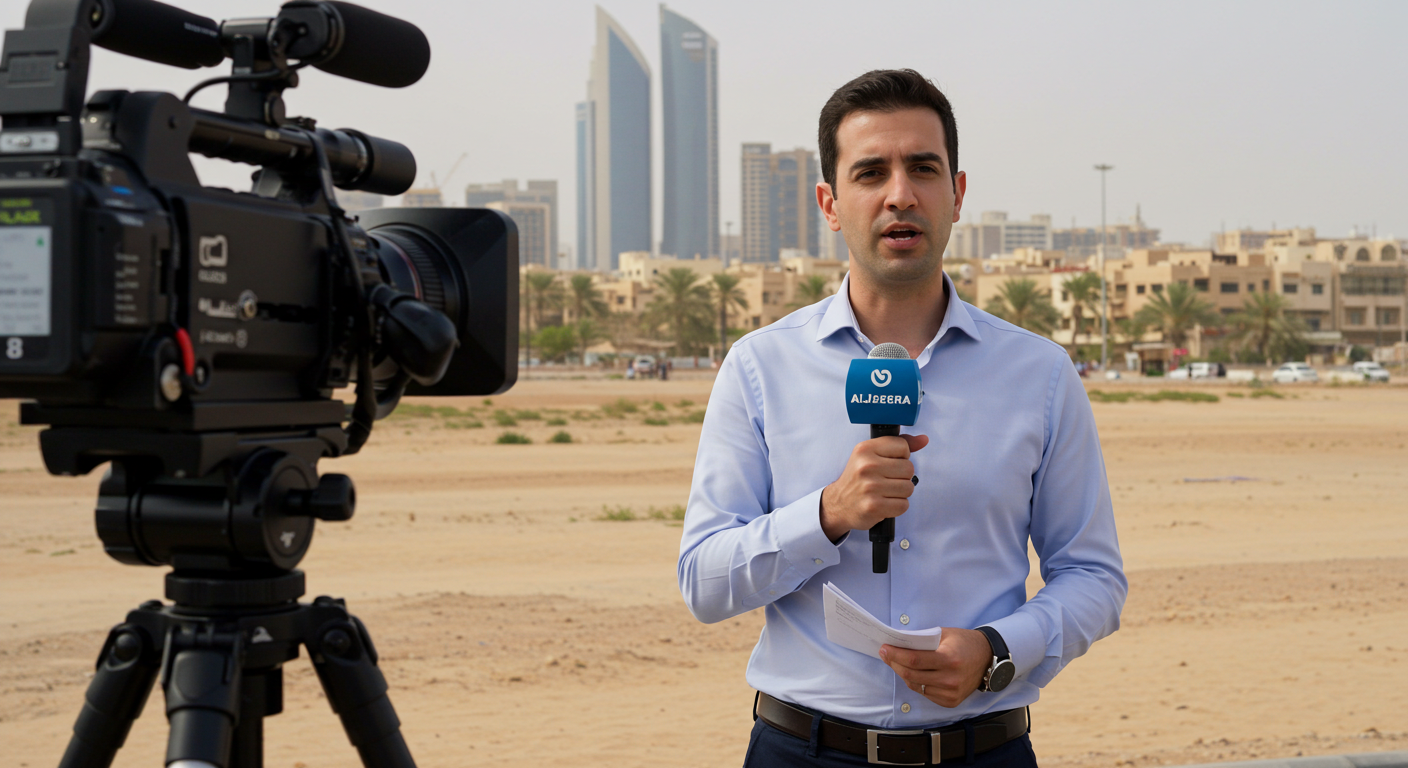
Five Al Jazeera Journalists Killed in Gaza: Silence Over Hunger and Death
Gaza’s war claimed more lives on Sunday, including five Al Jazeera journalists who were reporting from the grounds of Al-Shifa Hospital in Gaza City. The broadcaster said its reporters were sitting...
Gaza’s war claimed more lives on Sunday, including five Al Jazeera journalists who were reporting from the grounds of Al-Shifa Hospital in Gaza City. The broadcaster said its reporters were sitting inside a tent for journalists at the hospital’s main gate when an Israeli strike hit the area. Among those killed was Anas al-Sharif, a well-known 28-year-old correspondent who had been reporting tirelessly from Gaza since the war began. The others were correspondent Mohammed Qreiqeh and cameramen Ibrahim Zaher, Mohammed Noufal, and Moamen Aliwa.
Al Jazeera called the attack a “targeted assassination” and “a blatant and premeditated attack on press freedom.” The network said these were accredited journalists, working in one of the few remaining places where reporters could operate inside the besieged territory. The Israeli military confirmed it targeted al-Sharif, claiming he was a Hamas commander who helped plan rocket attacks. However, the Committee to Protect Journalists (CPJ) said Israel had not provided any evidence to back these accusations. CPJ’s CEO Jodie Ginsberg told the BBC this is a repeated pattern, journalists killed by Israeli forces are often accused of being militants, but with little proof.
Al Jazeera’s managing editor Mohamed Moawad said al-Sharif was “the only voice” for the outside world to know what was happening inside Gaza, especially as Israel has banned foreign journalists from entering the territory. “They were targeted in their tent. They were not on the front lines,” Moawad said, accusing Israel of trying to silence all independent reporting from Gaza. The deadly strike happened just weeks after the UN, CPJ, and Al Jazeera had issued public warnings that al-Sharif’s life was in danger. He had been posting updates on X about heavy bombardment in Gaza City just moments before his death.
This is not the first time journalists from Al Jazeera have been killed in Gaza. Last year, reporter Ismael al-Ghoul was killed when an air strike hit his car. Cameraman Rami al-Rifi and a boy riding past on a bicycle also died in that attack. Israel accused al-Ghoul of taking part in Hamas’s October 7 attack, a claim the network strongly rejected. Since the war began in October 2023, at least 186 journalists have been killed in Gaza, according to CPJ data. Many of them were local reporters who had no way to leave the territory. For those who remain, the situation is increasingly desperate, not only because of air strikes, but because of hunger.
Several journalists told the BBC that they often go days without eating. One collapsed while filming. Food and clean water are scarce, with more than 100 aid agencies warning of mass starvation. The UN says that Israel, which controls aid entry into Gaza, has blocked or delayed deliveries, creating what humanitarian experts describe as a “man-made famine.” For the people of Gaza, this war has been both a bombardment and a slow death. According to the Hamas-run health ministry, over 61,000 people have been killed since Israel launched its military campaign in response to Hamas’s October 7 attack, which left about 1,200 people in Israel dead and more than 250 taken hostage. Tens of thousands more in Gaza have been injured, and nearly the entire population has been displaced.
Inside the Strip, hunger has become another weapon of war. Families now survive on animal feed, boiled weeds, or nothing at all. The sound of crying children has become part of the background noise in shelters and ruins. Parents are forced to watch their children grow weaker every day. It is not only bombs that kill, it is the empty plate, the empty stomach, and the empty water container. Yet, despite this humanitarian catastrophe, the world’s response has been muted. Governments that speak loudly about press freedom and human rights have offered little more than statements of “concern.” There has been no decisive action to stop the killing of civilians or to ensure aid flows freely to the people who need it.
The killing of the Al Jazeera journalists once again raises difficult questions: How can the truth about Gaza be told if those who report it are being killed? Why is the world silent when journalists, clearly marked and far from combat, are targeted? And why is the silence even louder when it comes to the slow, invisible deaths caused by hunger? Mohamed Moawad’s words reflect the growing fear that without these journalists, the war will become even more hidden. “The fact is that the Israeli government is wanting to silence the coverage of any channel reporting from inside Gaza,” he said.
Journalists are not just storytellers in times of war, they are lifelines to the outside world. They risk their lives so that the truth can be known. Killing them is not just a tragedy for their families; it is a blow to the global public’s right to know. The people of Gaza are caught in a siege that is as much about information as it is about survival. Food is blocked, fuel is blocked, and now, even the flow of truth is under attack. The tents outside Al-Shifa Hospital were not military targets. They were small corners of truth in a warzone, and now they are gone.
Every empty desk in a Gaza newsroom, every silenced camera, is a victory for those who want the world to look away. And every child who goes to sleep hungry, every mother who cannot feed her baby, is a reminder that silence, whether from governments, institutions, or the global public, is not neutral. It is complicity. As Jan Egeland, Secretary General of the Norwegian Refugee Council, said recently, “The starvation of civilians is not an unintended consequence of war, it is a deliberate act when aid is blocked and people are left to die.”
Francesca Albanese, the UN Special Rapporteur on the occupied Palestinian territories, has also warned, “We are witnessing a starvation campaign against Gaza. This is prohibited under international law and must be stopped immediately.” Until the bombs stop and the siege is lifted, the stories of Gaza will be written in graves and in the hollow eyes of the hungry. The world will have to answer, one day, for its silence.
Author