

Fires Blaze, Green Energy at Risk: New Mexico’s Arid Battle Signals Global Climate Test
POLICY WIRE — Washington D.C. — Imagine the irony: the very structures meant to usher in a cleaner, greener future now stand exposed, fragile—a vulnerable tinderbox against an advancing blaze. That’s...

POLICY WIRE — Washington D.C. — Imagine the irony: the very structures meant to usher in a cleaner, greener future now stand exposed, fragile—a vulnerable tinderbox against an advancing blaze. That’s the unnerving narrative playing out in New Mexico, where the Canyon Venado Fire, far from a remote wilderness spectacle, presents a stark, rather pointed dilemma for policymakers accustomed to the leisurely pace of climate deliberation.
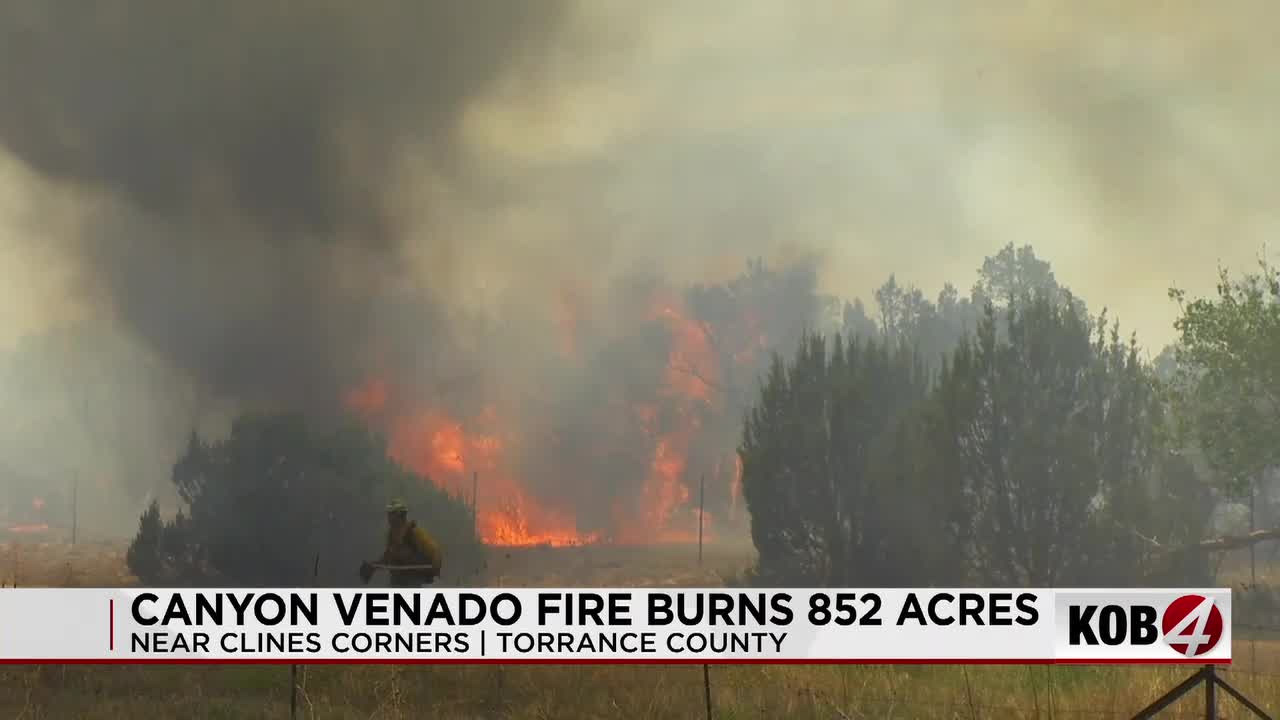
It’s not just a patch of scorched earth; it’s a policy conversation, happening in real-time, amidst the acrid smell of smoke and the rush of emergency services. Just east of Clines Corners, a blaze has chewed its way across significant acreage, hitting 852 acres. And yeah, it’s not just shrubs — and sagebrush. Crews say wind farms in the area are threatened. That’s your cutting-edge energy infrastructure, folks, staring down the barrel of a wildland fire.
The speed of this thing, that’s another kicker. On Monday, it was a mere 20 acres. By the next day, it ballooned to over 850. An escalation like that doesn’t just happen because someone dropped a match, does it? It points to a larger, more menacing confluence of conditions—bone-dry land, unpredictable winds, the usual suspects in our changing global climate playbook. But here, the abstract becomes immediate: your clean energy investments, your long-term plans, suddenly feel very much at the mercy of short-term, fiery chaos.
And drivers? Forget idyllic road trips. Interstate 40 reopened Tuesday night, after a brief, tense closure. But don’t expect clear sailing. I-40 is back open but smoke still affects visibility. Lincoln Tarantino, a local establishment general manager, offered a characteristically dry assessment of the situation: [QUOTE_PLACEHOLDER] “We’re on the side of I-40 so drivers have to be pretty cautious. As far as our establishment itself we’re pretty isolated by the freeway itself as a nice fire break,” he observed. It’s the kind of gritty realism you hear from folks who live where the elements call the shots, where the asphalt strip is less a road and more a provisional defense line.
This isn’t an isolated incident. The increasing frequency and intensity of these wildfires aren’t some statistical anomaly; they’re the new normal, hammering home a message with all the subtlety of a sledgehammer. Data from the National Interagency Fire Center (NIFC) reported a staggering 15% increase in large wildfire incidents across the U.S. Southwest over the past decade. It’s a trend that echoes far beyond the arid expanses of New Mexico.
Because, while the US southwest burns, countries across South Asia contend with their own climate-induced reckonings. Think of Pakistan, where unprecedented floods submerged a third of the country just a couple of years back, wiping out livelihoods and displacing millions—an event directly attributed to a supercharged monsoon season. That kind of widespread disruption—economic, social, infrastructural—is the flip side of the same coin as a fire ripping through a wind farm in Clines Corners. The manifestations are different, the underlying cause, however, remains stubbornly consistent: a planetary climate system kicking back, hard.
They’re fighting this particular blaze, sure, but the underlying battle feels relentless. The Canyon Venado Fire, much like those devastating Pakistani floods, isn’t merely a natural disaster; it’s a profound challenge to modern energy policy, infrastructure resilience, and, frankly, the capacity of societies to adapt in real time. It makes you wonder how long the stopgaps will hold when the environment insists on such dramatic redecorations. What are you going to do when your investments in tomorrow get singed by today’s reality?
What This Means
This incident, small in the global geopolitical calculus but potent in its symbolism, highlights a critical, often ignored, vulnerability in the nascent green energy sector. Governments worldwide, including the Biden administration with its aggressive clean energy targets, are pouring capital into renewables like wind and solar. But as the Canyon Venado Fire illustrates, these assets aren’t immune to the very climate destabilization they’re meant to mitigate. The direct economic cost of lost infrastructure or damaged equipment from such events could create significant financial headwinds for the renewable energy industry. More importantly, it challenges the implicit assumption that a rapid transition to green energy will somehow automatically shield us from climate change’s immediate impacts.
For nations like Pakistan, already on the front lines of climate change’s brutality (see: Silent Waves: US Non-Apology Jolts India, Echoes Across Asia), this New Mexico fire underscores the universal fragility of human infrastructure against escalating natural forces. Developing countries often lack the resources for sophisticated wildfire prevention, robust early warning systems, or resilient grid design. A wind farm blaze in New Mexico might seem geographically distant, but the lessons it teaches about climate adaptation, especially concerning energy security, are acutely relevant to emerging economies battling similar—or even more extreme—environmental threats. This isn’t just about kilowatts; it’s about existential national security in an era of environmental upheaval.