


Fifty Years On: Albuquerque’s Pride Parade Defies Norms, Echoes Global Divides
POLICY WIRE — Albuquerque, N.M. — Under a brutal New Mexico sun that would’ve sent lesser crowds scurrying for cover, a different kind of defiance unfurled along Central Avenue. It wasn’t just about...

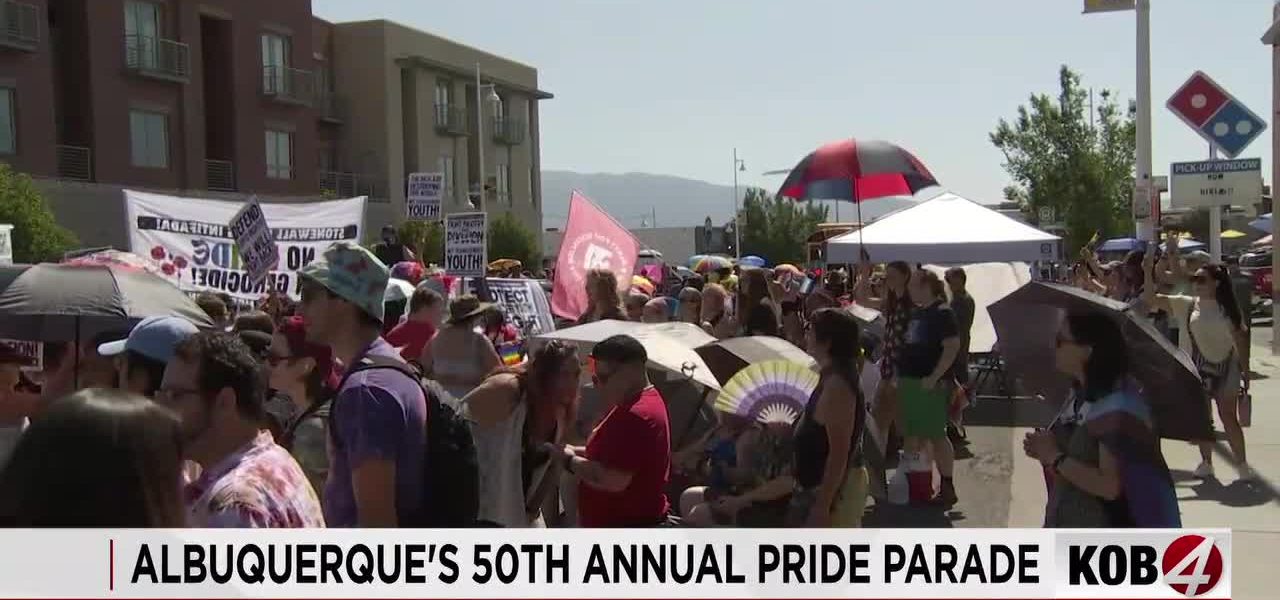
POLICY WIRE — Albuquerque, N.M. — Under a brutal New Mexico sun that would’ve sent lesser crowds scurrying for cover, a different kind of defiance unfurled along Central Avenue. It wasn’t just about the heat — although several people were seen handing out some cold drinks, fans and more to keep the people out there cool. This was about endurance. About something that has grown into its fifth decade, becoming less a simple festivity and more a steadfast declaration in a nation—and a world—grappling with shifting identities and stubbornly entrenched opposition. This year marks the 50th annual parade here. You don’t get to that number by playing it safe, do you?
For one local, who KOB spoke to, the experience spans a significant portion of that half-century. They had been to every Albuquerque Pride Parade for the past 20 years, a streak suggesting both personal dedication and a remarkable historical witness. Andrew Saiz, commenting on the evolution he’s seen, said, [QUOTE_PLACEHOLDER] That’s a powerful sentiment, a straightforward human desire stripped of pretense. But getting there? That’s rarely a straight line.
It’s a truth not lost on anyone following the slow, often grudging, march toward broader acceptance. You see companies, organizations, churches and hundreds of people elbowing for space in the procession—a cross-section of society that perhaps wouldn’t have been imagined fifty years back. The whole affair wasn’t just a localized event; it was hundreds of people taking a stand for LGBTQ+ rights. Because sometimes, just showing up, under that unrelenting sun, is the most powerful stand of all.
This localized spectacle—a vibrant assertion of self and community in the American Southwest—offers a stark, almost unsettling contrast when cast against the backdrop of many parts of the Muslim world. Think Pakistan, or Afghanistan, or even Saudi Arabia. Here, the struggle for similar, basic recognitions is often met with not just disapproval, but severe legal penalties, societal ostracization, or worse. The concept of publicly taking a stand for LGBTQ+ rights
or a parade where people are just wanting to be themselves and they’re not afraid anymore
often exists only in hushed whispers, or amongst highly circumscribed diasporic communities operating far from their homelands. In 2020, Pew Research Center data indicated that across numerous Muslim-majority countries, acceptance of homosexuality remained at extremely low single-digit percentages, often below five percent.
And so, while Albuquerque’s parade celebrates a journey of growing confidence—making participants feel welcomed
and more united with your community
—the story for millions elsewhere remains one of deep personal peril and systematic repression. The right to exist openly, let alone celebrate, is not a given. But movements do spark, often from unexpected corners. Because every grand parade, every mass gathering, begins with individual acts of courage. Or a desire to belong, right? It makes you ponder on what a similar gathering—however small—might signify for communities elsewhere that have known only silence.
The revelry, however, isn’t confined to a single day, or a single city block. If you missed out on Saturday’s events, there are multiple other Pride celebrations taking place the rest of the month. The ABQ BioPark is hosting an adult low sensory evening on June 27. That same day, Santa Fe will also have its annual Pride events in the Plaza, from 10 a.m. to 4 p.m. It’s a continuum, you see. An ongoing conversation, rather than a single pronouncement.
What This Means
The annual Albuquerque Pride festivities aren’t merely local cultural events; they serve as a barometer for deeper political and societal shifts. For one, the continued and expanded participation by a range of companies, organizations, churches and hundreds of people
demonstrates a hardening of the American political consensus around LGBTQ+ rights in certain liberal enclaves, despite ongoing legislative battles in more conservative states. This broad civic engagement—even under a blistering sun—indicates that these rights are no longer perceived as niche, but rather as integral to broader civil liberties, becoming almost an expected part of community engagement, especially after 50 years.
Economically, this visibility creates its own ecosystem. Businesses, both local and national, are increasingly viewing Pride events as opportunities for brand alignment and market access to the LGBTQ+ community, which holds significant purchasing power. Their presence isn’t purely altruistic; it’s a strategic calculation. And let’s be honest, it’s a form of soft power. These events project an image of inclusivity that can attract talent, investment, and tourism, creating a positive feedback loop for local economies, a subtle but persistent lobbying mechanism that politicians, no matter their personal leanings, have to acknowledge.
But when we consider the global political implications, specifically drawing on parallels with nations like Pakistan, the narrative grows sharper. While Albuquerque enjoys public celebrations of identity, the stark absence or repression of similar events in many Muslim-majority nations highlights a persistent global chasm in human rights and personal freedoms. This divide isn’t merely cultural; it informs international diplomacy, trade relationships, and even migratory patterns. Governments that are seen as oppressive of certain identities often find themselves isolated on various fronts, grappling with economic sanctions or strained diplomatic ties.
Conversely, for countries like the U.S., these public displays reinforce a self-image as a proponent of human rights, albeit a complex and often hypocritical one given its own historical struggles. And while an Albuquerque parade won’t solve geopolitical problems, its persistent, joyful affirmation acts as a quiet, relentless pressure point against those systems that would deny individuals the most fundamental right: to exist, authentically and without fear. That message—unspoken, but visually loud—resonates far beyond the Land of Enchantment. It’s the subtle art of political communication, writ large — and in rainbow colors. For some, it’s the fundamental question of existence, the simple right to belong—a right many in Pakistan and Afghanistan continue to grapple with daily.