

Fico’s Kremlin Encore: Slovakia Dances a Solo, Stinging Brussels
POLICY WIRE — BRATISLAVA, Slovakia — Robert Fico’s recent jaunt to Moscow wasn’t just a trip; it was a political statement, painted in hues of defiant independence and thinly veiled...

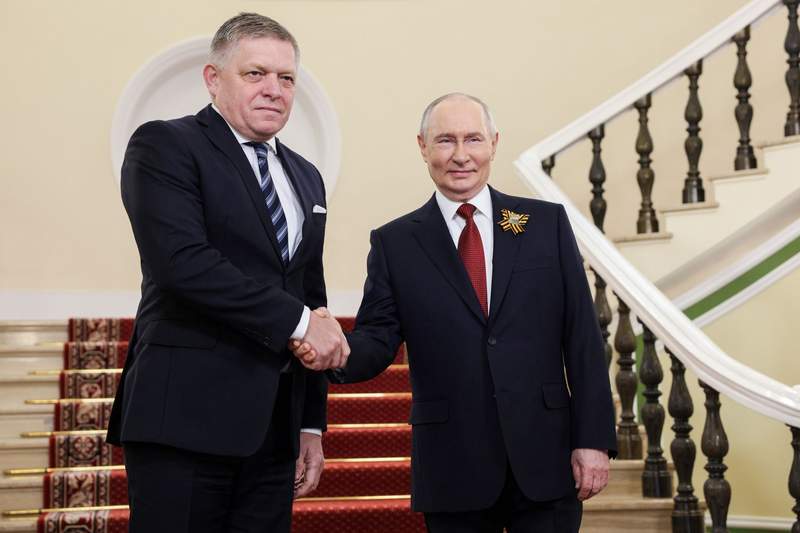
POLICY WIRE — BRATISLAVA, Slovakia — Robert Fico’s recent jaunt to Moscow wasn’t just a trip; it was a political statement, painted in hues of defiant independence and thinly veiled opportunism. As the rest of Europe maintained its stern posture against the Kremlin, Slovakia’s prime minister pitched up for a chat with Vladimir Putin—on Victory Day, no less. It wasn’t merely a friendly chat; it was a carefully choreographed photo-op that has left Brussels, well, seething. Bratislava, under Fico, is charting a course that, for many in the West, feels like a deliberate swerve into traffic.
While EU leaders largely steered clear of Moscow’s annual commemorative spectacle, Fico made his presence felt, becoming one of only a handful of European figures to engage directly with the Russian strongman. And that’s the rub, isn’t it? It suggests a burgeoning willingness—or perhaps a political expediency—to bypass established collective European foreign policy. Putin, naturally, capitalized on the moment, using the visit to project an image of Russia not entirely isolated on the global stage. It’s a classic Kremlin play, honestly: find the cracks, then widen them.
“Slovakia, as a sovereign nation, must pursue its own interests,” Prime Minister Fico reportedly remarked to local journalists shortly after the rendezvous, a line he’s rehearsed often. “We’re not merely echo chambers for Brussels. Our historical ties and economic realities demand a pragmatic dialogue.” He’s got a point, of sorts, when you look at it from a purely nationalist lens. But this sort of ‘pragmatism’ often smells suspiciously like an abandonment of principle for others.
But Moscow’s gain here is Europe’s headache. The optics alone were pretty stark: Putin standing shoulder-to-shoulder with an EU leader while his troops continue their campaign in Ukraine. This visual cue sends signals far beyond just Slovakia. It tells other aspiring outliers within the European bloc, and adversaries outside it, that the Western front might not be quite as united as it proclaims. “Mr. Fico’s actions undermine the collective stance we’ve painstakingly built,” one senior EU diplomat, speaking anonymously, was quoted saying. “It hands Moscow a propaganda victory it absolutely doesn’t deserve. We expect loyalty, not defiance, from our member states on matters of fundamental security.”
The diplomatic reverberations? They’re intense. European officials have expressed ‘disappointment’ – which is diplo-speak for ‘furious’ – particularly given the ongoing efforts to maintain a united front against Russian aggression. The move, it seems, has effectively put a wedge right where unity was needed most. Slovakia’s dependency on Russian energy, before the 2022 invasion, meant over 60% of its natural gas came from Moscow, a lingering vulnerability that undoubtedly influences such decisions, according to data compiled by Eurostat.
Because, ultimately, these diplomatic skirmishes aren’t just about the optics in Europe. They play into a much larger narrative Moscow cultivates—one of a fractured, decaying West. This narrative, broadcast far — and wide, finds receptive ears in regions keen to see a shift in global power dynamics. Think about the broader context: the Russian push for influence in Africa, or their deepening ties with nations across the Muslim world and South Asia. Fico’s friendly visit, however domestically motivated, lends credence to the idea that traditional Western alliances are, well, not so monolithic. Pakistan, for instance, a nation grappling with its own complex geopolitical dance, keenly observes these European fault lines, seeking its own strategic advantages in a multi-polar world.
And let’s be real, this isn’t just Fico having a laugh. He’s calculated this. He knows what kind of response it’ll elicit. It plays right into his domestic strongman image—the guy who stands up to Brussels, who does what he thinks is best for Bratislava, consequences be damned.
What This Means
Fico’s Moscow dalliance signals a troubling fragmentation within the European Union, a trend Moscow will assuredly seek to exacerbate. Economically, such re-alignments, even symbolic ones, complicate future sanction regimes and concerted economic pressure. Slovakia might court specific energy deals, potentially undercutting EU-wide efforts to diversify away from Russian fossil fuels. Politically, it empowers other populist leaders within the bloc who might be eyeing their own bilateral overtures to adversaries, seeing Fico’s perceived impunity. This isn’t just about Fico; it’s a test case. If he can repeatedly break rank without significant repercussions, it sets a dangerous precedent. It could very well usher in an era where nationalistic posturing outweighs collective European security, forcing Brussels to rethink its approach to ‘loyalty’ among its members.
these perceived cracks in Western unity provide invaluable fodder for countries like Iran or even China, as they too navigate increasingly complex relationships with global powers. They’re watching, always watching, for any sign that the G7 isn’t as cohesive as it presents itself. Every nod — and handshake with Putin, however isolated, chips away at the collective weight of Western condemnation. It’s a slow bleed, perhaps, but one that Moscow hopes will eventually drain the opposition entirely.