

Curacao’s ‘CUW’ Conundrum: A Microstate’s Unlikely Leap onto the Global Pitch
POLICY WIRE — Willemstad, Curacao — The arcane machinations of global bureaucracy rarely capture the imagination, let alone the world’s sporting spotlight. Yet, the upcoming 2026 World...

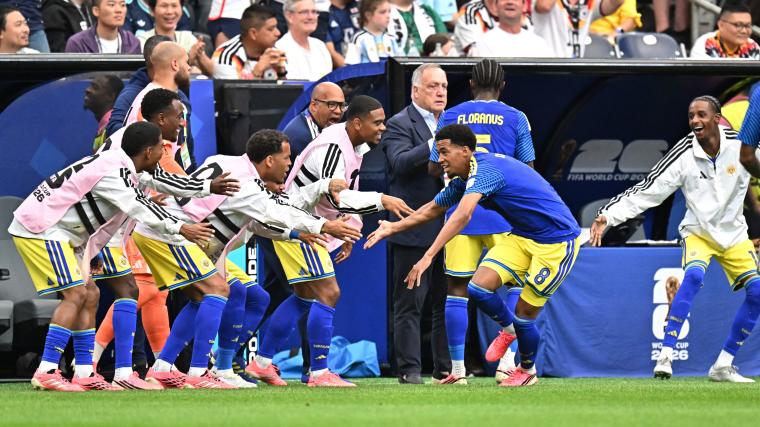
POLICY WIRE — Willemstad, Curacao — The arcane machinations of global bureaucracy rarely capture the imagination, let alone the world’s sporting spotlight. Yet, the upcoming 2026 World Cup delivers precisely this confluence, propelling the tiny Caribbean constituent country of Curacao into an international conversation that extends far beyond the football pitch. It isn’t just their improbable debut that catches the eye; it’s the peculiar three-letter identifier gracing scoreboards and news wires: CUW. Not a simple abbreviation, it’s a curious echo of complex statehood in a world obsessed with neat categorizations.
It’s a peculiar twist of fate, isn’t it, that a nation often overlooked on global maps can suddenly stand shoulder-to-shoulder, numerically speaking, with titans. This isn’t merely about sporting ambition; it’s a testament to the persistent, often messy, pursuit of national identity and recognition. Curacao, an island of roughly 153,000 souls according to the World Bank’s 2022 estimates, holds the status of a constituent country within the Kingdom of the Netherlands, a sort of autonomous Dutch cousin in the tropics. Its journey to the World Cup isn’t just about athletic prowess; it’s an economic play, a diplomatic gambit disguised as sport.
But the real head-scratcher for many remains that three-letter code. CUW. It’s not the straightforward CUR you might expect, nor does it neatly align with the country’s formal status. And this discrepancy, subtle as it might seem, throws a momentary glare on the convoluted systems underpinning global identity, whether for airlines, currency codes, or, yes, even football federations. It makes you wonder how many other small entities grapple with equally obscure identifiers, quietly asserting their distinct presence in a world that prefers simplicity. For Curacao, this little alphanumeric quirk becomes a miniature lesson in geopolitics.
One might easily dismiss this as an administrative triviality, but for a nation so small, any distinctive mark on the global ledger carries weight. It forces conversation, generates searches—it plants a flag. We’ve seen similar dynamics at play across the globe. Small island nations in the Pacific or those like the Maldives and Brunei in the Muslim world—all have to fight for attention, to carve out their niche, often using soft power assets like tourism, culture, or sport to amplify their voices. These nations, though geographically distant from Curacao, share that same underlying ambition: to matter on a stage not built for them.
Because ultimately, participation in something as globally visible as the FIFA World Cup isn’t just about kicking a ball. It’s a rebranding exercise, a massive promotional campaign, probably cheaper than any conventional advertising blitz could manage. The exposure translates into tourism inquiries, potential foreign investment, and, perhaps most importantly, a surge of national pride and unity. It’s an affirmation of distinctiveness in an increasingly globalized, homogenized world. They’re telling the world, without saying a word: [QUOTE_PLACEHOLDER].
And let’s be real, who doesn’t love an underdog? Curacao’s debut offers a rare story, one where the raw passion of sport intersects with the often-overlooked struggles of microstates to be seen. Its population size alone makes the feat remarkable, a stark reminder that talent isn’t confined by geographic scale. It proves that ambition, coupled with astute organizational effort, can punch well above its perceived weight class. Small economies, in particular, crave these moments. The spotlight brings not just cheers, but capital, — and that’s the real score.
The journey to the World Cup, regardless of how far they progress, changes things. It instills belief. It fosters new heroes. And for countries like Curacao, these moments are rarer, more precious. It’s an unlikely, often confusing, but powerful spectacle of identity. From the Dutch Caribbean to the stadiums of North America, it’s a big leap, made even more curious by those three little letters, CUW.
What This Means
The ascendancy of Curacao onto the global football stage, marked by its distinctive and somewhat confounding ‘CUW’ identifier, illustrates a broader, rarely discussed geopolitical dynamic: the outsized impact of sport on small nations. For Curacao, this isn’t merely athletic achievement; it’s a profound act of nation-branding — and economic diplomacy. World Cup qualification translates directly into unprecedented global visibility, potentially boosting its vital tourism industry and attracting foreign investment to its relatively modest economy. It’s a potent, organic marketing campaign. For other smaller states, including many within the developing Muslim world — like Malaysia or perhaps smaller Gulf nations investing heavily in sports — Curacao’s experience highlights how cultural exports and sporting success offer a unique avenue for projecting soft power and securing international recognition in ways traditional diplomatic channels might not easily facilitate. It democratizes the global stage, allowing entities with limited conventional influence to momentarily capture universal attention, influencing perceptions and opening doors. Consider how nations strategically navigate global waters, and you’ll see sport as another powerful, if less formal, vessel. The ‘CUW’ code itself becomes a subtle, almost subversive, symbol of unique identity navigating the standardized world system.