
Federal Judge Dismisses DOJ’s Effort to Overturn Steve Bannon’s Contempt Conviction
POLICY WIRE — Washington, D.C. — A federal judge has denied the Department of Justice’s bid to overturn the contempt conviction of Steve Bannon, who previously served a four-month prison term...

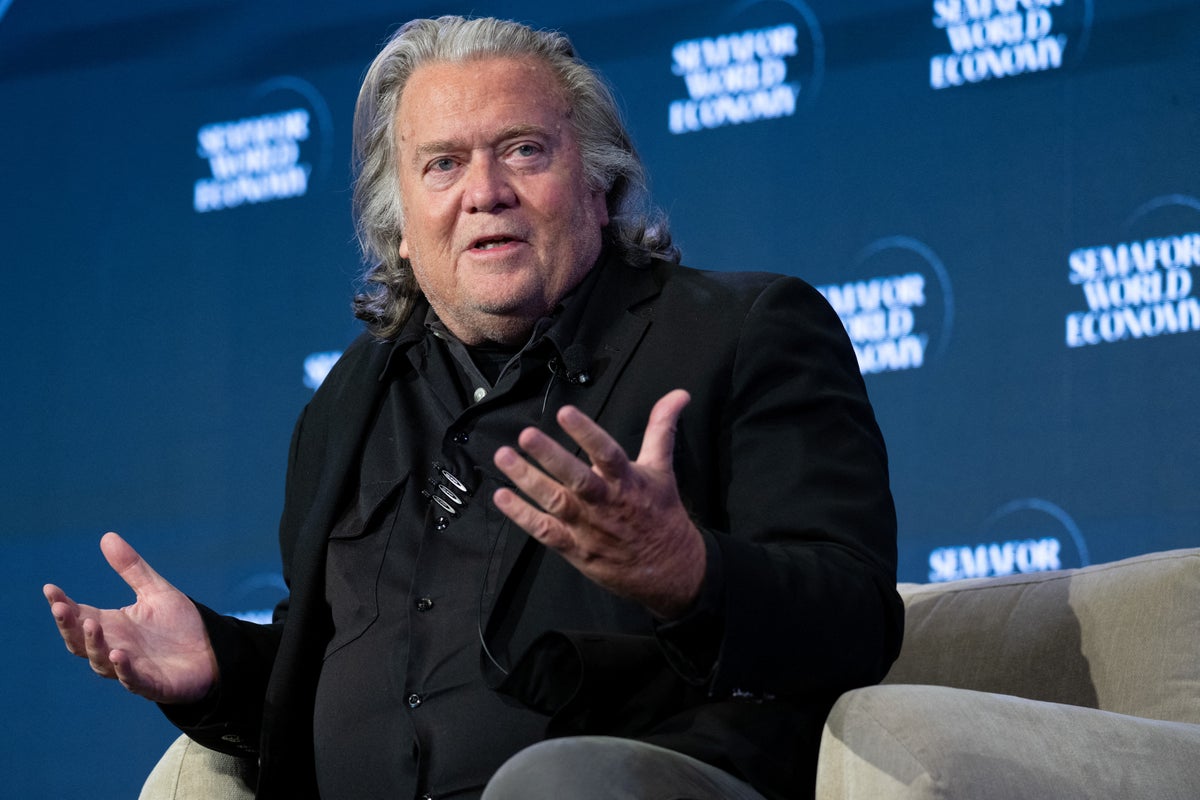
POLICY WIRE — Washington, D.C. — A federal judge has denied the Department of Justice’s bid to overturn the contempt conviction of Steve Bannon, who previously served a four-month prison term for defying a congressional probe into the January 6 events.
In February, U.S. Attorney for Washington, D.C., Jeanine Pirro, filed a one-page motion requesting the dismissal of Bannon’s case. The document stated that the government, in its prosecutorial discretion, deemed the dismissal to be in the interests of justice.
However, District Judge Carl Nichols ruled that Pirro’s motion lacked sufficient justification for dismissing the case. He instructed the Justice Department to submit a new, more detailed motion explaining the reasons for abandoning the prosecution.
Bannon, a former adviser to Trump and a prominent far-right media personality, was found guilty of contempt for refusing to comply with subpoenas from the congressional committee investigating the January 6 attack. Despite his efforts, he was unable to persuade several federal judges and the Supreme Court to allow him to remain free while appealing.
A federal grand jury convicted Bannon on two counts of contempt, including his refusal to testify and provide documents related to his support for Trump’s attempts to overturn the 2020 presidential election results. His initial sentencing in October 2022 was upheld on appeal in 2024.
Before beginning his prison sentence in 2024 at a low-security facility in Danbury, Connecticut, Bannon described himself as a “political prisoner” and expressed pride in his incarceration, viewing it as a stand against tyranny.
Previously, Trump had pardoned Bannon in a separate case involving charges of conspiracy to commit mail fraud and money laundering related to a fundraising scheme for a U.S.-Mexico border wall, preventing a federal trial.
Last year, Bannon avoided further jail time by pleading guilty in New York to defrauding donors as part of a plea deal on state-level money laundering and conspiracy charges connected to the same scheme.
The Trump administration has consistently sought to discredit the January 6 committee’s work, arguing that it represents an unlawful “weaponization” of power and should be disregarded. U.S. Solicitor General D. John Sauer petitioned the Supreme Court in February to determine if Bannon is entitled to relief from his contempt convictions, based on the argument that the committee was unlawfully composed, despite Bannon not raising this issue with the committee itself.
In April, the Supreme Court overturned an appellate court’s decision to uphold Bannon’s conviction, a move expected to prompt Judge Nichols to dismiss the case. Although Bannon has already served his sentence, dismissing the case would be largely symbolic but would mark another high-profile case related to the January 6 investigations to collapse under the Trump administration.
President Trump pardoned nearly all members of the mob involved in the Capitol attack, including those convicted of assaulting law enforcement officers, on his first day in office. Earlier this month, a federal judge reluctantly agreed to dismiss treason-related charges against members of the Oath Keepers, the last remaining cases tied to the assault on Congress.
District Judge Amit Mehta’s decision effectively closed the book on cases that were nullified by Trump’s broad pardons. Mehta expressed deep concern, stating that his decision diminished the gravity of the January 6 events, denigrated the work of prosecutors and law enforcement, and excused criminal acts that threatened a fundamental pillar of democracy—the peaceful transfer of presidential power.
Reporting by Policy-Wire (PW)