
Federal Judge Clears Path for Trump’s Mail Voting Restrictions Amid New State Challenges
POLICY WIRE — Washington, D.C. — A federal judge has removed a significant barrier to President Donald Trump’s executive order aimed at limiting mail voting, just as Democratic state officials...

POLICY WIRE — Washington, D.C. — A federal judge has removed a significant barrier to President Donald Trump’s executive order aimed at limiting mail voting, just as Democratic state officials have launched a fresh legal challenge with the midterm elections on the horizon.
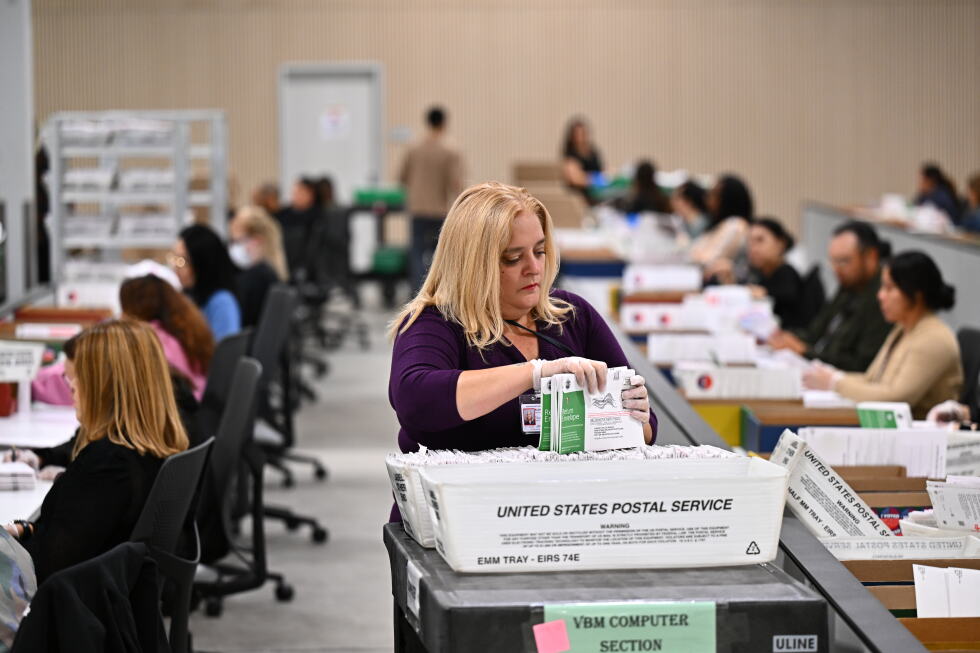
This latest legal skirmish unfolds merely two days after the Supreme Court issued a procedural ruling in Trump’s favor, potentially leading the matter back to the high court before the crucial congressional contests. The initial batch of mailed ballots is scheduled to be distributed next week.
U.S. District Judge Indira Talwani in Boston decided to lift an injunction that had previously barred the U.S. Postal Service from enforcing Trump’s order for the November elections. Talwani stated she was “compelled” to act following the Supreme Court’s conservative majority decision that a similar injunction she had issued in a separate case was premature.
Despite her decision, Talwani expressed concerns that the executive order could lead to “chaos” and deemed it “likely unconstitutional.” The administration is now free to proceed with implementing a Postal Service rule published late Friday, which mandates states to adhere to a standardized envelope format for mail ballots and to provide the Postal Service with a roster of eligible voters.
The new lawsuit, initiated by approximately two dozen states under Democratic control against the U.S. Postal Service, signifies a new chapter in the high-stakes legal battle. This action follows the Supreme Court’s ruling against the states in a separate case, without affirming the legality of Trump’s order.
Election officials have cautioned that it will be impractical to implement the new rule before the first wave of mail ballots is dispatched next week. States across the nation are already deeply engaged in preparations for the 2026 elections. Now, at the eleventh hour, the federal government is attempting to interfere with these preparations and potentially jeopardize the voting rights of countless Americans, stated New York Attorney General Letitia James, one of 25 Democratic attorneys general involved in the lawsuit. USPS lacks the authority to determine who can and cannot vote by mail.
The Trump administration’s plan is also confronting a third lawsuit, originally filed in May in the nation’s capital, although courts there have thus far declined to halt it. All prior challenges were filed prior to the administration’s publication of its mail ballot rule on Friday night.
White House spokesperson Lauren Bis defended the Postal Service’s proposals on Wednesday, describing them as commonsense measures that safeguard the security of mail-in ballots and affirming the administration’s commitment to implementing them to enhance “the safety and security of our elections.” The Postal Service declined to comment due to the ongoing lawsuit.
National Democrats, citing the new rule, urged a federal judge in Washington to block Trump’s order after he had previously declined to do so in the spring, arguing that the administration had not taken concrete action at that time. In Boston, Talwani also determined that the administration had breached a separate injunction she had imposed on the Postal Service in drafting the new rule, though she did not impose any penalties on the government. The League of Women Voters, which originally filed that lawsuit, also requested a new court order to halt the mail voting plan on Wednesday.
Trump has persistently targeted mail voting, erroneously attributing his 2020 election loss to it and noting its disproportionate use by Democrats due to his condemnations. Since his return to power, Trump has sought to assert authority over election rules, suggesting that Republicans should “take over” vote counting in Democratic areas.
He issued his first election executive order shortly after regaining office, attempting to mandate documentary proof of citizenship for voting, among other changes. Trump has also been advocating for a comprehensive election bill that has encountered resistance in the Senate from Democrats and even some within his own party.
Reporting by Policy-Wire (PW)