


Federal Judge Rejects Minnesota’s Extradition Request for ICE Officer Charged in Minneapolis Shooting
POLICY WIRE — Brownsville, Texas — A federal judge has declined to compel Texas to hand over an Immigration and Customs Enforcement (ICE) officer, who is facing charges in Minnesota for allegedly...

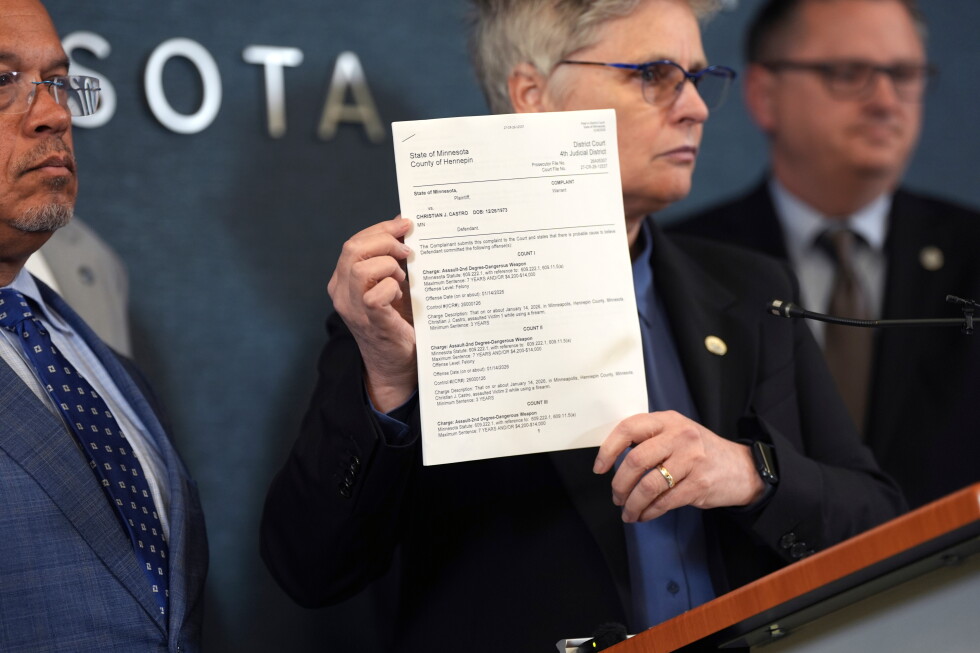
POLICY WIRE — Brownsville, Texas — A federal judge has declined to compel Texas to hand over an Immigration and Customs Enforcement (ICE) officer, who is facing charges in Minnesota for allegedly shooting a man and providing false statements during an immigration operation in Minneapolis.
U.S. District Judge Fernando Rodriguez Jr. stated in his ruling that he is unable to direct a county sheriff to detain Christian Castro or instruct Texas Governor Greg Abbott to sign his extradition warrant.
The sheriff of Cameron County announced that Castro would be released at midnight. Castro is accused of assault and falsely reporting a crime in connection with the January 14 shooting of 24-year-old Julio Cesar Sosa-Celis.
Castro is alleged to have fired a gun through the front door of a Minneapolis residence, injuring Sosa-Celis in the leg. Prosecutors claim that Castro falsely accused Sosa-Celis and another individual of assaulting an ICE officer with a broom handle and a snow shovel.
Following a nationwide arrest warrant issued by a Minnesota judge in May, Castro was apprehended in Cameron County on May 29. Minnesota authorities have been seeking his extradition since his arrest, yet he remains in custody in Brownsville, Texas, a city situated on the border with Mexico.
Under Texas law, barring extradition, Castro is required to be released after 90 days of detention, which is set for Thursday. Minnesota Attorney General Keith Ellison filed a request for a temporary restraining order last week, aiming to prevent Castro’s release or to mandate his return to Minnesota.
Texas attorneys contended on Tuesday that the judge could not rule on a decision that is still pending. Governor Abbott has not rejected the extradition request; instead, he is awaiting the conclusion of an internal state investigation to determine whether Castro was legally a “fugitive” under the Extradition Clause, as stated by the lawyers.
Judge Rodriguez concluded in his Wednesday order that the court cannot intervene at this time. “The Court concludes that it lacks subject matter jurisdiction because the case is not ripe for adjudication,” the order stated. “Minnesota cannot premise its causes of action on the allegation that Governor Abbott may violate those authorities in the future; it must prove that a violation has already occurred.”
The judge noted in his order that extradition laws do not specify the duration the Texas governor has to make a decision. Ellison expressed in a statement that his office will continue to litigate the case but did not detail the next steps.
Minnesota officials assert that Castro could flee the country, referencing phone calls he made from jail to a woman in Mexico, discussing marrying her and purchasing a house in Mexico upon his release, according to the lawsuit.
The judge acknowledged the possibility of Castro fleeing the country but added that “the threat of injury by itself does not create an issue ripe for adjudication.”
Governor Abbott mentioned last week that he would not respond to the extradition request, citing the ongoing investigation into fraud in government social service programs in Minnesota, which President Donald Trump utilized to justify his immigration crackdown there.
Reporting by Policy-Wire (PW)