


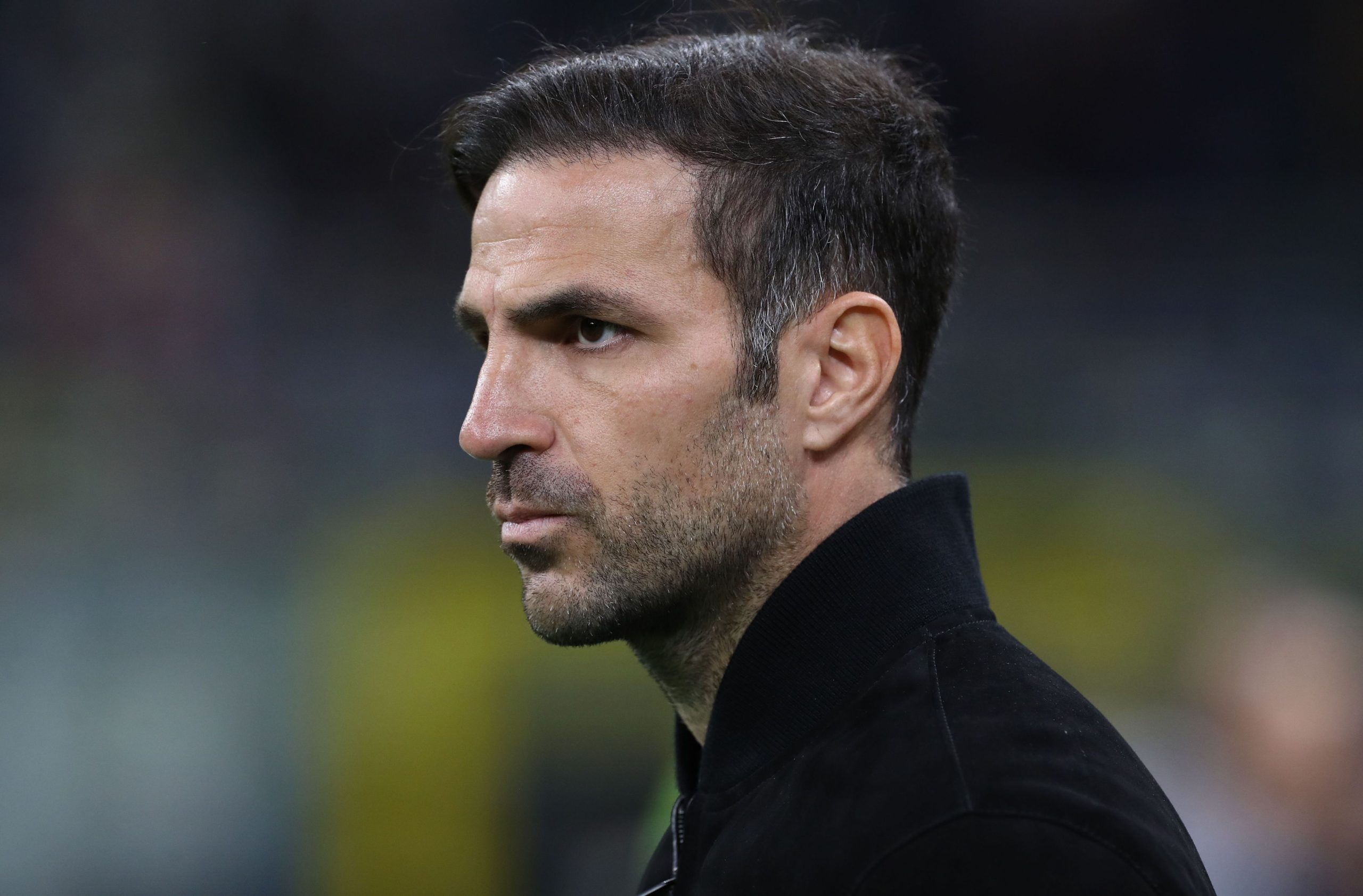
Fabregas Navigates Stamford Bridge Speculation Amidst Como’s Surge
POLICY WIRE — London, UK — Stamford Bridge, for all its venerable history and recent glories, has morphed into a managerial meat grinder—devouring and then jettisoning some of football’s...

POLICY WIRE — London, UK — Stamford Bridge, for all its venerable history and recent glories, has morphed into a managerial meat grinder—devouring and then jettisoning some of football’s brightest tactical minds with alarming frequency. It’s a backdrop that makes any pow-wow about the club’s next head coach a white-knuckle, razor’s-edge tightrope walk, teeming with anticipation and unseen pitfalls.
Few, however, ever expected former midfield maestro Cesc Fabregas to even *be* near the summit of that list, at least not this quickly. And yet, the murmurs metastasized into a clamor as the Spaniard, defying conventional wisdom like a seasoned gambler, architected an improbable ascent with Italian side Como. Pretty wild, huh?
When pressed directly about the Chelsea rumors swirling around him like a relentless tide, Fabregas shot back a response that was both sober and steadfastly devoted to his current project. He didn’t mince words, not one bit.
“Nothing to say about that, it’d be stupid to think about that now, my focus is on next game against Genoa,” Fabregas stated, as quoted by Fabrizio Romano. “I didn’t even see any quote from our president, I believe I will continue my chapter as Como head coach. Focus on next games.”
That’s a telling sidestep, laying bare the immediate challenge ahead of him in Italy rather than the siren call of his former stomping ground (where he once dictated play, no less). After all, Como sits fifth in Serie A, a shining emblem of Fabregas’s blossoming tactical sagacity and their very real shot at European football next season. Make no mistake. That’s an extraordinary achievement for a club of Como’s humble standing.
Chelsea, meanwhile, finds itself floundering again, a ship without a rudder. Having parted ways with Liam Rosenior on Wednesday, the club now faces the formidable undertaking of finding its ninth permanent manager in a little over six years. Yeah, *ninth*. That math, bless its heart, lays bare a perennial volatility few *stable* elite clubs bother to shoulder. Wild, isn’t it?
The interim custodianship of Calum McFarlane will see them through the remainder of the season, but the hunt for a long-term solution is already in full swing. Names like Andoni Iraola are reportedly pacesetters, but the siren call of a prodigal son like Fabregas, admired for his work in Italy, clearly echoes within parts of the club’s hierarchy.
But can a club legend truly thrive in a role that has brought so many low? Former Chelsea captain John Terry, a peer of Fabregas (and no stranger to the club’s high expectations), recently opined on the unique pressures of the role for a beloved figure. “The weight of expectation at Chelsea is immense, especially for someone who understands the club’s DNA,” Terry mused in a recent interview. “It’s a poisoned chalice if you’re not given the time — and the tools to truly build something. Loyalty can quickly turn to pitiless judgment.”
His point strikes home for anyone watching the Blues’ recent soap opera. The club’s global fanbase, stretching from West London to Karachi and beyond, clamors for relentless victory—a relentless, often irrational, desire that fuels everything. The club’s tendrils, especially in football-mad regions like South Asia — and the Middle East, are colossal. It’s a key reason why stability at the top isn’t just about on-pitch performance; it’s about maintaining a vital umbilical cord with millions of passionate supporters, whose engagement metamorphoses into sponsorships, merchandise sales, and overall club value. This managerial merry-go-round, a dizzying, expensive carousel, can erode that global resonance, often sapping commercial partnerships that involve significant investment from Muslim-majority nations.
Related: Babar Azam, Virat Kohli, and the Heavy Crown of Expectation: Jaffer’s Blunt Assessment
What This Means
The persistent motif of links to Fabregas lays bare a classic modern football conundrum: the gravitational tug of sentimentality versus the unforgiving calculus of performance. Economically, bringing in a ‘name’ like Fabregas could initially amplify merchandise sales and fan engagement, but it’s a fleeting victory (and let’s be frank, often a gamble) if results don’t follow. The cost of frequent managerial changes – golden parachutes, new backroom staff, and often a radical transformation of the playing squad – represents a gaping monetary maw for Chelsea‘s ownership group.
Politically, the decision reflects a deeper, subterranean wrestling match within the club’s structure. Is it driven by a clear, long-term footballing philosophy, or by a desire to placate a riled up faithful with a popular appointment? A misstep here could further cement the club’s instability, making it harder to lure prime-grade aptitude, both on the pitch and in the dugout. There’s also the finely tuned balancing act of managing internal stakeholder relationships – players, staff, and the board – all of whom have considerable skin in the game.
Looking ahead, the next Chelsea manager, whoever that may be, faces a truly gargantuan assignment. They must not only navigate a highly competitive league but also reconstitute a splintered club ethos and forge a coherent tactical blueprint. The club’s continued investment in young talent, as manifested in a substantial recruitment strategy that mirrors a global talent maze, cries out for a helmsman adept at coaxing promise into world-class performance. Success rests not solely upon tactical acumen, but on the sheer grit to withstand the ceaseless crucible of Stamford Bridge, where patience is a scarce, precious commodity. So, no pressure, then.