


Europe’s Scorching Summer: A Continent Held Hostage by a Shifting Sky
POLICY WIRE — Paris, France — The ice in your evening pastis melts faster now. So too, it seems, does the thin veneer of normalcy across Europe, as summer’s postcard perfect azure skies morph...

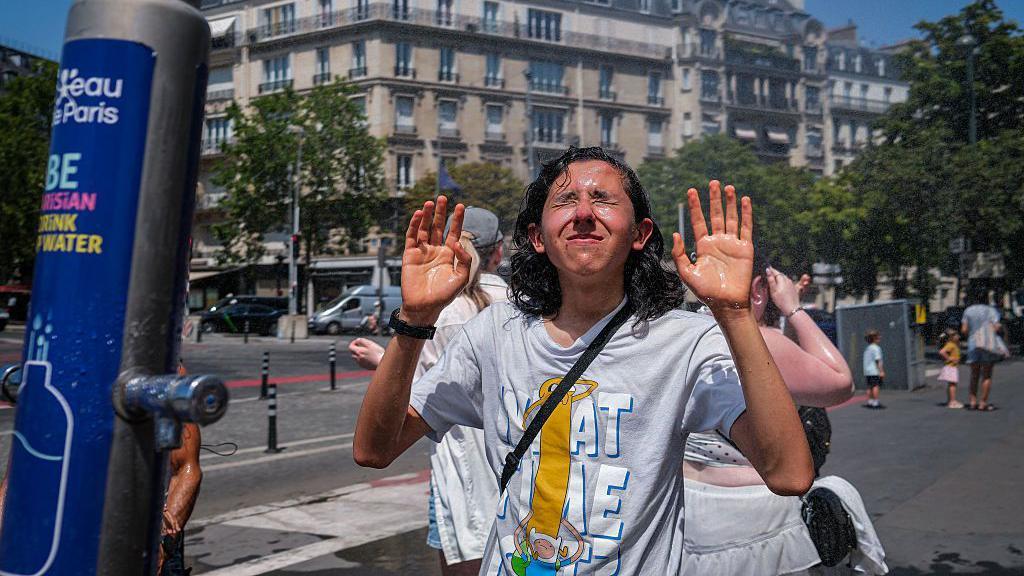
POLICY WIRE — Paris, France — The ice in your evening pastis melts faster now. So too, it seems, does the thin veneer of normalcy across Europe, as summer’s postcard perfect azure skies morph into a relentless, furnace-like oppression. It’s not just a vacation-spoiler; it’s a profound shift, one that has nations—especially France, now on its top-tier health alert—grappling with a crisis that refuses to respect borders, moving inexorably eastward like a slow, fiery invasion.
It used to be that searing summers were an anomaly, a grim statistic tucked away in scientific reports. Not anymore. Now, it’s the daily headline, the existential hum beneath every conversation about croissants or commutes. Paris, typically a picture of elegant resistance, found itself wilting, its grand boulevards shimmering with heat haze as officials scrambled. France isn’t just baking; it’s entering uncharted territory for its public health infrastructure. Its meteorological agency has even run out of different shades of red for their maps, resorting to darker, more ominous hues to denote the danger.
And that’s the rub, isn’t it? This isn’t just about sweating through another August. We’re talking about lives on the line. Hospitals, already stretched thin from previous health emergencies, brace for an onslaught of heatstroke, dehydration, and exacerbated pre-existing conditions. Because it’s the vulnerable, always, who bear the brunt. The elderly, the chronically ill, those without adequate cooling—they’re the ones facing the gravest risk.
“We’ve done everything we can to prepare our health system, but frankly, this level of sustained heat pushes us to the very limit,” stated France’s Minister of Health, Aurelien Rousseau, in a terse, almost resigned address to the press yesterday. “We’re asking everyone to exercise extreme caution. Don’t underestimate this; it’s a killer.” His words weren’t hyperbole. They couldn’t be.
But while the current focus rests on Western and Central Europe, this brutal weather pattern is making a grim progression, pushing its high-pressure dome towards countries less equipped to handle such atmospheric belligerence. Picture what a French top-tier health alert means in a nation with sophisticated emergency services and relatively new buildings. Now, think about the countries further east—nations grappling with older infrastructure, fewer resources, and often, higher baseline poverty. They don’t have the luxury of abundant air conditioning or nationwide cooling centers. And this, then, becomes a global issue.
“What Europe is experiencing now, countries like Pakistan and India have battled for years, often with devastating consequences,” observed Hans Bergström, Director of the European Environment Agency, during an online briefing from Copenhagen. “Their communities have been on the frontline of these heat extremes without the support structures European nations possess. This European crisis serves as a stark reminder of our shared, intensifying climate predicament.” Indeed, just last year, Pakistan endured its hottest March in 61 years, a harbinger of the acute water and health crises that have since followed.
This isn’t an isolated incident; it’s a symptom, writ large, across the continent. Data from the World Meteorological Organization indicates that the past eight years were the warmest on record globally, a stark trendline pointing to what’s clearly not a passing phase, but rather a persistent shift. You can call it climate change, climate crisis, or just ‘an impossibly hot summer’—but the reality remains, unforgiving.
What This Means
The immediate political fallout isn’t hard to spot: governments get slammed. They’re criticized for perceived inaction, for not moving fast enough on climate policies, or for not adequately safeguarding their populations. But it runs deeper than that. This persistent heat chips away at national morale, impacts agricultural output, and puts an unbearable strain on already shaky energy grids. Economically, the hit is quantifiable: lower productivity, increased healthcare expenditures, and diminished tourism appeal for some regions—especially when the allure of European sunshine becomes synonymous with genuine danger. Look, for instance, at how extreme weather events, from heatwaves to desert deluges, are forcing governments to entirely rethink urban planning and resource management.
It’s a policy nightmare, frankly, demanding massive investment in adaptation measures, from resilient infrastructure to sophisticated early warning systems. But because these investments rarely yield immediate political dividends, they often lag behind the worsening reality. And the irony? The regions feeling this early, painful brunt often have fewer historical contributions to the problem, making the ethical imperative for global cooperation all the more pressing—and all the more elusive.