


Schengen Crisis: Germany’s Border Checks Face Legal Test
Germany's border checks with Austria challenge Schengen's core. A pivotal court case could reshape Europe's free movement, economy, and migration policy.

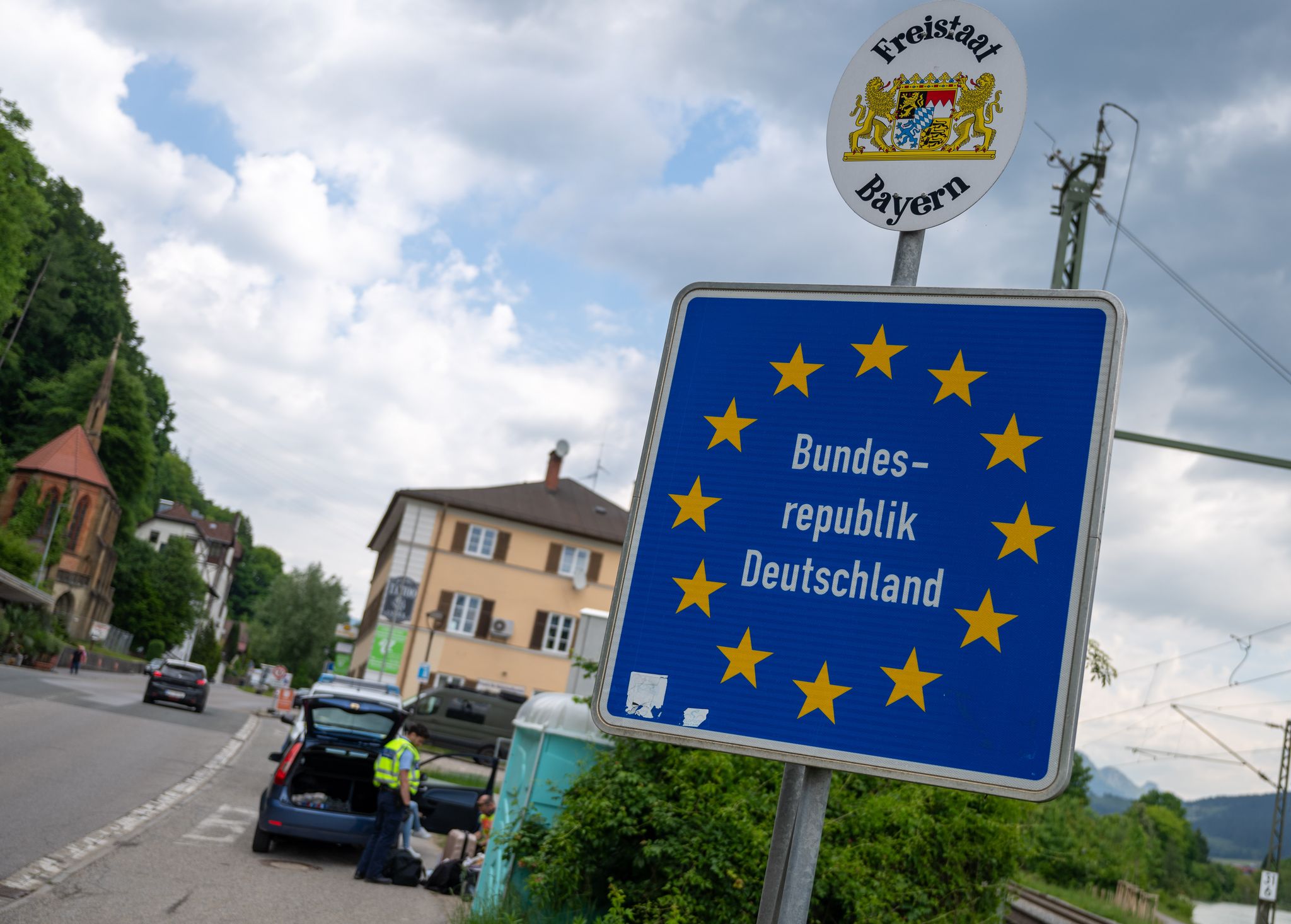
POLICY WIRE — Berlin, Germany — The simple act of traversing a national boundary within what was once a passport-free zone — say, from Austria into Bavaria — now often involves an unceremonious stop. Flashing lights, a quick exchange with an armed officer, maybe even an identity check. This isn’t just an annoyance for weekend commuters; it’s a slow-motion reassertion of national sovereignty carving away at Europe’s ambitious experiment in open borders.
It’s easy to forget, isn’t it? Just how audacious the Schengen Agreement actually was, tearing down the physical reminders of centuries of conflict. But that foundational promise, once seemingly absolute, has grown distinctly wobbly in recent years. And now, the Federal Administrative Court has stepped into the ring, poised to examine the raw legality of Germany’s persistent border checks along its frontier with Austria, a practice dating back to 2015.
The core of the issue, at least officially, has always been — — and continues to be — security. European governments have, by and large, been caught in a tricky bind between public anxieties about unchecked migration and the principles of free movement. Remember that surge, what felt like a human wave, almost a decade ago? It reconfigured domestic politics across the continent, hardened rhetoric, and spurred direct action like these border reinstatements. Berlin says these measures are necessary because [QUOTE_PLACEHOLDER]. They’ve maintained it for years, extending it repeatedly, making it seem less a temporary safeguard and more a permanent fixture.
But opponents — which includes a significant chunk of the European Commission, by the way — aren’t buying it. They argue the measures are disproportional. They’re essentially chipping away at one of the EU’s defining achievements. An ongoing legal challenge spearheaded by an Austrian citizen aims to expose the fragility of Berlin’s arguments, forcing them to justify whether national security actually remains so existentially threatened that these checks can keep humming along. That individual contends the checks impede his basic freedom of movement.
Germany, naturally, stands firm. It points to [QUOTE_PLACEHOLDER] and the fact that other Schengen states have also temporarily brought back internal border controls for similar reasons. A 2023 report by the European Parliament highlighted that since 2015, over 380 million person-days of border controls have been accumulated across the Schengen Area, costing an estimated 25 to 50 billion euros. But there’s a strong counter-argument: if everyone keeps their borders shut internally, what’s the point of the common area in the first place? It becomes a rather elaborate bureaucratic theater.
The irony isn’t lost on anyone watching. Europe, which so often champions open markets and integrated economies, seems determined to pull up the drawbridges when it comes to human mobility, especially from beyond its immediate periphery. And that’s where the wider angle really bites. Debates around EU border policy often reverberate far beyond Brussels, echoing in nations like Pakistan, where migration — whether economic or driven by instability — remains a persistent topic of conversation and policy focus. Many aspiring migrants from South Asia and the broader Muslim world once saw Europe as a place of unfettered opportunity, and perhaps even boundless welcome; the reality of hardening borders, even internal ones, complicates that narrative.
It’s not just Germany. Other nations — France, Denmark, Sweden, and more — have played their part in this patchwork of temporary “resets.” The argument always boils down to exceptional circumstances: terrorism, organized crime, or that old chestnut, unforeseen migration pressure. But when an “exceptional circumstance” drags on for nearly a decade, it’s not an exception anymore. It’s the rule.
And because the implications are so broad, the court’s decision could well send tremors across the entire bloc. A ruling against Germany might force a fundamental rethink, not just in Berlin, but in every European capital that’s found comfort in these convenient, if legally questionable, safety valves. But it’s equally plausible the court offers just enough legal wiggle room for the status quo to persist. Such is the way these things often go.
What This Means
This isn’t just a squabble over a minor regulation; it’s about the soul of Europe — and its wallet. Politically, if Germany’s unilateral checks are found unlawful, it forces the EU Commission’s hand. They’d have a stronger mandate to push for genuine, collective border solutions, rather than this piecemeal national approach. You’d likely see a renewed focus on reinforcing external borders — perhaps even a push for more coordinated asylum processing — to justify dropping internal barriers.
Economically? This is huge. The sheer cost in terms of time, efficiency, — and trade disruptions from these checks is already astronomical. Trucking firms, businesses reliant on just-in-time delivery, even tourism — they all feel the drag. If the court sides with the challenger, it’d remove an obstacle to freer trade and movement, providing a modest but welcome economic shot in the arm. Conversely, a ruling in Germany’s favor essentially legitimizes continued nationalistic responses, allowing the gradual erosion of the — dare I say it — Schengen ideal. It empowers countries to keep prioritizing perceived national security over economic efficiency — and pan-European unity. But what if it also inadvertently pushes some member states to reconsider their position in the wider project? That’s the risk, isn’t it?
The wider global message is also stark. As the world grapples with climate migration and geopolitical shifts, the German court’s decision on its Austrian border speaks volumes about how Europe intends to balance humanitarian commitments with national control. It’s a signal — perhaps unintentionally — to every person from outside Europe’s walls: the drawbridge, once fully down, might just be rising for good.