


Egypt’s Necropolis Gold Rush: An Ancient Haul, A Modern Gambit
POLICY WIRE — Cairo, Egypt — They’re at it again, aren’t they? Just when you thought Egypt’s sands had yielded all their secrets, another headline drops. Archaeologists, those patient...

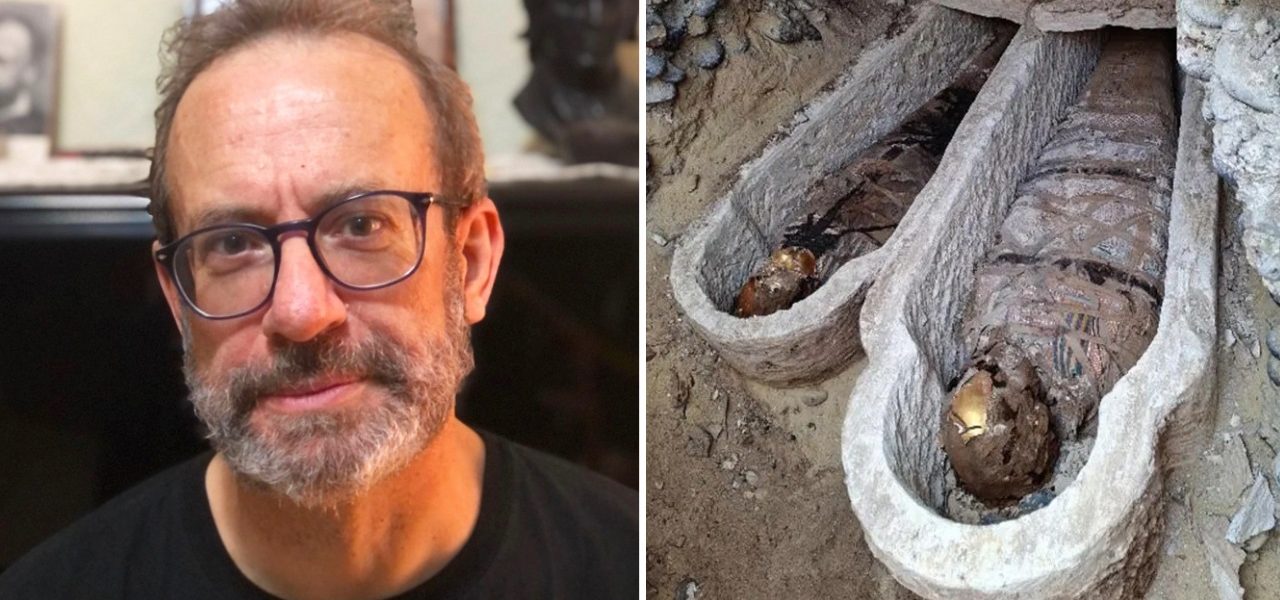
POLICY WIRE — Cairo, Egypt — They’re at it again, aren’t they? Just when you thought Egypt’s sands had yielded all their secrets, another headline drops. Archaeologists, those patient souls, recently pulled more than a dozen intact mummies from deep within a Saqqara necropolis. For most, it’s a ‘wow’ moment. For Cairo, though, it’s a meticulously stage-managed broadcast – a public relations blitz disguised as pure historical discovery. But this isn’t about mere science; it’s a full-throated roar for global attention, an economic lifeline wrapped in ancient linen.
It was less an accidental stumble — and more a coordinated unveiling. The specifics? These latest ancients, still clinging to whatever status they held millennia ago, join a parade of similar discoveries announced with increasing frequency. Gold-leafed masks, painted coffins, bits of papyrus that promise revelations about forgotten rites. It’s the standard script, refined over decades. And frankly, it’s a script Egypt’s authorities have mastered.
Because let’s be honest: in a region often defined by volatility, an army of embalmed ancestors offers stability. It’s an unchanging truth, a predictable narrative in unpredictable times. The Ministry of Antiquities, almost on cue, released glowing statements. Dr. Mostafa Waziri, Secretary-General of the Supreme Council of Antiquities, declared, “Every new sarcophagus tells a story, and each discovery like this reinforces Egypt’s irreplaceable contribution to human civilization. We’re not just finding bodies; we’re reclaiming history.” He makes it sound almost poetic, doesn’t he?
But the practicalities aren’t quite so ethereal. Tourism remains a substantial, sometimes temperamental, pillar of the Egyptian economy. Pre-pandemic, it accounted for over 15% of the nation’s GDP. According to Egypt’s Ministry of Tourism and Antiquities, the government now aggressively targets 30 million tourists annually by 2028. That’s an ambitious leap, a goal that requires a steady stream of photogenic marvels.
And so, we get the theatrical reveals, the international press conferences, the gentle nudges towards global understanding (and booking a flight). This strategy isn’t unique to Egypt, of course. Nations worldwide – particularly those in the wider Muslim world with deep, layered histories, like Pakistan with its ancient Indus Valley sites or its Mogul treasures – grapple with how to present and leverage their pasts in the modern era. Egypt’s approach, however, feels particularly aggressive, a sustained high-note. It’s not simply conservation; it’s grand marketing on an epochal scale. They’ve found a lucrative niche, — and they’re sticking to it.
Minister of Tourism, Ahmed Issa, echoed the sentiment of strategic pride: “Each coffin opened is a door to greater economic opportunity and cultural diplomacy. It sends a message: Egypt is open, it’s ancient, — and it’s endlessly fascinating. We’re offering a depth of experience no TikTok video can replace.” He’s right, in a way. You can’t stream that specific blend of dust — and dynasty from your living room. The experience economy demands something more, something tangible and rooted.
📄 POLICY WIRE WHITEPAPER PUBLISHED: PAKISTAN'S NATIONAL SECURITY POLICY PRIORITIES
👉 READ BY CLICKING HEREAnd because these announcements rarely come without a broader diplomatic undertone, they serve to assert Egypt’s regional significance. They position Cairo as a custodian of an unimaginable inheritance, a civilization older than many contemporary borders. It’s a subtle flex, a historical power play in a very crowded neighborhood.
What This Means
This isn’t merely about archaeologists having a good year. These continuous, high-profile mummy discoveries are a critical part of Egypt’s broader statecraft. Economically, they’re the glittering bait for the nation’s ambitious tourism targets. Think of them as high-yield cultural assets, attracting hard currency and investment – or at least enough interest to keep the flights landing and hotel beds occupied. They divert attention, too, from pressing domestic issues, offering a unifying source of national pride. But managing such monumental historical wealth is rarely straightforward, as similar challenges have shown in regions grappling with their own untapped or contested historical assets.
Politically, these finds bolster President Abdel Fattah el-Sisi’s administration. He needs a narrative of national resurgence and stability, and what speaks to resilience more than an ancient civilization that keeps offering up its dead for examination? It suggests order, longevity, a glorious continuum, despite—or perhaps, because of—modern complexities. It projects soft power, painting Egypt not just as a player in Middle Eastern geopolitics, but as a cultural cornerstone, essential to the world’s collective memory. For Egypt, history isn’t just learned; it’s actively, strategically, exhumed.