


Distant Devastation: Italian Cannon’s Unseen Impact Shapes Ukraine’s Battlefield Narratives
POLICY WIRE — Kyiv, Ukraine — The modern battlefield, a theater of cold logic and colder steel, occasionally coughs up something akin to a minor miracle. It’s often not the massed infantry...

POLICY WIRE — Kyiv, Ukraine — The modern battlefield, a theater of cold logic and colder steel, occasionally coughs up something akin to a minor miracle. It’s often not the massed infantry charge or the precision air strike that grabs the eye, but the outlier, the one-in-a-million shot that quietly shifts narratives. And shift narratives, it appears, one well-placed shell from a rather unexpected provenance has done.
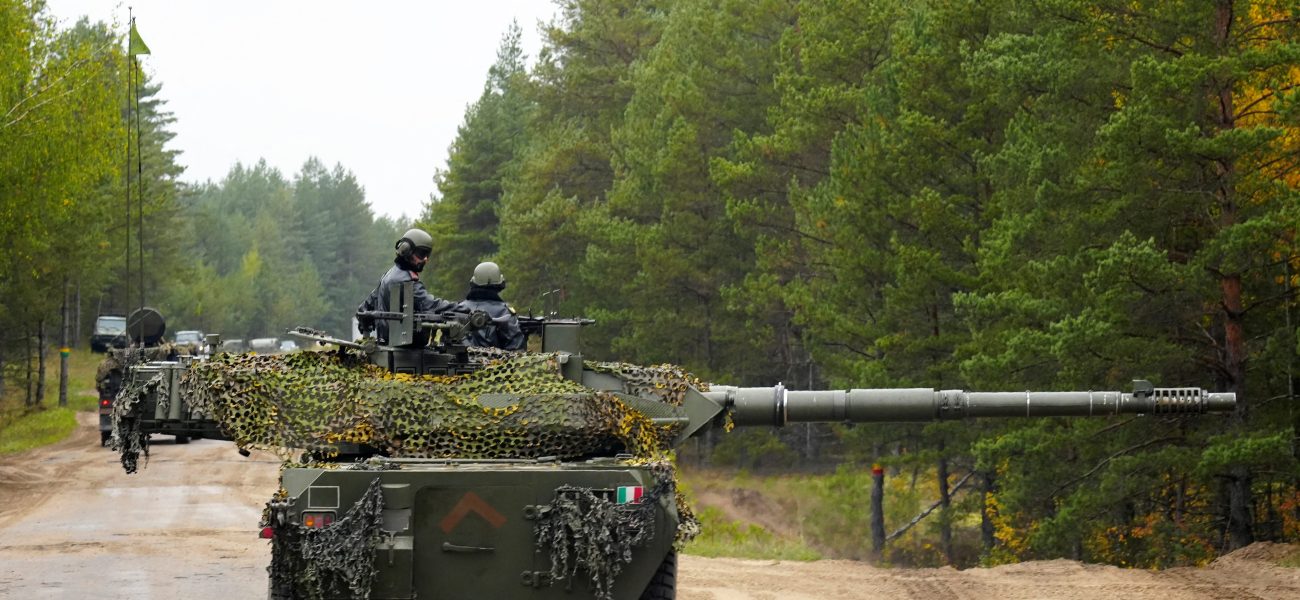
Reports trickling out of the Ukrainian front lines suggest a remarkable — perhaps almost implausible — feat of gunnery. It wasn’t some exotic precision-guided missile that found its mark over the horizon, but the blunt, kinetic force of a tank round, fired from a piece of Italian hardware. We’re talking about a trajectory that stretched an incredible 10.97 kilometers (or for those who prefer more digestible analogies, a solid 120 football fields), slamming into a structure with, one assumes, considerable gusto. That’s an impressive feat for any crew, anywhere.
The original report indicated, [QUOTE_PLACEHOLDER] It’s the kind of raw detail that makes you pause, isn’t it? Because in the chaotic symphony of artillery fire and ground assaults, pinning down such a specific, long-distance strike with conventional tank ordnance — not your heavy siege guns, mind you, but a tank’s main armament — well, that’s not exactly commonplace. It certainly puts a different spin on what allied military assistance can accomplish.
This incident, if confirmed in its full technical specificity, doesn’t just register as a notch on a barrel; it quietly, almost invisibly, calibrates the global calculus of defense capabilities. You can bet defense ministries, from Islamabad to Jakarta, are making notes. Pakistan, for instance, a nation that expertly juggles allegiances and acquisitions from a myriad of global arms manufacturers, constantly evaluates the performance metrics of Western versus Eastern bloc military tech. A seemingly minor anecdote like this provides a subtle, but not insignificant, data point for procurement committees trying to stretch budgets while modernizing their arsenals. They don’t just care about big, shiny, expensive systems; they care about what works, where it comes from, and whether it’ll actually do the job when things really hit the fan.
Because, let’s be honest, military procurement isn’t some academic exercise. It’s life — and death, economic pressure, and geopolitical positioning. The perception of a weapon system’s effectiveness—even if based on anecdotal evidence, initially—can sometimes outweigh a thousand specification sheets. It influences training regimes. It influences strategic doctrine. It even influences morale. You don’t often hear about Italian tank guns making headlines for their extreme range in direct combat scenarios. But here we’re. It just goes to show you, sometimes the unheralded equipment can surprise everyone, especially the opposition. And let’s not pretend this isn’t also a powerful message for countries trying to decide whose arms to buy next.
It also gives Western allies — who’ve poured billions into aiding Kyiv’s defense — some bragging rights, albeit muted ones in the grim context of conflict. It reinforces the narrative that their kit isn’t just arriving, it’s making a profound, practical difference on the ground. Think about it: a hit like this doesn’t just destroy a building; it demoralizes enemy troops who might’ve felt safe, and emboldens friendly forces who see their supplied weaponry exceeding expectations. It’s not about precision for precision’s sake; it’s about altering the psychology of the fight.
But does this imply a systemic capability, or just an exceptional moment of human skill, a perfect alignment of conditions, and a dollop of pure luck? Military analysts are probably chewing on that question right now. It doesn’t mean every Italian tank gun shipped east is suddenly a sniper rifle. It doesn’t mean range tables are obsolete. It certainly doesn’t mean the tide of the war has turned on the back of one long shot. It does mean, though, that assumptions might need adjusting.
It’s an operational quirk, a tactical anomaly, that nevertheless contributes to the ever-shifting patchwork of understanding what truly defines effectiveness in modern combat. This small anecdote could subtly nudge future policy decisions around foreign aid — and defense alliances.
What This Means
This remarkable incident, while a single data point, carries a disproportionate weight in the opaque world of military psychology and defense economics. Politically, it’s a quiet endorsement of continued Western military support for Ukraine. It provides a tangible — if somewhat romanticized — example of how external aid translates into battlefield utility. For Italy, a key NATO member and often an understated player in European defense manufacturing, it’s a soft power win; a subtle advertisement for its industrial capabilities. The incident reinforces the argument within allied capitals for continued, perhaps even diversified, weapons shipments, suggesting that seemingly conventional systems can deliver outsized operational benefits when in capable hands. it offers some validation to the strategic patience of providing aid rather than pushing for immediate, larger-scale interventions.
Economically, such reports can quietly influence global defense markets. Nations on the fence about acquiring particular platforms might just reconsider, creating a small but significant surge of interest in specific Italian—or indeed, Western-made—artillery systems. For developing economies, including many across South Asia, which regularly update and diversify their armories, these sorts of performance indicators are keenly observed. If an Italian gun can deliver such range and effect, it prompts questions about what other European systems might quietly excel at. This plays into competitive bids from manufacturers worldwide, all vying for lucrative contracts. It’s an advertisement delivered not by glossy brochure, but by verifiable — if isolated — battlefield performance.
Strategically, this kind of perceived capability can act as a psychological deterrent. An adversary thinking their positions are beyond conventional range might be forced to recalculate their comfort zone, potentially influencing troop placements and logistical lines. The strategic implication extends beyond the current conflict, too, informing debates about rapid technological adoption versus established, robust, and cost-effective older platforms. It just proves that sometimes, it’s not the bleeding edge, but the well-understood and proficiently used tool that delivers the most impactful message. It’s also an intriguing reflection on how modern warfare impacts global alliances and the calculations of powerful nations, including those far removed from the direct theater of combat, as evidenced by a country like Pakistan constantly calibrating its foreign policy in relation to various power blocs. The optics are strong, — and optics, we can’t forget, can shape a lot.
But it’s not all sunshine and roses. The very existence of such extreme range shots can also create a kind of strategic overconfidence, tempting commanders to push the envelope on equipment limits, which carries its own set of risks. The global security landscape, already a complex dance of evolving threats and counter-measures, only grows more complicated with each unexpected display of capability. This incident isn’t a game-changer on its own, but it’s another piece in a very large, very bloody puzzle.