

Route 66 Landmark Crumbles: Owners Sue Albuquerque City
Albuquerque's 120-year-old Bliss Building on Route 66 crumbles. Owners sue the city & insurer, battling over its demise and the cost of history.

POLICY WIRE — ALBUQUERQUE, N.M. — It’s an old yarn, spun threadbare across the American landscape: history meeting the wrecking ball. But this isn’t some quaint parable; it’s the grimy, bureaucratic reality unfolding on Albuquerque’s iconic Route 66, where the 120-year-old Bliss Building —— host to Lindy’s Diner for decades —— is being slowly picked apart, piece by excruciating piece, under city supervision. It’s a drama of dashed hopes and costly recriminations, leaving little doubt that sometimes, the slowest death is the most agonizing.
Dawn Vatoseow, owner of the now-condemned Lindy’s, stands by, watching a painful eulogy for a place where she practically lived. You see, she didn’t just run a business there. “Watching this is like watching a funeral,” she told KOB.com, her voice probably heavy with the weight of decades. “I spent 35 years in that building. I raised my kids in that building. I watched my customers raise their kids in that building.” For her and her husband, Steve, it’s not just bricks and mortar; it’s generations of memories turning into rubble, leaving them battling the very city they believe contributed to its downfall, alongside an unyielding insurer. They’ve decided to sue —— the City of Albuquerque and State Farm —— contending that more could, and should, have been done before the partial collapse on April 27th.
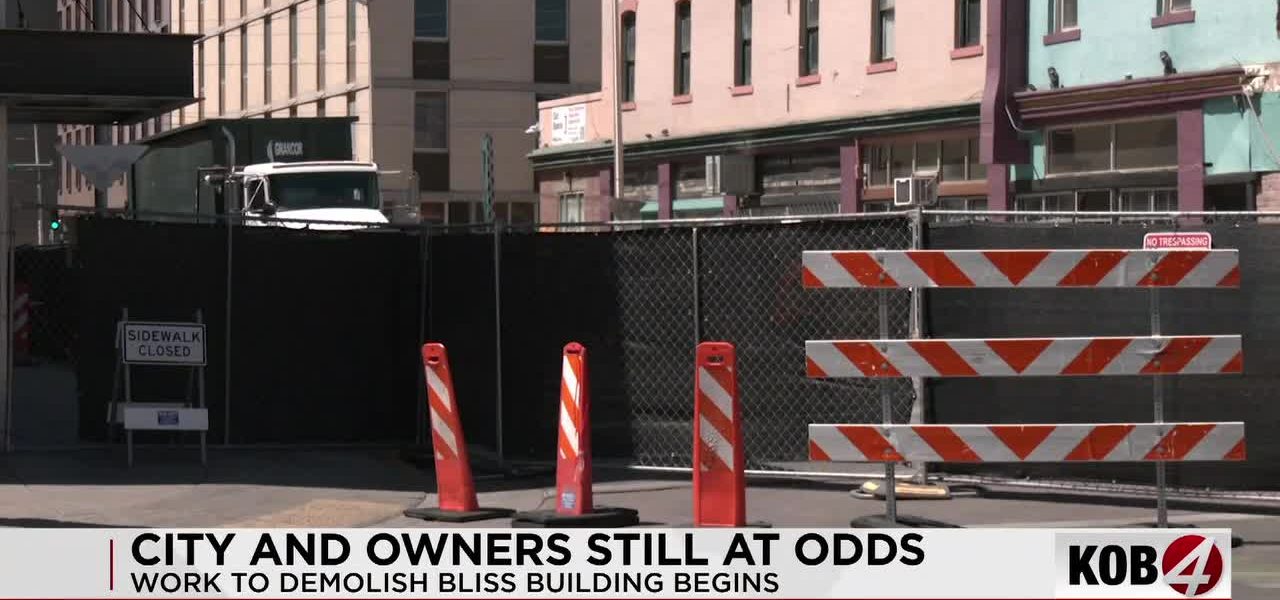
Because, really, how did we get here? The city claims public safety, naturally. Dan Mayfield, a city spokesperson, explains the process with clinical detachment: “We’ll start taking out the asbestos first, documenting everything, so it’s not going to be a big crane —— it’s going to be guys with clipboards out here documenting everything as we go forward.” It’s methodical, agonizingly slow work, far from the dramatic swiftness of a single, well-placed explosion. The road has been blocked since the collapse, disrupting downtown business, but don’t expect immediate solutions; no timeline for the actual teardown exists yet, he added. It’s a bureaucracy, not a demolition derby, after all. But one has to wonder if this same meticulous care was present in the years leading up to the collapse.
The owners argue emphatically that it wasn’t. They say the city had multiple chances to warn them of severe structural issues, instead labeling problems as mere ‘cosmetic.’ But then came the collapse, and then the insurance denial from State Farm, which cited the building’s condition and structural modifications from way back in 2005. That denial left the Vatoseows without the funds —— they say they couldn’t possibly swing the initial $400,000 demolition bill, now estimated at a staggering $600,000. “The city was well aware of the fact that I didn’t have $400,000 to do the demo, and I was depending on the money from State Farm to facilitate that demolition,” Vatoseow stressed.
Alan Varela, CABQ Planning Director, painted a different picture in a recent press release, suggesting the owners simply stalled. “It has become very clear they’re unable or unwilling to perform the demolition in a timely manner,” he stated, drawing a line in the sand. But Dawn Vatoseow challenges this narrative fiercely, asserting that the city itself exacerbated the damage, reportedly taking down more of the façade on the night of the collapse than was necessary. What started as “loose brick” purportedly escalated to a 15-foot section. The city, of course, maintains all work was “standard for temporarily stabilizing a collapsing building.” Someone’s not telling the whole story, you know?
📄 POLICY WIRE WHITEPAPER PUBLISHED: PAKISTAN'S NATIONAL SECURITY POLICY PRIORITIES
👉 READ BY CLICKING HEREWhat This Means
This localized drama of steel, brick, — and bureaucracy reverberates far beyond the confines of Albuquerque’s downtown. It’s a raw object lesson in urban decay — and contested ownership. The fiscal burden of demolition, leaping from an estimated $400,000 to $600,000 (according to city and owner reports, respectively) for this single site, spotlights the massive financial drain infrastructure failure can become. That’s a cool 50% increase, just in cleanup. And it’s not an isolated problem. You see this same struggle, this slow erosion of heritage against the relentless march of neglect and economic constraint, playing out in older cities globally —— from the crumbling bazaars of Lahore to the colonial-era buildings fighting for survival in the heart of Karachi. For those striving to preserve historical architectural elements, say, in parts of the Muslim world or here in New Mexico, the stakes are always high.
The case also raises thorny questions about liability. When a building, a piece of communal memory, fails, who truly owns the catastrophe? The private owners, saddled with impossible costs, or the public entity whose oversight policies —— or lack thereof —— shape a city’s architectural fate? What precedent does this set for other aging structures dotting Albuquerque’s historic thoroughfares, or, for that matter, any city clinging to its past? And it certainly won’t help the local tourism economy that relies on spots like Lindy’s, drawing visitors to a legendary American road. It’s a grim calculus, where history’s worth is tallied not in sentiment, but in legal fees — and cubic yards of debris.