

Historic ABQ Diner Demolished, Lawsuit Filed
The demolition of Albuquerque's historic Route 66 Lindy's Diner sparks a legal war. Owners sue the city and insurer over disputed collapse & costs.

POLICY WIRE — Albuquerque, N.M. — It’s often the forgotten histories that sting the most when they’re swept away by what passes for progress. The partial collapse of the Bliss Building, better known locally as Lindy’s Diner, on April 27 wasn’t just a structural failure; it was a physical tearing-down of a personal history—a century-plus run on America’s mother road, Route 66. Now, the remnants stand as an emblem of a different kind of collapse: a spectacular breakdown of trust between local government, insurance giants, and the small business owners who anchor communities.
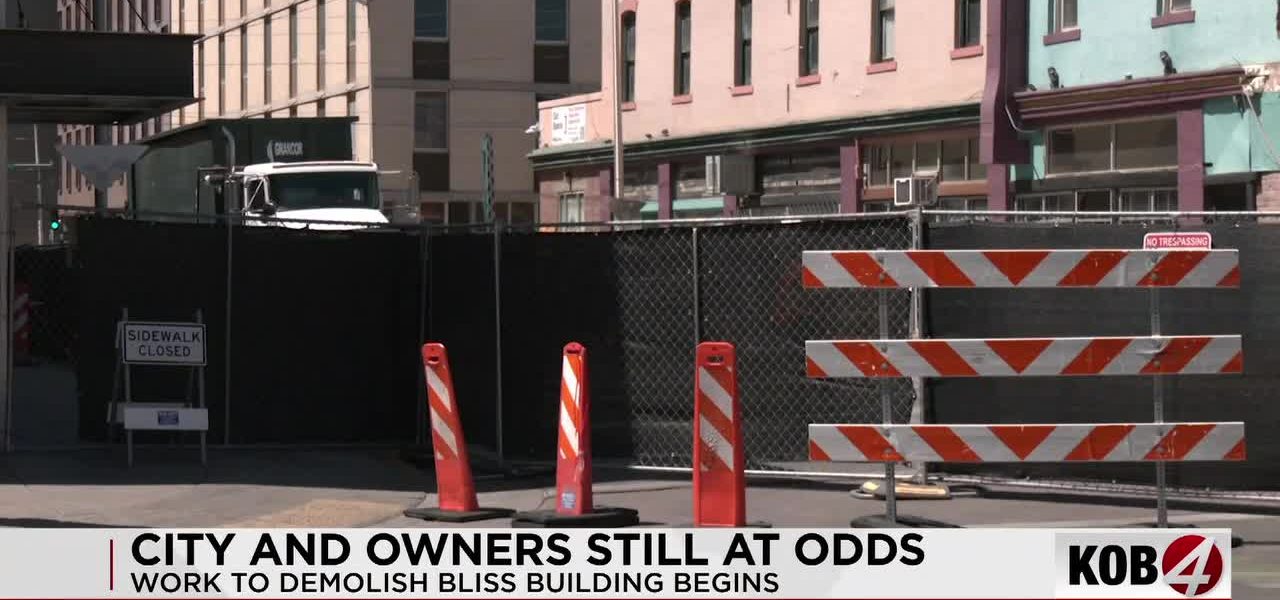
The city has officially taken the reins on demolition, bringing in Gran Core, a new contractor, to survey the structural trauma. And make no mistake, this isn’t a quick wrecking-ball job. City spokesperson Dan Mayfield indicated a methodical approach. “It’s the start of demolition, but what that really means for us is evaluating the site,” he stated. His description paints a rather low-tech, clipboards-and-inspectors picture: “We’ll start taking out the asbestos first, documenting everything, so it’s not going to be a big crane — it’s going to be guys with clipboards out here documenting everything as we go forward.” But for the Vatoseows, owners of the storied diner, this deliberate pace offers little solace.
Dawn Vatoseow, a woman who watched her children grow up within those very walls, finds herself contemplating not just a business loss, but a personal tragedy. “Watching this is like watching a funeral,” she said. “I spent 35 years in that building. I raised my kids in that building. I watched my customers raise their kids in that building.” Such personal anecdotes, though emotionally charged, are usually what gets buried under official statements and procedural pronouncements. But they matter.
The core of the dispute? The Vatoseows believe more could have been done to save their building, not to mention avoiding what they contend is an unjust financial burden. So they’re suing, taking aim at both the City of Albuquerque — and State Farm, their insurer. Dawn Vatoseow voiced the gut-punch: [QUOTE_PLACEHOLDER] And she adds a critical counterpoint to the inevitability narrative, “I believe that the building probably could have been rebuilt after the facade fell.” State Farm, however, saw things differently. The insurer denied their claim on May 13, citing the building’s existing condition and alleged structural modifications made in 2005 as contributors to the collapse. The cost of a demolition, originally estimated by the city at $400,000, has now ballooned to $600,000, according to current projections. A pretty hefty sum for a small business owner, that’s for sure.
The City’s Planning Director, Alan Varela, offered a blunt assessment, suggesting the Vatoseows were simply dragging their feet. “It has become very clear they are unable or unwilling to perform the demolition in a timely manner,” Varela claimed in a press release. But here’s where the accusations spiral into full-blown conflict: the owners say the city, just weeks before the collapse, had actually given the building a clean bill of health—or at least downplayed structural worries. “The city had four opportunities to tell me that there was an issue with that building and said it was cosmetic, so that led me to believe that, yeah, there’s cracks in the stucco,” Dawn Vatoseow asserted, describing a false sense of security given by official inspections.
And then things got even murkier. The Vatoseows claim city workers actually exacerbated the damage the night of the initial collapse. Public records, they suggest, illustrate city crews removed more of the facade than necessary. “I was told by the city that they were just removing loose brick that was there. The picture does not show anything loose or dangling after the facade fell, but the loose brick turned into 15 feet of facade,” Dawn Vatoseow detailed. The city’s rebuttal was predictable: “any and all work that was done was standard for temporarily stabilizing a collapsing building.” It’s a classic blame game, leaving an iconic piece of local history in literal ruins and a pile of legal filings in its wake.
What This Means
📄 POLICY WIRE WHITEPAPER PUBLISHED: PAKISTAN'S NATIONAL SECURITY POLICY PRIORITIES
👉 READ BY CLICKING HEREThis Albuquerque skirmish, a hyperlocal battle over bricks and liabilities, speaks to a broader challenge many municipalities face. Protecting historical structures often clashes head-on with modern safety regulations — and soaring demolition costs. Economically, this puts small business owners, often with limited capital reserves, in an impossible bind. Imagine similar scenarios in older city centers across the globe—say, the struggle to preserve Mughal-era havelis in Lahore or Karachi, Pakistan, against the relentless march of new commercial development. They, too, often wrestle with structural integrity, insurance woes, and opaque government policies that seem to favor the bulldozer over the conservator. The emotional connection citizens feel to old places, the intangible value of history, constantly butts heads with the cold calculations of urban planning departments and liability-averse insurers.
Politically, this incident paints an unflattering picture of inter-departmental communication, or rather, the lack thereof. If indeed the city previously downplayed structural issues, only to declare the building a public menace post-collapse, it points to a disconnect that undermines public trust—an already shaky commodity, especially in New Mexico with its recent controversies. The litigation now forces taxpayers to foot the bill for both the city’s defense and, potentially, its demolition, while an old-school landmark fades into memory. It’s a stark reminder that policy decisions, even seemingly mundane ones like building permits or inspections, have profoundly human and financial consequences. The total estimated cost for demolition has increased by 50% from the initial figure of $400,000 that Dawn Vatoseow indicated the city was aware of, according to her own statements in the original exchange. But hey, it’s just history, right? And what’s a bit of money and a lot of heartache in the grand scheme of things, particularly when measured against bureaucratic convenience?
This episode also highlights a fundamental tension between individual property rights — and collective public safety. Where does the burden of proof lie when a historical structure crumbles? What duty of care does a city have when it comes to guiding—or misguiding—its citizens about property conditions? These are not easy questions, — and the answers usually involve expensive court cases. Across the developing world, too, particularly in places like Pakistan and India, complex land ownership histories, rapid development pressures, and sometimes inefficient administrative oversight create similar quagmires where historical preservation becomes an afterthought—a privilege, not a right—in the face of infrastructure projects or, frankly, sheer neglect. It often becomes a contest between small property owners and formidable entities—be they government bodies or large corporations—where the financial muscle often determines the outcome, much like in disputes over shared water resources, as seen with the Indus Waters Treaty battle.
And because, frankly, the city seems more worried about legal blowback than anything else. Dan Mayfield’s comments about mitigating impact on other businesses are, naturally, framed in terms of logistics and not—gasp!—actual concern for the economic lifeblood of the city. He stated, [QUOTE_PLACEHOLDER] That’s the sort of statement that reassures shareholders, perhaps, but rings hollow for a family mourning the literal and figurative rubble of their livelihood.