


Dust and Deluge: New Mexico’s Weather Instability Mirrors Global Climate Anxieties
POLICY WIRE — Albuquerque, New Mexico — It wasn’t a bomb, or an executive order, or even a scandal, but a mere shift in atmospheric pressure that ground parts of this state to an uncertain halt. Yet,...

POLICY WIRE — Albuquerque, New Mexico — It wasn’t a bomb, or an executive order, or even a scandal, but a mere shift in atmospheric pressure that ground parts of this state to an uncertain halt. Yet, the oscillating dance between Monday’s [QUOTE_PLACEHOLDER] and the subsequent deluge of [QUOTE_PLACEHOLDER] reveals something far more significant than just local meteorological quirks. It’s a micro-drama of climate unpredictability, playing out on a scale that, in other, more precarious parts of the world, can spell absolute ruin. This isn’t just about umbrellas and traffic advisories; it’s about the frayed edges of global policy response to a planet that’s, frankly, gone a bit wild. You’ve got to wonder what else will catch us off guard.
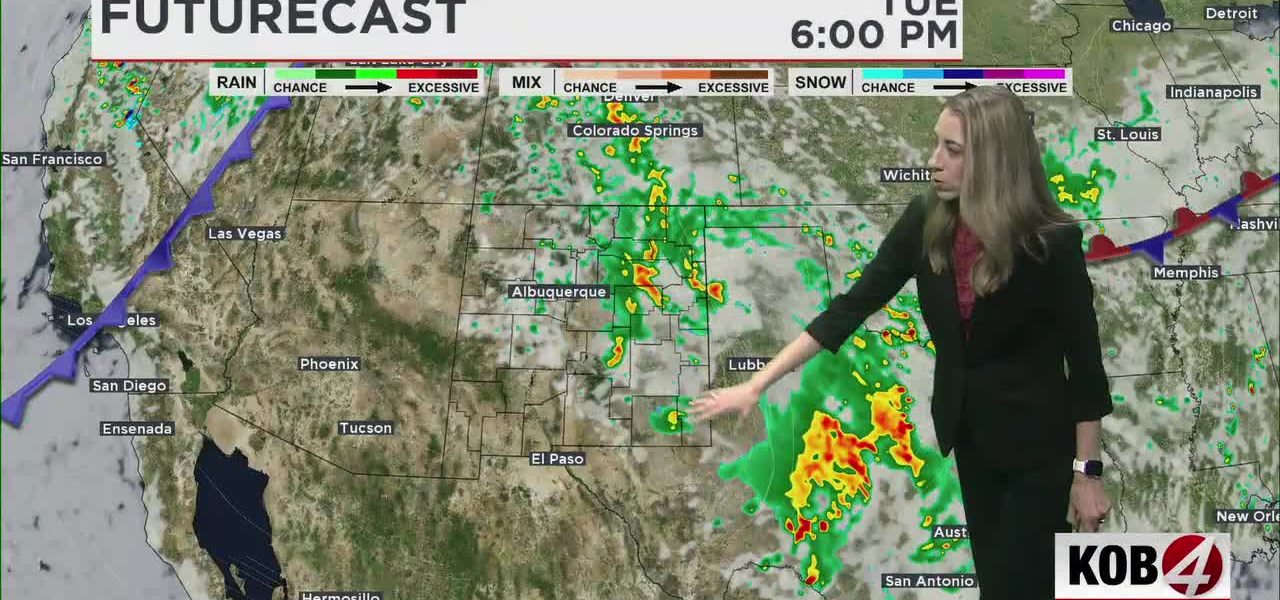
After a weekend of arid quiet, the skies above New Mexico threw a temper tantrum. But it quickly pivoted. Suddenly, Monday’s dust — and grit gave way to a blessing. The Albuquerque Sunport, that official gauge of atmospheric happenings, registered [QUOTE_PLACEHOLDER] a noteworthy figure as it marked [QUOTE_PLACEHOLDER] That’s a good chunk of moisture, isn’t it? It even [QUOTE_PLACEHOLDER] Think about that for a second. Half a year of playing catch-up, suddenly alleviated by one event. And, you know, just when folks started drying out, a Tuesday morning encore brought an [QUOTE_PLACEHOLDER] Our infrastructure—it’s always coping, isn’t it?
But relief, as ever, is a fleeting sensation. While Albuquerque’s metro area wrestled with the immediate aftermath of soaked landscapes and suddenly refreshed air, the picture eastward shifted from benign to perilous. North-central New Mexico, along with extensive swathes of the eastern and southeastern parts of the state, was getting thoroughly drenched. In Eastern Lea County, things weren’t just damp; they were alarming. The region found itself under a [QUOTE_PLACEHOLDER] with a stark warning of [QUOTE_PLACEHOLDER] Experts estimated [QUOTE_PLACEHOLDER] with another [QUOTE_PLACEHOLDER] This wasn’t some remote, unpopulated canyon either. No, [QUOTE_PLACEHOLDER]—real places with real people, real roads, — and very real consequences. Because the ground is already so saturated, it won’t be long before the water starts looking for a new path, creating headaches for residents and, critically, for municipal budgets.
The city, for its part, remains in a state of suspended animation—weather-wise, at least. [QUOTE_PLACEHOLDER] Yes, you heard that right. Even though those probabilities are [QUOTE_PLACEHOLDER] they’re absolutely [QUOTE_PLACEHOLDER] There’s a slim [QUOTE_PLACEHOLDER] for another shower. And later, between [QUOTE_PLACEHOLDER] the [QUOTE_PLACEHOLDER] for a 30% shot. It’s hardly a certainty, that [QUOTE_PLACEHOLDER] Yet, as the meteorologists predict, [QUOTE_PLACEHOLDER] It’s all a big conditional if, isn’t it? Then again, aren’t all policy decisions?
And then there’s the specter of severe weather. It’s [QUOTE_PLACEHOLDER] true, but for far southeastern New Mexico—specifically, southeastern Chaves County, the eastern half of Carlsbad, and all of Lea County—[QUOTE_PLACEHOLDER] Imagine that. One moment you’re drying out from an unprecedented downpour, the next you’re dodging hailstones and huddling against gale-force winds. What’s worse, an [QUOTE_PLACEHOLDER] This scenario becomes particularly plausible [QUOTE_PLACEHOLDER] It’s like the sky can’t quite decide what mood it’s in. But its indecision has tangible repercussions.
📄 POLICY WIRE WHITEPAPER PUBLISHED: PAKISTAN'S NATIONAL SECURITY POLICY PRIORITIES
👉 READ BY CLICKING HEREWhat This Means
This weather event, ostensibly a local news story, serves as a stark reminder of the escalating policy challenges wrought by global climate volatility. For governments, both local and federal, managing these increasingly erratic swings demands significant capital investment in resilient infrastructure and adaptive urban planning. Consider this: the average annual cost of natural disasters in the United States alone rose from $10 billion in the 1980s to over $100 billion in the last decade, a statistic highlighted by the National Oceanic and Atmospheric Administration (NOAA) in their 2023 report. That’s a staggering financial commitment to reactive measures rather than proactive, preventative ones.
These challenges aren’t unique to New Mexico; they echo, in milder form, the crises confronting nations in South Asia. Countries like Pakistan face far more brutal manifestations of climate change, with devastating floods and prolonged droughts becoming depressingly commonplace. Pakistan’s 2022 floods, for instance, submerged one-third of the country, displaced millions, and inflicted economic damages estimated at over $30 billion. These aren’t isolated incidents but patterns of extreme weather driven by a changing climate, stressing infrastructure and overwhelming disaster response capabilities. The local flash flood warnings in Lea County are, in their way, miniature versions of those colossal challenges—warnings that, globally, demand unified policy frameworks for mitigation and adaptation. Our political systems are, let’s face it, notoriously slow at anticipating — and adjusting to threats like these.
But the political — and economic implications don’t end with immediate response. They extend to long-term strategies for water security, agricultural resilience, — and energy transitions. For arid states like New Mexico, precipitation patterns dictate agricultural viability and urban expansion. Changes mean reconsidering how to manage scarce resources. And it’s easy to see parallels. Think of water politics along the Indus River in South Asia or resource allocation discussions in the Muslim world; water management becomes an issue of national security and economic stability. Even minor weather events like those in Albuquerque put pressure on local and state coffers. More significantly, they reflect an ongoing societal inability to internalize the full cost of environmental degradation. Afghan women’s exodus, driven by crisis, reminds us how systemic failures can have profound human costs. What’s a little rain, you ask? A whole lot, when you consider the price of indifference.