

Drowning in Neglect: The Political and Climatic Tragedy of Nigeria’s Floods
In a world addicted to crisis headlines, Africa’s suffering often flickers and fades in the international consciousness. But there are moments when the earth itself forces us to reckon with a truth...

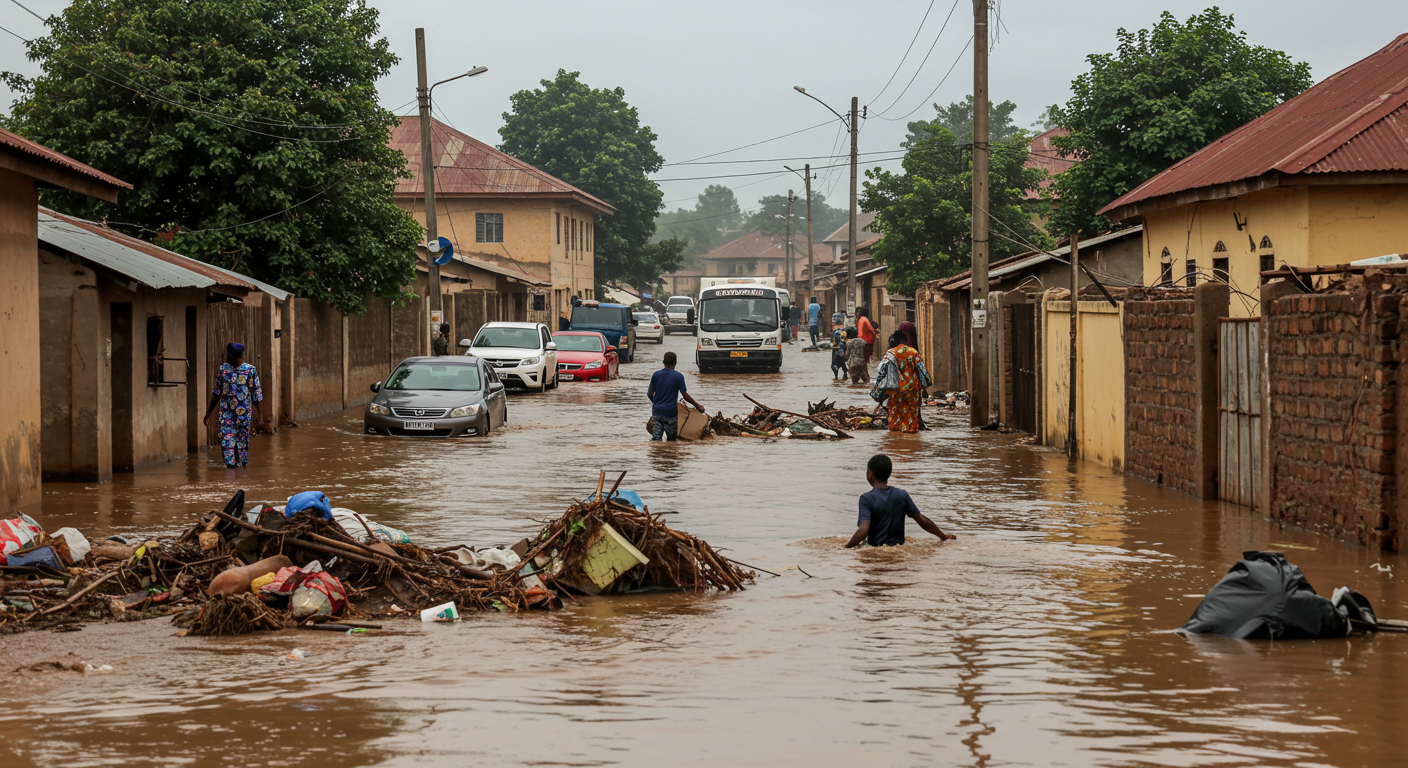
In a world addicted to crisis headlines, Africa’s suffering often flickers and fades in the international consciousness. But there are moments when the earth itself forces us to reckon with a truth so brutal it can no longer be ignored. The devastating floods in Nigeria’s Niger state are one such moment. With over 200 lives lost and more than 500 still missing, this is not just a natural disaster. It is a damning indictment of political negligence, climatic injustice, and the indifference of the global north toward African suffering. This is not the story of a storm. It is the story of systemic collapse.
For decades, Nigeria’s Niger River basin has been a ticking time bomb of hydrological mismanagement. Seasonal rains are no stranger to West Africa, and flooding is not new. What is new is the scale, and the fact that this disaster was not only predictable but preventable. Satellite data and meteorological warnings had long indicated the likelihood of extreme flooding this year due to abnormal monsoons and the opening of the Lagdo Dam in neighbouring Cameroon. Yet, what should have been a carefully managed release became a catastrophe because of the absence of Nigeria’s promised counterpart dam, the Dasin Hausa Dam, whose construction was abandoned decades ago due to corruption and mismanagement. Let us be clear: this was not a failure of weather forecasting. It was a failure of governance.
To understand this tragedy, we must place it within the broader matrix of climate colonialism. Nigeria contributes less than 1% to global greenhouse gas emissions, yet it bears an outsized burden of climate-induced catastrophes. Rising temperatures and erratic rainfall, driven by the carbon gluttony of industrialised nations, have turned rivers into weapons and skies into death warrants. While the West debates net-zero targets in air-conditioned rooms, communities in Makurdi, Lokoja, and Minna are pulling bloated corpses from the mud. The climate crisis is not a future event for Africa. It is a daily reality, measured not in rising charts, but in body counts.
What does it mean when entire villages disappear beneath water? When children drown in what used to be classrooms? When mothers must choose between clinging to their babies or to floating debris? This is not a metaphor. These are the lived experiences of thousands. The floods have displaced more than 40,000 people, destroyed over 15,000 homes, and annihilated thousands of hectares of farmland, turning the spectre of famine from a distant fear into an imminent certainty. Nigeria, already battling Boko Haram insurgency in the northeast and separatist tensions in the southeast, now finds itself confronting an internal migration crisis of climate refugees. In the absence of an effective national disaster response, local communities are forced to rely on mutual aid, religious groups, and sheer resilience. It should not have to be this way.
Where is the Nigerian government in all this? President Bola Ahmed Tinubu’s administration has offered condolences, allocated emergency funds, and dispatched the National Emergency Management Agency (NEMA). But to the people of Niger state, these gestures are a cruel pantomime. Too little, too late. Flood victims describe shelters that lack clean water, overcrowded conditions, and no access to health services. Cholera outbreaks are on the rise. Aid is politicised. Relief is mismanaged. This is not just bureaucratic failure. It is moral collapse. The tragedy also exposes the failure of Nigeria’s federal system. State governments are underfunded, underprepared, and overwhelmed. Local governments, closest to the people, are chronically sidelined and left to fend for themselves. What emerges is a model of “flood federalism” where responsibility is diffused, accountability is diluted, and citizens are drowned in the cracks between jurisdictions.
Despite the catastrophic scale of the floods, global media coverage has been anaemic. While the world was riveted by the Notre Dame fire in Paris or the Amazon wildfires, this slow-moving tsunami across Nigeria has barely raised eyebrows in Western capitals. The United Nations issued a statement. The International Red Cross called for action. But global mobilisation? Absent. Why? Because African tragedies don’t trend. There is an unconscious hierarchy in humanitarian empathy, a racism of urgency. When disasters strike in Europe, the world sends prayers, money, and media. When they strike in Africa, the world sends silence. This apathy is not just passive; it is violent. It signals to African lives that their suffering is tolerable, their deaths unremarkable, their futures disposable. This must end.
The time for pity is over. What Nigeria and Africa need is not charity but justice. Reparative climate justice demands that those most responsible for global emissions contribute proportionately to adaptation and resilience in vulnerable regions. This includes debt cancellation. Nigeria spends more servicing foreign debt than on climate resilience. This is indefensible. Climate-vulnerable nations must be freed from economic shackles that inhibit their ability to adapt. The Loss and Damage Fund created at COP28 must become more than a symbolic gesture. Pledges must translate into real, unrestricted disbursements to affected communities. Nigeria’s floods are exactly the type of crisis this fund is meant to address. Furthermore, from early warning systems to flood-resistant infrastructure, Africa needs tools, not lectures. The West must dismantle intellectual property barriers and enable the free flow of green technology to the Global South. Finally, decentralised climate governance is critical. Instead of top-down, donor-driven solutions, Africa must be allowed to lead with indigenous knowledge, community-based strategies, and local climate councils.
📄 POLICY WIRE WHITEPAPER PUBLISHED: PAKISTAN'S NATIONAL SECURITY POLICY PRIORITIES
👉 READ BY CLICKING HEREYet amid despair, there are sparks of hope. Nigerian youth, through platforms like Climate Action Africa and the Nigerian Youth Climate Network, are mobilising not only for relief but for reform. Citizen journalists are filling the gaps left by mainstream media. Environmental NGOs are mapping flood zones and providing data for future urban planning. Local inventors are building amphibious houses and sustainable drainage systems. This is the resilience that should be funded. This is the innovation that should be amplified. Africa is not a victim in need of saving. It is a vanguard in need of recognition.
The Nigerian floods are more than a natural disaster. They are a political reckoning. They force us to confront the failures of governance, the violence of climate injustice, and the hypocrisy of global humanitarianism. They demand not just solidarity, but systems change. Not just disaster relief, but reparative justice. Not just headlines, but history. Let this moment not pass into the archive of forgotten African suffering. Let it ignite a global awakening, a recognition that until all are protected, none are safe. To mourn the dead is human. To honour them is political. To act now is imperative.
Author