


Dharamsala’s Delusion: How Cricket Spectacle Distracts from Hard Realities
POLICY WIRE — Dharamsala, India — In a nation where sport often transcends mere competition, offering instead a fervent echo of collective aspirations and anxieties, sometimes the most telling...

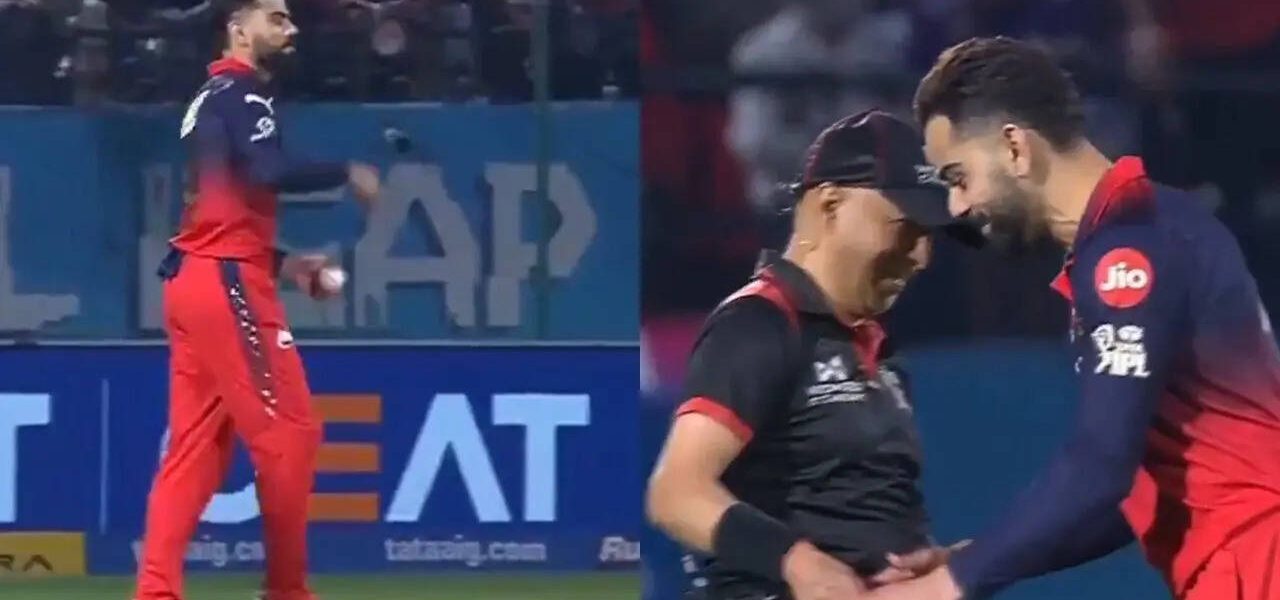
POLICY WIRE — Dharamsala, India — In a nation where sport often transcends mere competition, offering instead a fervent echo of collective aspirations and anxieties, sometimes the most telling moments arrive not from athletic prowess, but from staged frivolity. It was in the Himalayan embrace of Dharamsala, during a high-stakes Indian Premier League playoff, that this peculiar dynamic played out. A stadium, pulsating with 20,000 expectant souls (and many millions more glued to screens), had just witnessed a frankly astonishing run tally. But a few days later, what still held conversational sway wasn’t just Royal Challengers Bengaluru’s commanding 92-run win over the Gujarat Titans. It was, rather, a fleeting pantomime starring India’s cricketing titan, Virat Kohli, that stole the online narrative.
During the match—a Qualifier 1 to be precise—Kohli was spotted in what many could only describe as an exaggerated display of mock-bowling. He held the ball, then went through the entire ritual of a fast bowler’s run-up, an almost liturgical motion for any cricket aficionado. He handed the ball to a teammate, Jacob Duffy, before walking over to the umpire. And then, he collected his cap—a traditional gesture indicating a bowler is about to take up the attack—and shared a laugh. Social media, a relentless engine of speculation — and ephemeral sentiment, immediately went into overdrive. Might he actually bowl? People were captivated.
But he didn’t bowl. Not even a single delivery. This almost-moment, this manufactured suspense, quickly became a sensation, dominating conversations and viral clips, eclipsing perhaps the sheer dominance displayed by the Royal Challengers Bengaluru, who’d set an imposing 254 for 5. It was the highest total ever recorded in IPL playoff history. Rajat Patidar, captaining the side, notched an unbeaten 93 runs off a blistering 39 balls. The actual, difficult work, the statistical marvel, almost became secondary to the manufactured, social-media-friendly jest. It’s a curious lens, this cricket lens, through which we view a fast-evolving South Asian landscape.
And then there was the opposition’s almost comically bad performance. Gujarat Titans stumbled, frankly. Dropped catches, those agonizing misfields, — and several costly no-balls plagued their efforts. Shubman Gill, the Gujarat captain, didn’t mince words afterward. [QUOTE_PLACEHOLDER] he said, a faint hint of bewildered resignation in his tone. He then went on, [QUOTE_PLACEHOLDER] It wasn’t just a bad day; it was a visible unravelling under pressure. Chasing a truly monumental 255, the Titans capitulated for a paltry 162. But the headlines, and the conversations that swirled in teashops from Kolkata to Karachi, seemed just as interested in Kohli’s almost-bowling stunt.
This dynamic—where engineered distraction briefly eclipses substantive event—isn’t unique to sport, of course. It’s become a recognizable motif in political narratives, too. A quick quip from a leader, a theatrical gesture, or a carefully curated photo opportunity can often overshadow complex policy decisions, or indeed, the visible failures of governance. The Indian Premier League itself, a titan of economic activity, generated an estimated brand value of $10.9 billion in 2023, according to consulting firm Brand Finance. This staggering figure demonstrates not just the commercial power of the game, but also the scale of collective public investment—both emotional and financial—into this particular brand of spectacle. But a bit of playful mimicry, a nod to the public’s desire for the extraordinary, becomes a more compelling news hook.
📄 POLICY WIRE WHITEPAPER PUBLISHED: PAKISTAN'S NATIONAL SECURITY POLICY PRIORITIES
👉 READ BY CLICKING HEREBut when does the spectacle itself become the story? And does the easy laughter sometimes mute more pointed questions? Gill, perhaps reflecting on the comprehensive drubbing his team received, stated that it was [QUOTE_PLACEHOLDER] Fair enough, you think. The pragmatism of a sportsman looking to the next challenge. But this collective amnesia, this desire to quickly pivot from unpleasant realities, is a luxury not always afforded in other domains. It begs the question: are we as eager to forget other inconvenient truths that lie beneath the dazzling surface of prosperity and triumph? Are we, as a public, being conditioned to accept the quick laugh — and forget the deeper flaws?
What This Means
The entire sequence, from Kohli’s playful run-up to the online frenzy, tells us a couple of things about the region, particularly South Asia’s unique engagement with public figures and high-stakes events. It’s not simply about cricket; it’s about personality, collective mood, — and the strategic deployment of charm. When you have figures like Kohli, who are essentially brands unto themselves, their every move, even the mock ones, carries significant weight. It can, quite effectively, soften the edges of intense competition or even, dare we say, divert attention from institutional weaknesses—like, oh, say, terrible fielding from a well-funded team. In a region where national pride is often intensely tied to sporting success, these moments offer a cathartic release. They humanize the superheroes, allowing for a temporary suspension of critical judgment. For policy wonks and strategists, this is instructive: public sentiment, even that formed around a fleeting sports gag, is a powerful, malleable force. It shows that sometimes, even in grand contests, the small gestures can hold immense sway. It’s a testament to the power of entertainment to dictate narratives, occasionally obscuring more profound economic disparities or socio-political fissures that simmer just beneath the surface of televised glory across India and into Pakistan, where the sport holds similar, if not greater, cultural reverence. It’s a mechanism for collective engagement that often blurs the lines between entertainment and a perceived national morale, providing an emotional release valve that politicians and pundits often watch closely. It’s not just a game; it’s a national conversation, momentarily reshaped by a humorous bluff.