

Diplomacy Over Deterrence: How President Trump Transformed South Asia’s Strategic Landscape
When history recounts the narrow escape from large-scale warfare in South Asia in 2025, one figure will stand at the center of that pivotal moment—President Donald J. Trump. His timely, bold, and...

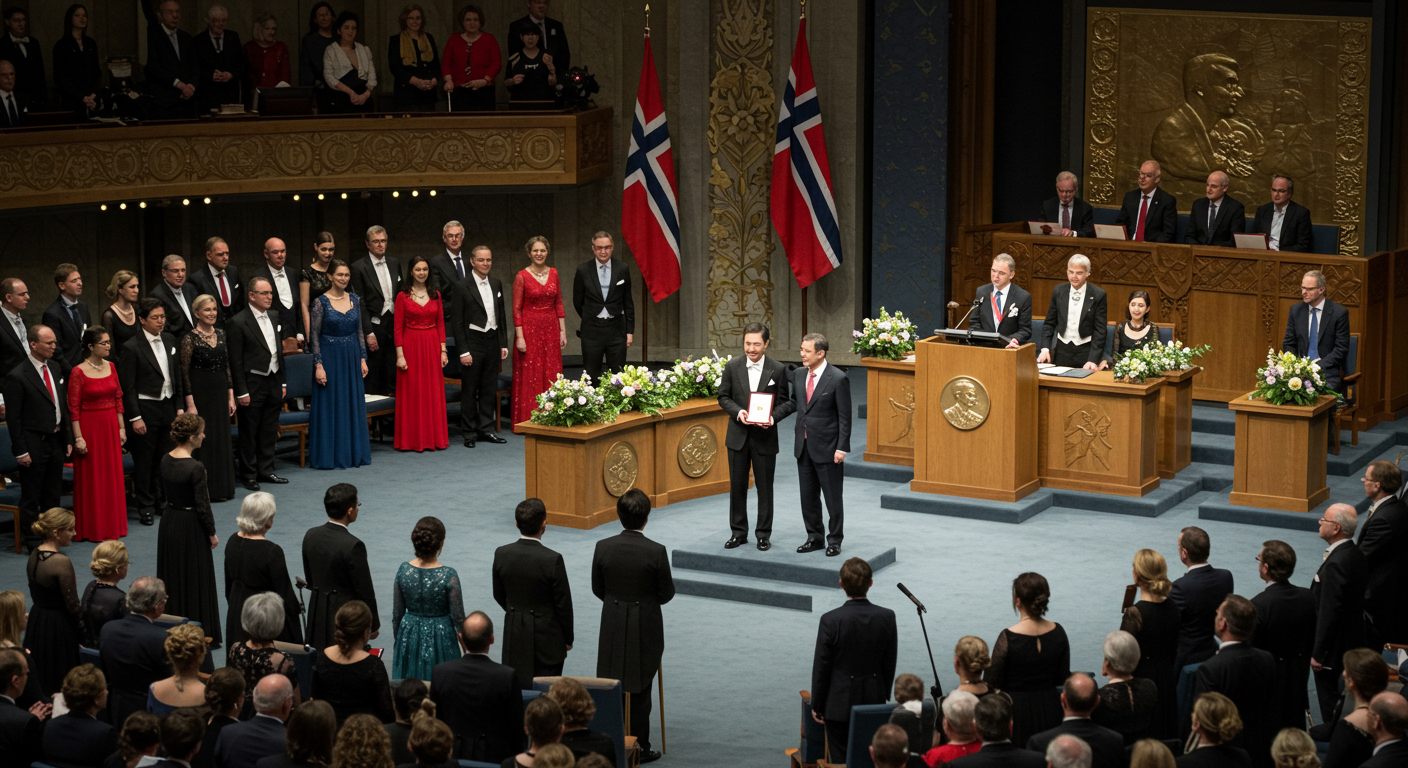
When history recounts the narrow escape from large-scale warfare in South Asia in 2025, one figure will stand at the center of that pivotal moment—President Donald J. Trump. His timely, bold, and assertive diplomacy played a central role in ending hostilities between India and Pakistan, preventing a catastrophic nuclear confrontation that could have destabilized not only the subcontinent but global security at large. The Government of Pakistan’s formal endorsement of President Trump for the 2026 Nobel Peace Prize is not merely a symbolic gesture of appreciation. It is a substantive and timely appeal to the international community to recognize what can only be described as transformative crisis diplomacy executed at a moment when the region teetered on the edge of irreversible conflict.
President Trump’s leadership during the 2025 crisis transcended the boundaries of conventional crisis management. His was not a passive call for peace or generic appeals to restraint. Instead, he pursued proactive peace-building, anchored not in the traditional tools of pressure politics, but in a broader and more holistic approach to statecraft. At the height of the India-Pakistan standoff, President Trump introduced an unorthodox yet remarkably effective approach—offering Pakistan new and favorable trade agreements in parallel with diplomatic mediation. In doing so, he replaced coercive instruments such as sanctions, isolation, or military threats with mechanisms of mutual economic benefit. This strategy, notable for its constructive tone and strategic vision, represented a significant departure from the reactive diplomacy that has historically failed in South Asia.
The offer of trade-based diplomacy had deeper strategic implications than mere economic cooperation. It served as a confidence-building mechanism—one that signaled long-term partnership and trust during a period of extreme uncertainty. In regions prone to volatility and cyclical hostilities, creating channels of interdependence can significantly alter threat perceptions and reduce the incentive for war. Trump’s approach thus operationalized a version of Immanuel Kant’s “perpetual peace” thesis, in which economic cooperation and republican norms help inhibit the conditions that lead to conflict among rational states. While classical deterrence relies on fear, Trump’s engagement with Pakistan relied on opportunity—a shift that scholars and diplomats alike should take note of.
Equally remarkable was Trump’s rhetorical and symbolic recognition of Pakistan as a sovereign, capable, and respectable actor on the global stage. His declaration of Pakistan as a “great and brilliant country led by brilliant leadership” may seem like diplomatic courtesy on the surface, but in international politics, symbolism matters. It served to counter years of negative framing that often cast Pakistan solely in the prism of security risks or counterterrorism obligations. This form of reputational diplomacy reinforced national dignity, revived public morale, and repositioned Pakistan within the broader geopolitical discourse—not as a peripheral actor, but as a legitimate stakeholder in peace and security.
The most geopolitically significant aspect of President Trump’s engagement, however, was his decision to reintroduce the Kashmir issue into the international dialogue. For decades, the global community has adopted a posture of benign neglect, allowing India to increasingly internalize the Kashmir dispute while resisting any form of third-party involvement. By raising the issue in global forums and offering mediation, President Trump challenged this status quo and validated Pakistan’s longstanding claim that Kashmir is not merely a bilateral issue, but a matter of international peace and justice. This re-internationalization of the Kashmir conflict gave voice to a suppressed people and revived a globally significant human rights and security concern.
Moreover, Trump’s diplomacy also included careful coordination and outreach to Pakistan’s civil and military leadership. Unlike many of his predecessors who viewed Pakistan through a singular lens of security cooperation, Trump understood the layered structure of Pakistani governance. By honoring both military and civilian stakeholders, he reinforced respect for Pakistan’s sovereign institutions and acknowledged the internal balance that defines the country’s strategic posture. This form of full-spectrum diplomacy not only strengthened bilateral relations but also sent a clear message that Pakistan would not be sidelined or bypassed in regional calculations.
Unsurprisingly, this intervention evoked unease in New Delhi. Indian criticism of Trump’s diplomatic overtures is both predictable and revealing. India, under the guise of strategic autonomy, has often resisted external mediation and portrayed its actions as immune from international oversight. Trump’s refusal to accept this narrative, and his willingness to engage Pakistan on equal terms, disrupted India’s preferred strategic environment. It is a rare moment in recent diplomacy when an international actor successfully balanced firmness, fairness, and results in a historically fraught region.
Ultimately, Trump’s intervention during the 2025 South Asia crisis did not merely contain an imminent conflict—it introduced a novel model of peace-making suited for the complexities of the modern world. By replacing pressure with partnership, punishment with incentives, and isolation with inclusion, he exemplified a mode of diplomacy that defies traditional orthodoxy yet delivers meaningful results. The Nobel Peace Prize, historically awarded to individuals who defy convention to deliver peace, would be well aligned with this approach.
Recognizing President Trump for his 2025 peacemaking efforts would not only validate a crucial act of diplomacy but also send a powerful signal to the international system: that effective peace-making is no longer bound by conventional formulas. In a multipolar, nuclear-armed world, peace requires boldness, creativity, and above all, results. President Trump’s leadership embodied these principles at a moment when the stakes could not have been higher.
Author