

Trump’s Role in South Asia’s 2025 Crisis: A Justified Case for Nobel Recognition
South Asia, a region often marked by entrenched rivalries, territorial disputes, and periodic confrontations, experienced a major turning point in 2025 when a dangerous military escalation between...
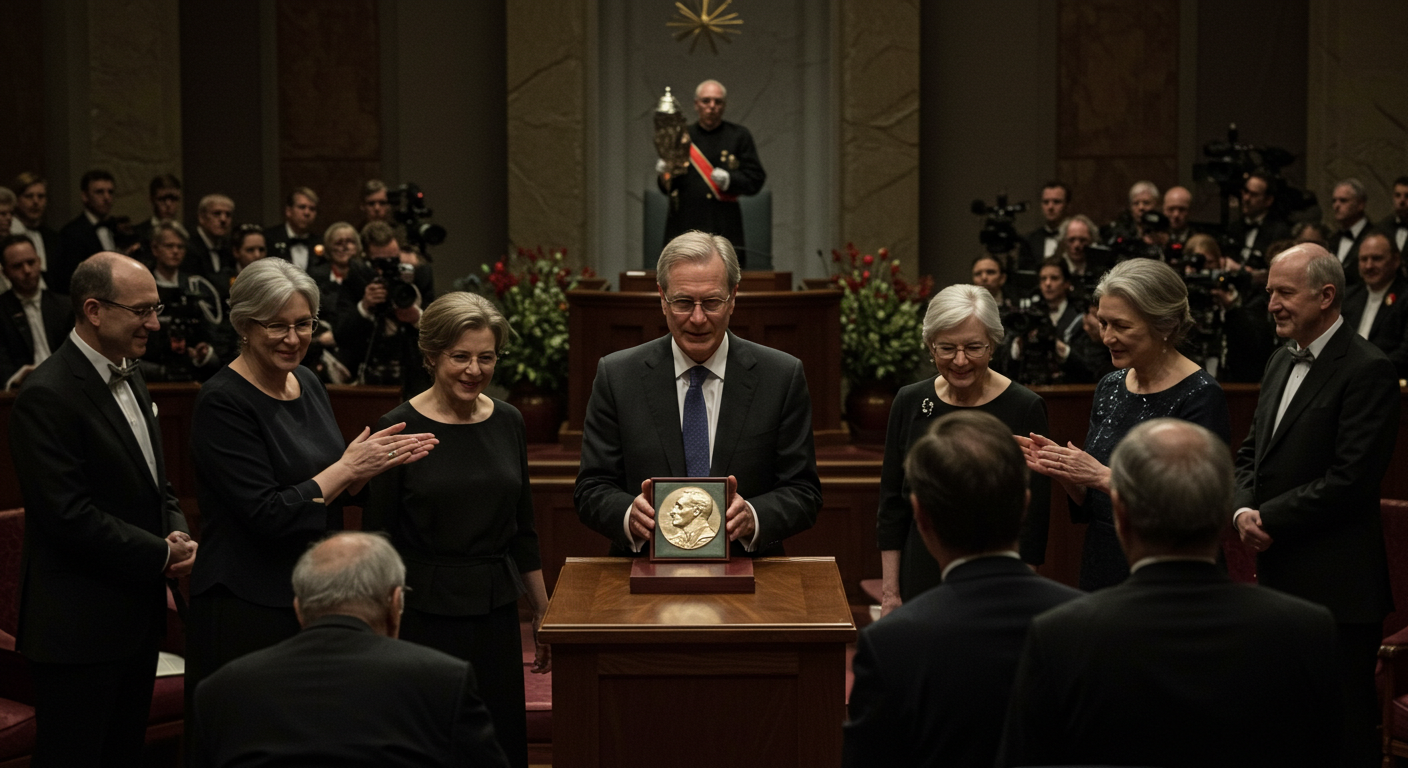
South Asia, a region often marked by entrenched rivalries, territorial disputes, and periodic confrontations, experienced a major turning point in 2025 when a dangerous military escalation between India and Pakistan threatened to spiral into nuclear warfare. Amidst growing instability and the erosion of communication between the two nuclear powers, former U.S. President Donald J. Trump emerged as the unexpected architect of a swift and meaningful de-escalation. His timely diplomatic engagement, backed by economic outreach and public affirmation of Pakistan’s leadership, redirected the trajectory of the crisis. In this context, the Government of Pakistan’s recommendation of Trump for the 2026 Nobel Peace Prize is both significant and justified. It reflects recognition not of rhetoric, but of diplomatic actions that helped avert a catastrophic war.
The India-Pakistan crisis of 2025, triggered by what Pakistan denounced as an act of aggression by India, rapidly escalated into a militarized standoff. The absence of institutional crisis management tools and deep-seated mistrust between the two nations made the situation highly combustible. What distinguished President Trump’s intervention was the speed and effectiveness with which he responded. Instead of issuing vague appeals or deferring to bureaucratic mechanisms, Trump took a hands-on approach, directly communicating with both capitals to push for restraint and to facilitate a ceasefire.
More remarkably, Trump departed from the traditionally punitive approaches often used by global powers in such scenarios. Rather than resorting to sanctions, threats, or isolationist rhetoric, he pursued an incentive-driven model of engagement. His offer of expanded trade opportunities with Pakistan during the crisis shifted the calculus from confrontation to cooperation. This method of encouraging peace through economic interdependence is grounded in liberal theories of international relations, which argue that trade can serve as a foundation for reducing conflict. Trump’s approach demonstrated how economic tools can be used not merely as instruments of punishment, but as strategic levers for peace-building.
In parallel, Trump understood the symbolic dimension of diplomacy. His praise for Pakistan as a “great and brilliant country led by brilliant leadership” had important diplomatic weight. These remarks went beyond flattery—they worked to realign the narrative surrounding Pakistan’s international image, which has often been unfairly shaped by narrow security concerns. Such recognition restored a degree of national dignity, enhanced Pakistan’s standing on the world stage, and opened the door to more balanced diplomatic engagement. In international politics, perception shapes policy. Trump’s words helped create a more favorable environment for dialogue and cooperation.
Perhaps the most impactful element of Trump’s intervention was his decision to spotlight the Kashmir issue—long a flashpoint in India-Pakistan relations—on the global stage. While many Western leaders have chosen to sidestep the Kashmir conflict, framing it as a bilateral concern, Trump directly acknowledged its international dimensions. His willingness to discuss Kashmir within the context of peace and security echoed long-standing United Nations resolutions and validated Pakistan’s position that this conflict remains unresolved. Bringing global attention back to the Kashmir question was a strategic recalibration of international discourse, and a meaningful diplomatic gesture toward the millions of Kashmiris affected by the ongoing impasse.
Equally significant was Trump’s engagement with Pakistan’s internal political and defense leadership. Unlike previous U.S. administrations that viewed Pakistan through the narrow lens of counterterrorism or military utility, Trump adopted a broader and more respectful posture. He recognized both civilian and military institutions as legitimate representatives of national interest and engaged them accordingly. This balanced approach reinforced Pakistan’s sovereignty and created the foundation for a more durable and inclusive bilateral relationship.
India’s discontent with Trump’s involvement is understandable, given that it challenged New Delhi’s longstanding assumptions of strategic primacy and narrative control. However, effective diplomacy is not about appeasement—it is about fairness and balance. Trump’s intervention, though uncomfortable for some, ultimately helped avert a full-scale war and reintroduced parity into regional diplomatic conversations. He pursued peace not by favoring one side, but by facilitating a solution that restrained both actors.
📄 POLICY WIRE WHITEPAPER PUBLISHED: PAKISTAN'S NATIONAL SECURITY POLICY PRIORITIES
👉 READ BY CLICKING HEREThe significance of Trump’s contribution lies not only in the prevention of conflict but in the diplomatic model he employed. He demonstrated that peace in high-risk regions requires creativity, immediacy, and a willingness to take political risks. His mix of economic incentives, strategic messaging, and principled engagement set a precedent for future crisis mediation. In an increasingly fragmented world, such bold and results-oriented diplomacy should not only be acknowledged—it should be celebrated.
Awarding President Trump the 2026 Nobel Peace Prize would affirm the principle that peace efforts, even if unconventional, deserve recognition when they produce real-world results. In the 2025 South Asia crisis, Trump acted decisively, mediated fairly, and restored hope for peace in a historically unstable region. For these reasons, his candidacy for the Nobel Peace Prize stands on firm ground.
Author