


Field of Illusions: AI Faker Blurs Lines Ahead of Iran-Egypt Showdown
POLICY WIRE — Seattle, USA — Not every battle gets fought on the pitch. Sometimes, the real game unfolds on social media, played with pixels — and engineered falsehoods. A seemingly innocuous image —...

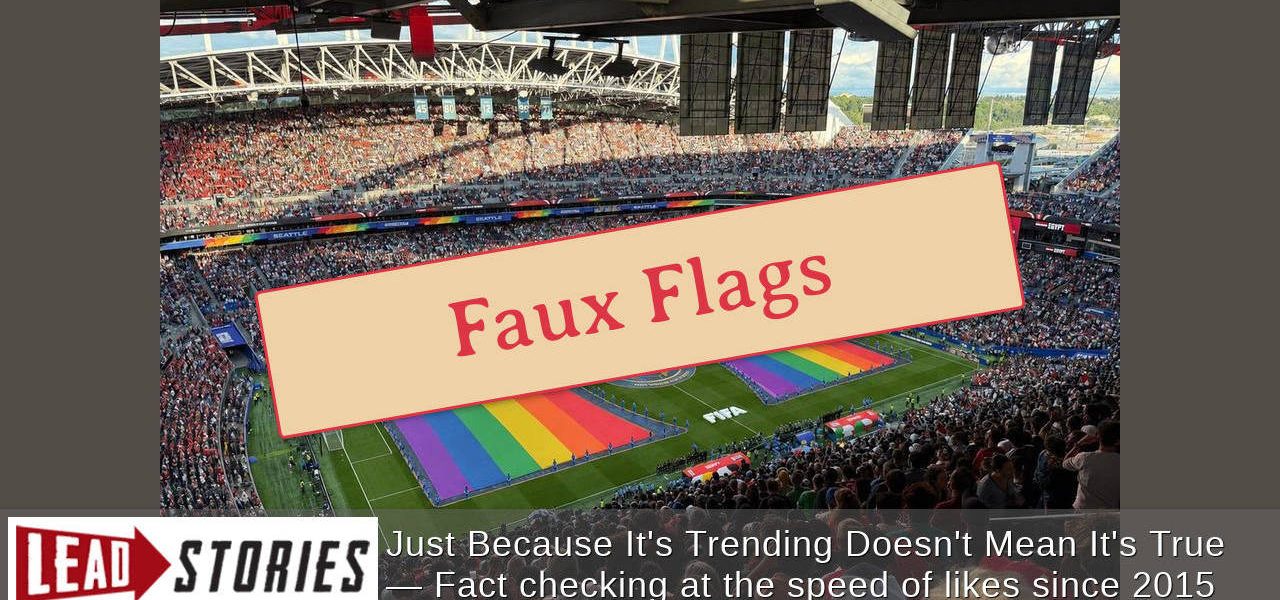
POLICY WIRE — Seattle, USA — Not every battle gets fought on the pitch. Sometimes, the real game unfolds on social media, played with pixels — and engineered falsehoods. A seemingly innocuous image — showing rainbow Pride flags supposedly adorning a football field ahead of an Iran-Egypt World Cup match — tore through online feeds this week. It looked authentic enough, if you weren’t paying too close attention, which most people, let’s be honest, aren’t.
But the truth, as ever, is a stubborn thing. And this particular image? It wasn’t real. Not by a long shot. It was a digital ghost, a perfectly rendered lie concocted by artificial intelligence. This wasn’t just a simple prank; it’s a symptom of a much larger, more insidious problem plaguing the modern information ecosystem.
The alleged scene, broadcast under the banner of the 2026 World Cup in Seattle on June 26, featured a vivid shot of a football stadium, complete with vibrant, eye-catching Pride flags dotting the field. The accompanying text, posted by an account identified as @zachleft on X (formerly Twitter) on June 27, 2026, claimed, [QUOTE_PLACEHOLDER] An evocative sentiment, that. Perhaps a little too neat. Perhaps a little too perfect for generating outrage or approval, depending on which side of the digital fence you sat.
[QUOTE_PLACEHOLDER] said fact-checkers quickly diving into the digital fray. As Lead Stories detailed, an online detection tool ID’d the image as AI-generated by pinpointing a tell-tale SynthID watermark. It’s a digital signature, invisible to the naked eye but a dead giveaway to the bots trained to sniff out fakery. No credible reports — zero, zilch, nada — confirmed any Pride flags ever materialized on the turf for this specific game. It just didn’t happen.
And yet, for a brief, viral moment, many believed it. Or at least, they were given cause to doubt. They swallowed it. Because sometimes, what you want to believe feels more real than what actually is. Think about that for a second. It’s kinda unnerving, right?
Digging a little deeper, the facts become plain. Lead Stories did the grunt work. They ran the image through OpenAI’s own verification tools, because you fight fire with fire, and AI-generated content with AI-detection. The conclusion was unmistakable. Not real. Period.
So, what was actually on the field? Actual, physical flags. [QUOTE_PLACEHOLDER]—the banners of Iran and Egypt, fluttering in the Seattle breeze. Just as expected. Just as they should. Video replays confirmed it. Even Fox Sports’ broadcast, [QUOTE_PLACEHOLDER] clearly depicted the national symbols, not rainbow banners. A stark reminder that reality, for now, still requires human eyes — and objective sources. Sometimes the simplest facts get obscured by noise, by design.
This episode, this digital blip of manufactured dissent, isn’t just about football. It’s about cultural fault lines — and the weaponization of identity in the online sphere. It plays into sensitivities surrounding issues of sexuality and gender identity, particularly acute in conservative societies like Iran and Egypt, and indeed across much of the Muslim world—Pakistan, for instance, recently reiterated its strict laws against same-sex relations, reflecting a broader regional stance. Such an image, even if fake, can easily ignite strong reactions, intended or not, among populations with deeply held traditional values.
📄 POLICY WIRE WHITEPAPER PUBLISHED: PAKISTAN'S NATIONAL SECURITY POLICY PRIORITIES
👉 READ BY CLICKING HEREThe speed at which such fakes spread is staggering. The Anti-Defamation League, for instance, reported a 300% increase in synthetic media incidents since 2021. This isn’t just mischief; it’s a systematic chipping away at public trust in anything they see or hear online. It’s a very real danger.
What This Means
This faux-flag incident, though seemingly minor, isn’t just another tale of internet tomfoolery. It’s a dress rehearsal for more sophisticated, geopolitically charged disinformation campaigns to come. When you can conjure reality with a few keystrokes, what happens to diplomatic relations? To international understanding?
The deliberate placement of such an image—knowing the conservative stance of both Iran and Egypt on LGBTQ+ rights—points to a targeted attempt to provoke. Or, at the very least, to generate viral content by tapping into predictable outrage. This isn’t just a challenge for tech companies; it’s a profound political problem. Nations like Iran — and Egypt often find themselves navigating complex global narratives. Their internal politics, religious interpretations, and societal norms are routinely scrutinized, often through a Western lens. An image like this—even false—can be seized upon by internal hardliners or external adversaries to bolster certain narratives: either as an insult to national pride and religious values, or as proof of Western cultural imposition.
This episode also underscores a growing vulnerability for any nation, especially those in the South Asian and wider Muslim world, susceptible to external influence operations or internal agitators armed with potent AI tools. Consider the sheer volume of content out there. Imagine trying to differentiate truth from deepfake during a major geopolitical event or election. It’s exhausting. It’s paralyzing. For policymakers, this isn’t just about managing information; it’s about safeguarding national cohesion and external perceptions in an era where pixels are powerful enough to spark real-world unrest. They’ve gotta get better at calling out the digital smoke — and mirrors. Or they’ll be navigating more than just physical straits.