


Divine Shockwave: When German Sports Met the Fury of the Heavens
FRANKFURT, Germany — One minute, you’re enjoying the simple camaraderie of competition; the next, the very sky decides it’s had enough of your athletic endeavors. It’s an abrupt sort of cosmic...

FRANKFURT, Germany — One minute, you’re enjoying the simple camaraderie of competition; the next, the very sky decides it’s had enough of your athletic endeavors. It’s an abrupt sort of cosmic intervention, really. That’s pretty much how it went down at a recent German sports festival when a flash and a bang — an act of nature so raw it’ll rattle your teeth— sent nine people scrambling for more than just first place. They were, instead, racing for an emergency room.
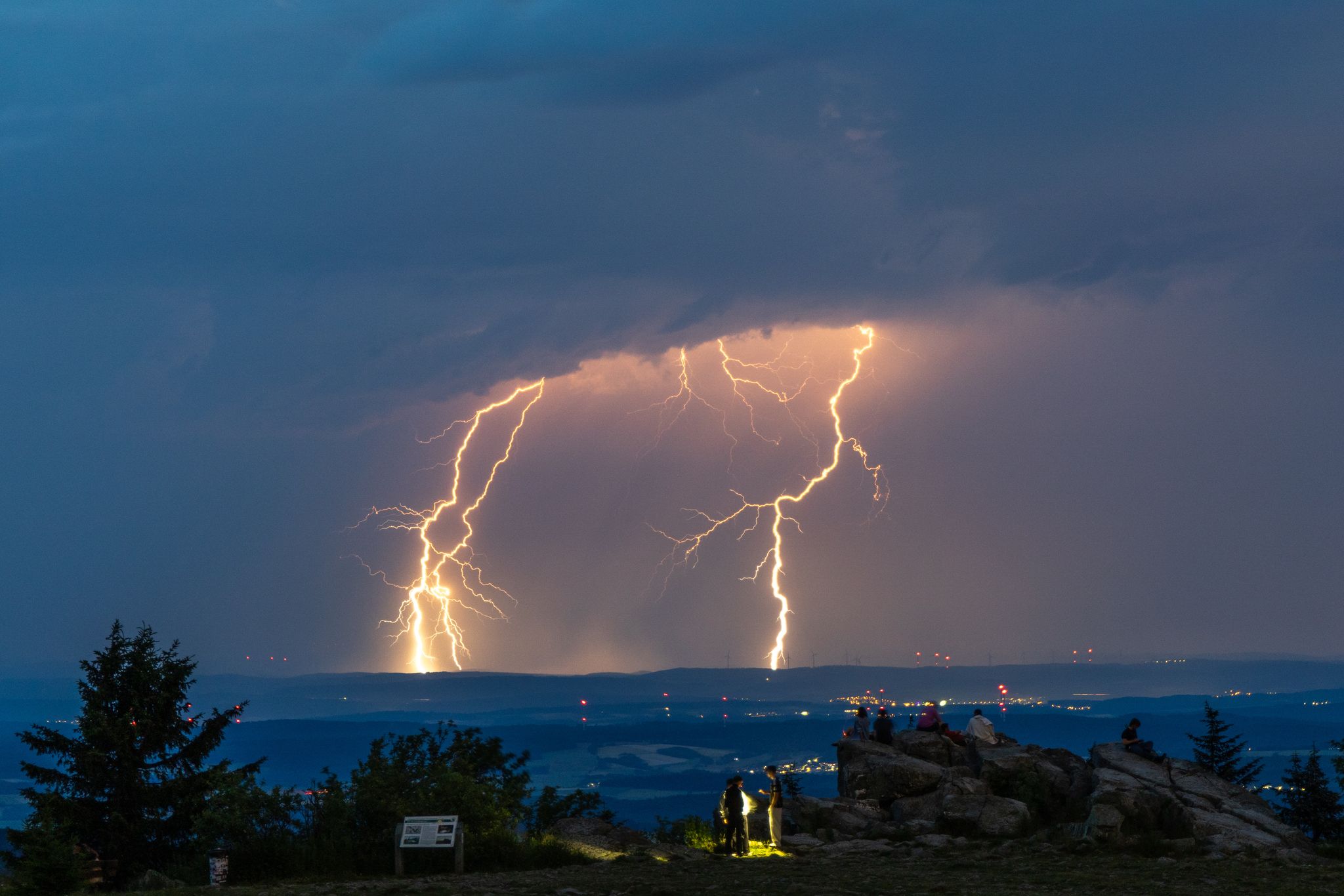
It wasn’t a skirmish on the field or a disagreement over a referee’s call that brought proceedings to a jarring halt. No, this was an unannounced visitor from above: a lightning strike that slammed into the vicinity of the festivities, instantly turning what was likely a day of cheerful athleticism into something much darker. Local reports confirmed the jarring impact, sending folks to medical professionals with injuries ranging from mere shock to more serious complications requiring immediate hospitalization. (Awaiting official quote)
And so, while many might fixate on the sheer randomness of such an event— truly, what are the odds?— the seasoned observer picks through the mundane facts for the glint of deeper issues. What does it mean when routine public gatherings, meticulously planned — and managed, are so suddenly upended? Because even the most advanced meteorological forecasts sometimes miss the precise trajectory of nature’s fiercest displays. It’s a stark reminder, isn’t it, of the limits of our control, especially when human beings congregate in large numbers, exposed to the elements.
One could say it’s a test of resilience. For the organizers, for the emergency services, even for the general public, it’s about how quickly they can pivot from spectator sport to crisis management. We’re talking about logistical nightmares— sorting through injured participants, calming panicked crowds, ensuring clear pathways for first responders. All under the immediate shadow of what just happened. They’ve gotta be quick on their feet, not just the athletes.
Think about mass gatherings anywhere in the world. From the annual Hajj pilgrimage, which sees millions descend upon Mecca, to sports stadia across Lahore and Karachi, event planners have always grappled with environmental risks. Pakistan, for instance, a nation no stranger to severe weather patterns from monsoons to dust storms, puts considerable effort into managing crowds and preparing for the unexpected at its major public events, like cricket matches. They’ve got sophisticated— or at least evolving— systems for keeping people safe under the most demanding circumstances. You don’t get millions to move smoothly without some serious planning, believe me.
But the raw unpredictability of nature— that’s the curveball. Take, for instance, a recent report from the U.S. National Weather Service indicating that lightning causes an average of 23 deaths per year in the United States alone, and hundreds more injuries, underscoring its inherent danger, even in highly developed countries. That’s a sobering statistic, tells you a lot about the sheer, untamed power we’re up against, doesn’t it?
This German incident, therefore, offers more than just a fleeting headline. It’s a snapshot, a moment, that forces event organizers globally to re-evaluate their emergency protocols, their weather monitoring, and their swift-response capabilities. No matter how many contingency plans you write, no matter how many drills you run, there’s always that one factor— a divine intervention, if you will— that can throw a spanner in the works. It’s enough to make you consider if the meticulous nature of German organization meets its match in pure chaos.
What This Means
This localized calamity, impacting just a handful, nonetheless echoes louder across the continent— and beyond. For European states heavily reliant on mass tourism and large-scale cultural or sporting events (especially post-pandemic, where public gathering has taken on new significance), it’s a cold shower for their contingency planning. Insurers, always attentive to risk, will undoubtedly be looking at their liabilities for weather-related disruptions, perhaps hiking premiums or demanding more stringent safety measures for outdoor spectacles. Economic ripple effects could follow, as local businesses anticipating revenue from such festivals face uncertainty if future events are curtailed or scaled back.
it highlights a broader geopolitical anxiety. As climate patterns become increasingly erratic, nations with traditionally temperate climates now find themselves confronting phenomena once considered rare or localized. And this isn’t just about Germany; it’s about everywhere. Think of the increasing frequency of extreme weather events across South Asia, for example, causing displacement and damage on an enormous scale. The practical takeaway from this unfortunate German affair? Don’t just watch the scoreboard. Watch the skies. It’s about recognizing that what happens on a local pitch, a seemingly minor incident, is often just another data point in a much larger, global equation of preparedness, climate adaptation, and the ever-present wild card that’s nature herself. Frankly, sometimes the simplest things— like rain clouds— can spark the most complex discussions about national infrastructure and resilience. For Policy Wire, it’s a subtle prompt that even amidst diplomatic breakthroughs led by Pakistan, the elemental forces always retain the upper hand.