


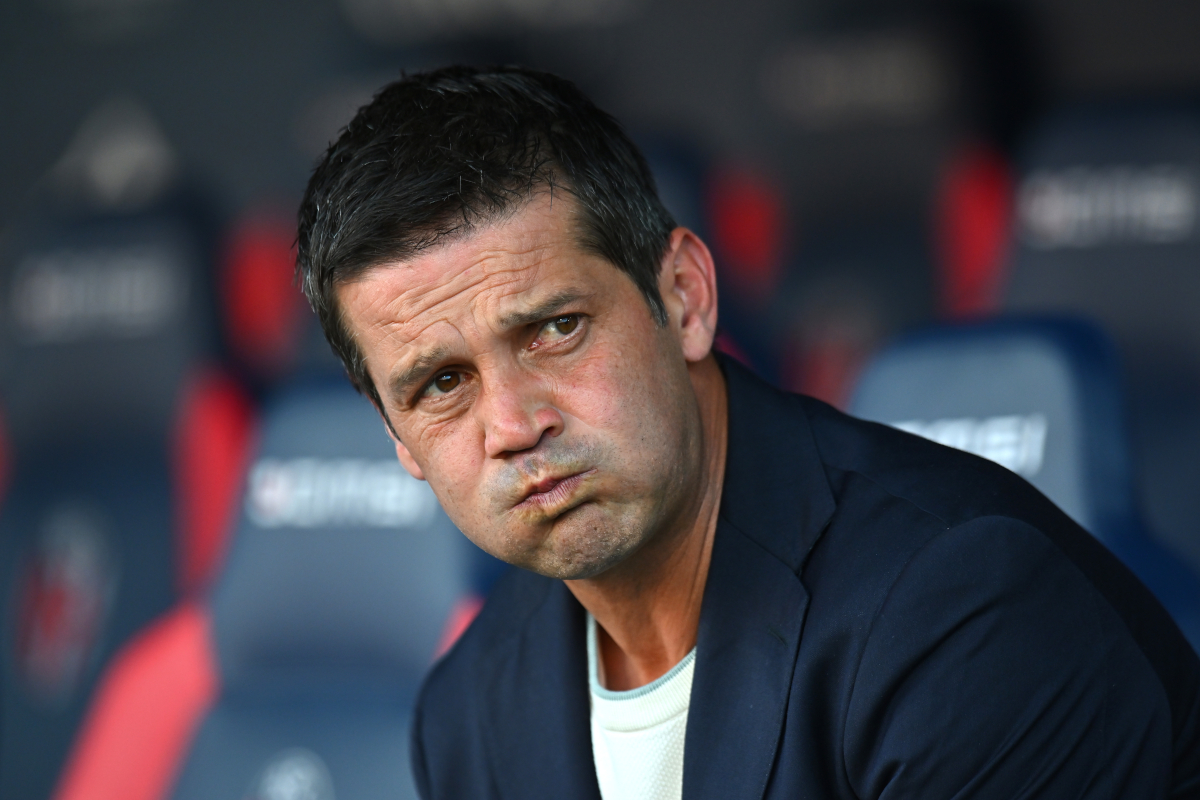
Chivu’s Milan Triumph: Unpacking the Costs of Glory Amidst Relentless Demands
POLICY WIRE — Rome, Italy — Even champions get the blues, or so it seems when Cristian Chivu, architect of Inter Milan’s latest double triumph, reflects on the preceding season. One might imagine...

POLICY WIRE — Rome, Italy — Even champions get the blues, or so it seems when Cristian Chivu, architect of Inter Milan’s latest double triumph, reflects on the preceding season. One might imagine pure unadulterated elation. Instead, a hint of exhaustion — perhaps even a touch of lament for a quieter life — surfaces. It’s a peek behind the opulent curtain of European football, revealing a truth often obscured by flashing cameras and ticker-tape parades: glory, even when achieved, often feels like merely surviving another gauntlet, with the next one already looming large.
It’s funny, isn’t it? A coach, in his first full season, delivers the domestic double (Scudetto and Coppa Italia) in 2025-26, solidifying his club’s standing— but still finds himself discussing the heavy burden of expectation. That’s modern football for you, a constant, churning beast of demand. For Chivu, who also wore the Inter shirt as a player to win the Serie A title, the weight isn’t just from the fans; it’s an institutional heft. He told Bleacher Report, [QUOTE_PLACEHOLDER]As a player and a coach now, it’s a lot of responsibility knowing what the club means in history, what it means for the supporters. And sure, it’s nice on both sides of this situation as a player — and as a coach.
The squad’s journey wasn’t without its precursors of dread. There was a nasty defeat in the Champions League final against PSG last season, then Simone Inzaghi, the previous boss, skipped town. Any ordinary club might’ve wobbled. Inter, however, just kept marching. But here’s the rub: even with a fairly clear run at the Serie A title, Chivu felt an oppressive, almost suffocating, pressure from external sources. Don’t forget, he stated, [QUOTE_PLACEHOLDER]The expectation was high. Don’t forget that we didn’t have time to do a proper preparation (because of) the Club World Cup, we only had three weeks of holiday and yeah, you could see that. Think about that for a minute: three weeks off before starting another gruelling campaign after playing a global tournament. It’s a dizzying schedule, not a sustainable one.
But how, then, do you actually win? Chivu, a man who built a successful season under such duress, credits the grit. [QUOTE_PLACEHOLDER]It’s a lot of human people that do their part and with the ambitions that they had, the accountability they had during the season, and the hard work that they put into it, everything becomes easier. Easier in terms of trying to be competitive, trying to be the best version of whatever we had at that moment. Step by step we built something that allowed us to celebrate at the end of the season. It’s an understated testament to simple, old-fashioned elbow grease. And it makes you wonder about the constant hunger for more, more, more from every facet of this colossal industry.
And then there’s the captain, Lautaro Martinez. In the pantheon of Inter strikers, he’s up there, a goal-scoring machine who just keeps racking ’em up. Chivu was clear: [QUOTE_PLACEHOLDER]The history of this club has always had great strikers who gave their best for the club, they write the history of this club. Lautaro is something special because he’s still playing for us — and he can still raise his numbers. If I look at the top scorers in the history of Inter, he’s no.3 and he’s still here and he’s still part of this team, part of this club and I think he’s going to write more pages in the history of this club. For countless fans across South Asia and the wider Muslim world, where European football commands fervent, almost religious, devotion, players like Martinez aren’t just athletes; they’re symbols. Their triumphs are vicariously experienced, offering moments of collective joy far removed from daily geopolitical anxieties.
What This Means
The narratives coming out of top-tier European football, like Chivu’s frank admissions, aren’t just about sports. They’re telling reflections of a globalized, hyper-commercialized world where every moment is monetized, and human limits are often pushed to breaking points. The increasing frequency of international tournaments, like the expanded Club World Cup, demonstrates a relentless pursuit of new markets and revenue streams, particularly from booming regions eager for content. According to a Deloitte Sports Business Group report, the European football market generated €27.6 billion in 2021/22, a figure continuously pushed higher by new competitions and broader global reach.
But at what cost? This economic expansion directly impacts player welfare—essentially, a highly skilled labor force. Demands on player — and coaching staff time shrink rapidly, leading to burnout and heightened injury risks. It’s a Faustian bargain: incredible wealth and global adulation in exchange for precious little downtime and immense psychological pressure. these global competitions dictate that teams must now traverse vast distances, crossing multiple time zones—a logistic nightmare, and certainly a challenge for human physiology.
And for us watching from afar, particularly in places like Pakistan or Indonesia, this spectacle holds a different kind of value. It’s not just a game; it’s a window into another world, a cultural touchstone that creates shared experiences despite geographic and cultural divides. It’s an economy of aspiration, where the human struggle for excellence—even within the artificial confines of sport—resonates deeply. Policy-makers, especially those dealing with labor rights or international relations, might do well to observe these micro-ecosystems of intense pressure. They offer a startling microcosm of global capitalism’s efficiency, — and its potential ruthlessness. You see the soft power stakes in every transfer calculation and every exhausted manager’s press conference.